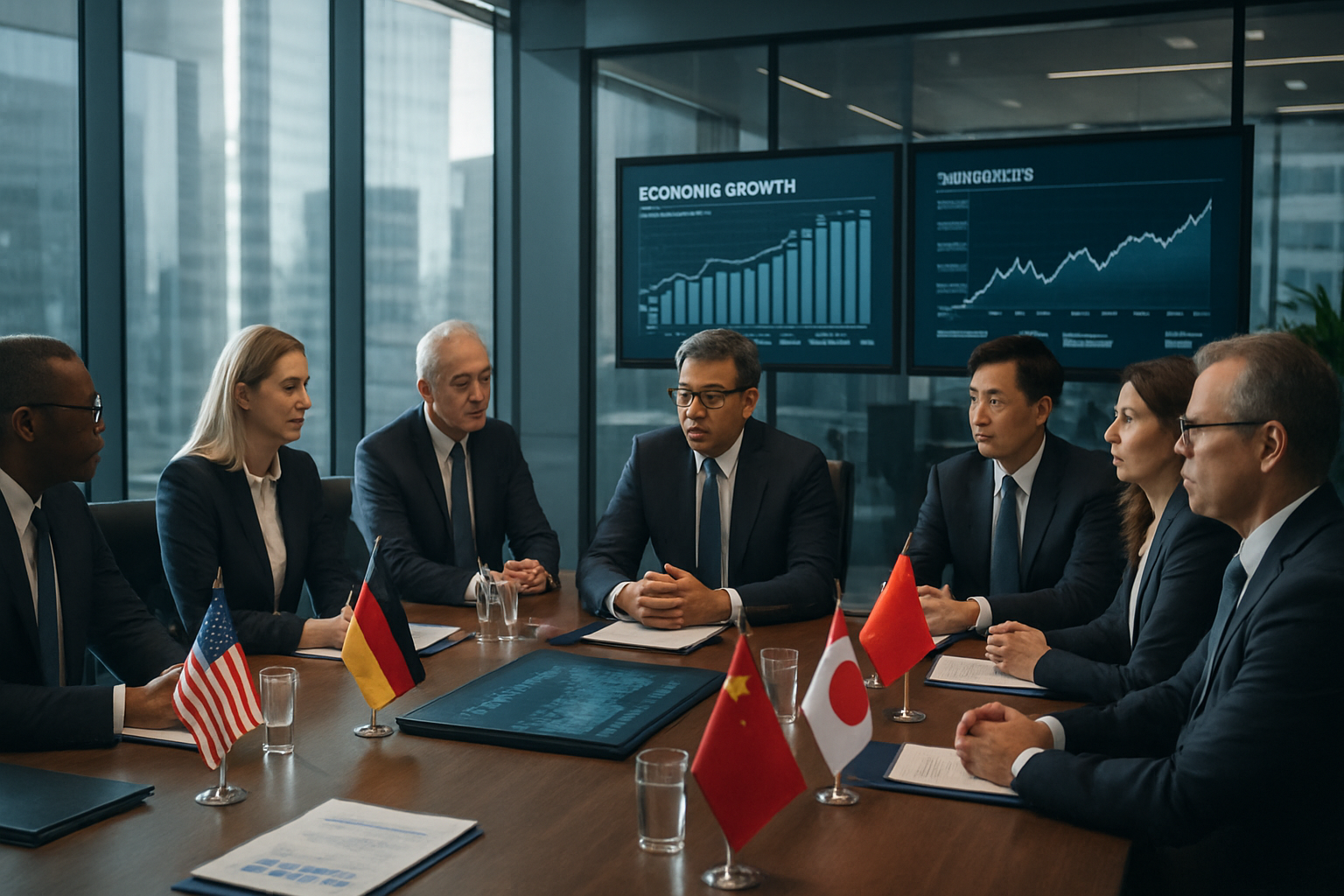
A remarkable surge of international economic development initiatives emerged across multiple continents in February 2026, as nations from Afghanistan to Uzbekistan announced major investment partnerships, technological cooperation agreements, and business expansion projects worth billions of dollars collectively.
The coordinated wave of economic announcements represents one of the most significant periods of international business cooperation in recent years, spanning diverse sectors from digital technology and renewable energy to agricultural development and infrastructure modernization. Countries are increasingly leveraging strategic partnerships and foreign investment to accelerate domestic economic growth while positioning themselves as regional hubs for international business.
Central Asian Economic Renaissance
Central Asia emerged as a particular focus of investment activity, with several nations announcing transformative projects. Kazakhstan demonstrated its growing international stature through multiple major developments, including confirmation of its leading position in scientific research among Central Asian countries by taking first place in the region according to the SCImago Research Group's international scientific activity ranking.
The National Payment Corporation of Kazakhstan outlined ambitious projects to integrate the digital tenge across multiple sectors of the economy, representing a significant step toward financial modernization. As the third form of the national currency alongside cash and bank deposits, the digital tenge combines advantages of both traditional payment methods while positioning Kazakhstan at the forefront of central bank digital currency implementation.
Uzbekistan showcased particularly dynamic investment momentum, with the commercial banking sector demonstrating robust growth. As of January 1, 2026, the loan portfolio reached 604 trillion soums, marking a 13% increase from the previous year. The banking system's total assets reached 924.8 trillion soums with annual growth of 20%, while state-owned banks maintain 63% of assets and 67% of the loan portfolio, providing stability amid expansion.
"The significant growth in our banking sector reflects not just domestic economic vitality, but increasing international confidence in Central Asian markets," according to regional financial analysts tracking the developments.
— Regional Financial Analysis, February 2026
International Technology Transfer and Partnerships
Technology cooperation emerged as a central theme across multiple initiatives. Afghanistan welcomed proposals for investment and technology partnerships with India, with Commerce and Industry Minister Nooruddin Azizi meeting with Indian delegation leader Ankush Satana. The discussions encompassed establishing gemstone exhibition facilities, connecting pharmaceutical sector traders, and potentially transferring German technology capable of producing diesel fuel from plastic waste.
Slovakia positioned itself as a European artificial intelligence leader with President Peter Pellegrini announcing plans for a state-of-the-art AI data center in Bratislava. The facility will utilize surplus nuclear energy, providing Slovakia with a competitive advantage in digital infrastructure development. This initiative exemplifies how countries are leveraging their unique energy resources to attract cutting-edge technology investments.
The British-Uzbek Infrastructure Conference in Tashkent, organized by the UK Department for Business and Trade, highlighted the growing international interest in Central Asian development opportunities. Such multilateral forums are becoming increasingly important for coordinating international investment flows and sharing best practices in economic development.
Industrial Sector Recovery and Expansion
Bhutan's industrial sector showed significant signs of recovery according to the Department of Industry's Annual Industry Report 2024-2025. The number of active industry licenses increased by nearly three percent, driven by growth in cottage and manufacturing industries. This recovery demonstrates how smaller nations can achieve meaningful economic progress through focused industrial policy.
Slovakia's Tatravagónka announced expansion of operations in India with plans to construct a new factory, joining several other Slovak companies already operating in the country. This trend of European manufacturing companies expanding into Asian markets reflects the ongoing globalization of production networks and the search for new growth opportunities.
Regional Economic Integration Efforts
Several initiatives demonstrated increasing regional economic cooperation. Kazakhstan President Kassym-Jomart Tokayev's writings emphasized the need for a shift from ideological globalism to more pragmatic, sovereignty-based international cooperation, ahead of his visit to the United States. This approach reflects growing preferences for bilateral and regional partnerships over traditional multilateral frameworks.
Uganda received expressions of interest from Saudi Arabia regarding investment in the country's coffee industry, demonstrating the potential for cross-regional agricultural partnerships. Such South-South cooperation represents an evolving pattern in international economic relations, where developing nations increasingly partner directly rather than through traditional North-South aid relationships.
Infrastructure and Transportation Development
Major infrastructure announcements accompanied the investment surge. Bratislava Airport experienced record passenger growth following the opening of a Wizz Air base, demonstrating how strategic transportation investments can quickly generate economic returns through increased connectivity.
Energy sector developments included significant progress on projects across the region. Condor Energies Inc. reported strong test results for the Kumli-45 gas well in Uzbekistan, while various nations advanced renewable energy initiatives as part of broader economic modernization strategies.
Economic Data and Performance Indicators
The investment announcements occurred against a backdrop of solid economic performance in many regions. Uzbekistan's manufacturing sector produced 20.2 million tons of Portland cement in 2025, indicating robust construction and infrastructure activity. Import statistics showed diversified trade relationships, with the country importing 13,983 tons of dates from 19 countries, totaling $10.3 million.
Regional financial integration accelerated through various payment system improvements and banking sector reforms. These developments support increased trade flows and business cooperation by reducing transaction costs and improving financial infrastructure reliability.
Strategic Implications and Future Outlook
The February 2026 investment surge reflects several important global economic trends. Countries are increasingly pursuing strategic partnerships that combine economic development with technology transfer, recognizing that sustainable growth requires both capital investment and knowledge acquisition.
The emphasis on regional cooperation and bilateral partnerships suggests a shift away from purely multilateral approaches toward more flexible, targeted collaboration models. This trend allows countries to tailor partnerships to their specific development needs while maintaining sovereignty over their economic policies.
Environmental sustainability considerations are increasingly integrated into investment decisions, as seen in Kazakhstan's digital currency initiatives and Slovakia's renewable energy-powered data centers. This integration of environmental and economic objectives represents a maturation of development thinking that could influence international investment patterns for years to come.
Looking Forward: Sustainable Investment Models
The success of these diverse investment initiatives will likely depend on several key factors: transparent governance frameworks, sustained political commitment across electoral cycles, technical capacity building, and authentic community engagement. Modern partnerships increasingly emphasize institutional development and technology transfer over simple capital infusion.
The geographic spread of announcements—from Afghanistan's technology partnerships to Uganda's agricultural investments—demonstrates that economic development opportunities exist across all regions and development levels. Success appears to correlate with countries' ability to identify and leverage their unique advantages, whether in natural resources, geographic location, or human capital.
As these initiatives progress through 2026, they may establish templates for international economic cooperation that balance national sovereignty with global integration, potentially influencing development strategies worldwide. The emphasis on practical partnership over ideological alignment suggests a pragmatic approach to international economic relations that could prove more sustainable than previous models.