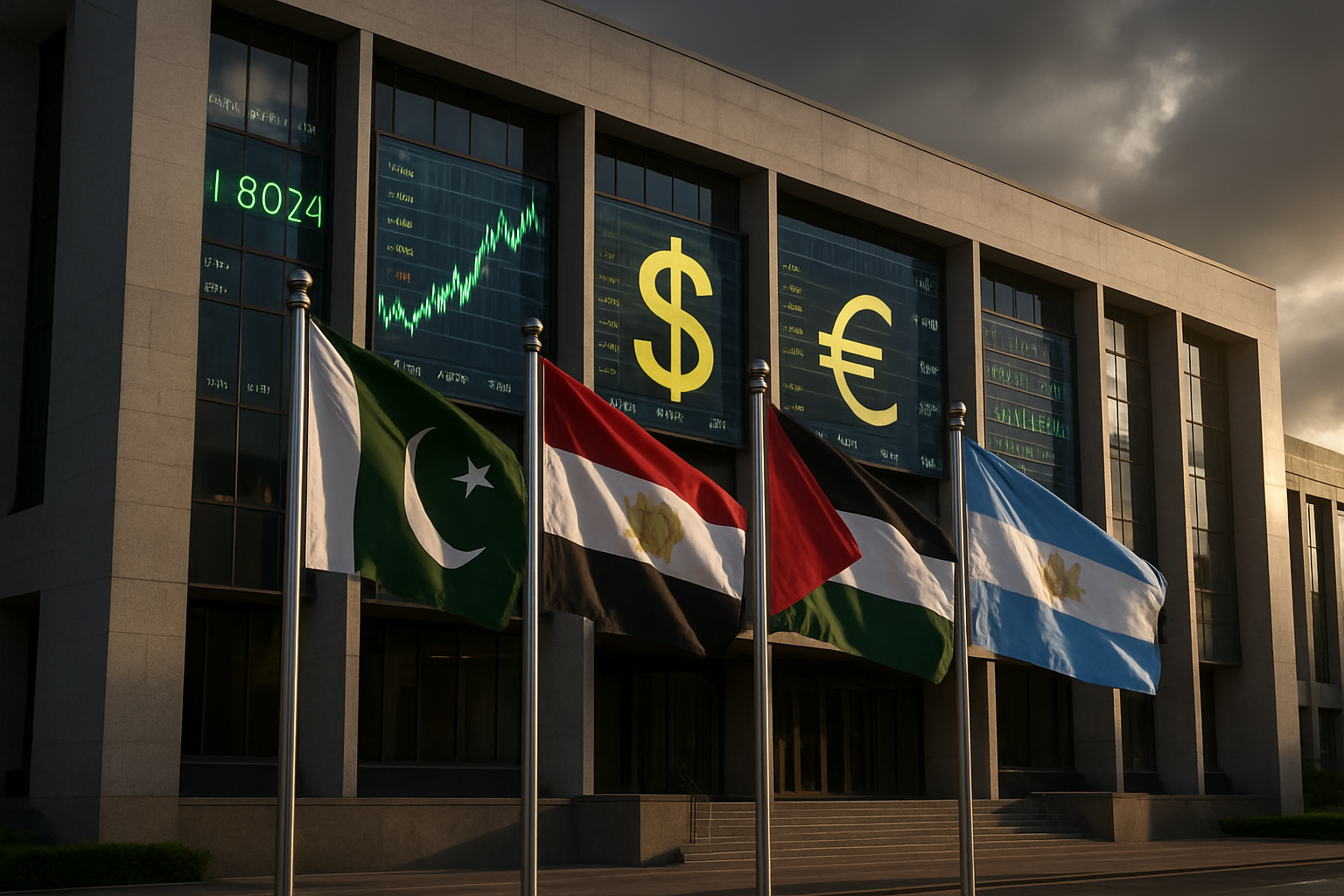
A wave of significant economic policy changes across four major emerging markets signals a fundamental shift toward national monetary independence, as Egypt, Pakistan, Jordan, and Argentina implement divergent strategies to address inflation, fuel costs, and structural reforms in March 2026.
The synchronized yet distinct policy responses represent a departure from the coordinated international monetary approaches that characterized the post-2008 financial era, with each nation prioritizing domestic economic objectives over traditional global alignment.
Egypt Strengthens Debt Market Position
Egypt's Central Bank announced a significant expansion of its domestic debt instruments program, raising local currency debt offerings by 1 billion Egyptian pounds for the second consecutive week. This strategic move reflects the bank's confidence in domestic market stability following record-breaking foreign reserve accumulations that reached $52.59 billion in January 2026.
The enhanced debt issuance program, encompassing both treasury bills and bonds, demonstrates Egypt's sophisticated monetary policy transmission mechanisms. With 94% of policy rate cuts effectively transmitted to interbank markets, the Central Bank has successfully maintained monetary control while supporting economic growth.
"Egypt's approach demonstrates how emerging markets can leverage domestic financial instruments to maintain monetary sovereignty while participating in global markets."
— Banking analyst specializing in Middle Eastern monetary policy
This development occurs against the backdrop of Egypt's successful completion of its fifth and sixth IMF program reviews, which unlocked $2.3 billion in financing and validated the country's monetary policy framework.
Pakistan Implements Fuel Price Adjustments
Pakistan's government announced substantial fuel price increases effective March 1, with petrol rising by Rs8 per liter to Rs266.17 and high-speed diesel increasing by Rs5.16 to Rs280.86. The Oil and Gas Regulatory Authority's recommendations reflect global petroleum market volatility and domestic economic pressures.
The price adjustments carry significant implications for Pakistan's economic landscape, as petrol directly impacts private transportation costs affecting middle and lower-middle class households. High-speed diesel price changes influence the broader economy through transportation, agriculture, and industrial sectors.
These increases occur amid broader inflationary pressures affecting South Asian economies, with Pakistan's policy response demonstrating the challenging balance between global commodity price transmission and domestic economic stability. The fortnightly pricing mechanism allows for responsive adjustments to international market conditions while providing some predictability for consumers and businesses.
Jordan Adjusts Petroleum Pricing Structure
Jordan's Petroleum Derivatives Pricing Committee implemented targeted fuel price increases for March, raising 90-octane gasoline from 810 fils to 820 fils per liter and adjusting diesel prices upward. The monthly pricing review reflects global petroleum market trends and Jordan's commitment to transparent energy pricing mechanisms.
The committee's systematic approach to energy pricing demonstrates Jordan's sophisticated management of external commodity shocks while maintaining domestic economic stability. Global petroleum price volatility has challenged energy-importing nations throughout 2026, requiring careful balance between market-based pricing and social stability.
Jordan's energy policy adjustments occur within the context of broader regional economic coordination, as Middle Eastern nations navigate varying approaches to energy subsidies, pricing mechanisms, and economic diversification strategies.
Argentina's Labor Market Transformation
Argentina continues advancing comprehensive labor reform legislation under President Javier Milei's administration, with the Senate approving structural changes to employment regulations despite sustained organized opposition. The reforms introduce "bank of hours" overtime systems and modified severance structures designed to enhance labor market flexibility.
The labor modernization initiative complements Argentina's broader economic restructuring, including the historic US-Argentina trade agreement eliminating over 1,600 tariffs. This comprehensive approach aims to position Argentina as a competitive destination for international investment while managing domestic employment transitions.
Argentina's reform agenda occurs amid challenging economic conditions, with economists projecting 22.4% annual inflation compared to the government's 10.1% forecast. The persistence in pursuing structural changes despite social resistance demonstrates the administration's commitment to long-term economic transformation.
Implications for Global Monetary Coordination
These concurrent policy developments across diverse economic regions highlight a fundamental shift in international monetary coordination. Unlike the synchronized responses characteristic of previous decades, countries are increasingly pursuing independent strategies tailored to domestic conditions.
The divergent approaches reflect sophisticated understanding of local economic dynamics while acknowledging global interdependence. Egypt's debt market expansion, Pakistan's fuel pricing adjustments, Jordan's energy policy modifications, and Argentina's structural reforms each address specific national challenges while contributing to broader regional stability.
"We're witnessing the emergence of a multipolar economic approach where countries develop independent monetary strategies while maintaining international engagement."
— International economic policy researcher
This trend toward monetary independence may reshape international financial institutions and coordination mechanisms, as countries demonstrate capacity for sophisticated policy development without traditional multilateral oversight.
Economic Resilience and Adaptation
The policy changes demonstrate remarkable economic resilience among emerging markets, which have developed sophisticated tools for managing external shocks while maintaining domestic stability. Egypt's successful reserve accumulation, Pakistan's responsive pricing mechanisms, Jordan's transparent energy adjustments, and Argentina's comprehensive reforms each reflect adaptive governance capabilities.
These developments occur against challenging global conditions, including persistent inflation pressures, commodity price volatility, and technological disruption affecting traditional economic models. The success of these independent approaches may influence other nations facing similar policy challenges.
The economic policy evolution represents a maturation of emerging market institutions and policy frameworks, moving beyond dependency on traditional coordination mechanisms toward innovative approaches addressing unique national circumstances within global economic pressures.
As March 2026 progresses, the effectiveness of these diverse policy approaches will provide valuable insights into sustainable economic development strategies for the multipolar world economy, potentially reshaping international monetary cooperation frameworks for decades to come.