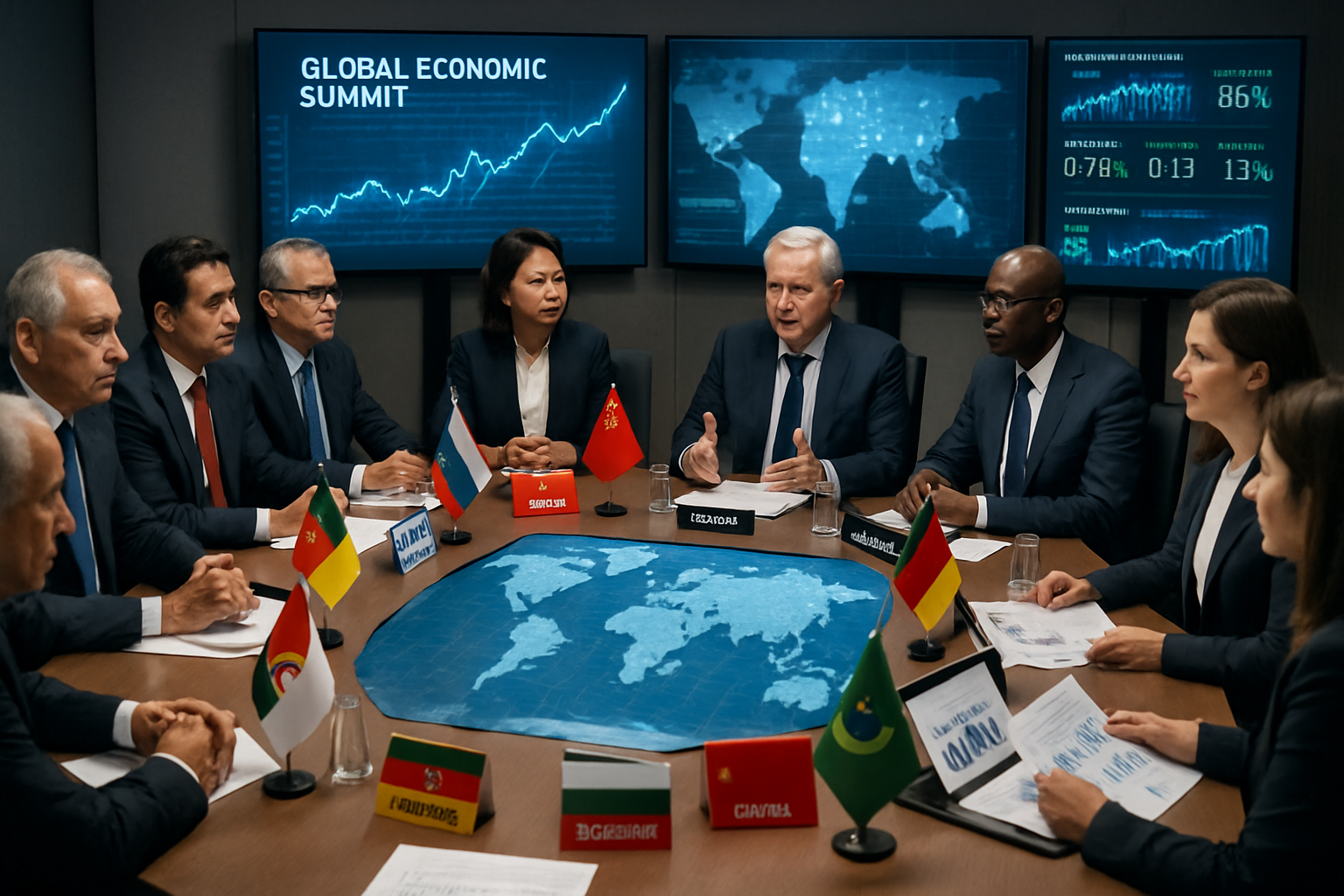
April 2026 has witnessed a complex tapestry of global economic developments, from agricultural trade agreements and business launches to financial sector changes and international shipping disputes, highlighting the interconnected nature of the modern world economy.
Strategic Business Partnerships Drive Regional Growth
France has launched an ambitious new business initiative in Bolivia, marking a significant step in strengthening Franco-Bolivian economic ties. The French Embassy in Bolivia announced the official launch of the Franco-Bolivian Business Affairs Circle in La Paz, an initiative designed to fortify economic cooperation between the two nations.
The project emerged under the leadership of French Ambassador Olivier Fontan, working alongside Joel Flores-Carpio, president of France's Foreign Trade Advisors (CCEF) in Bolivia, and Horacio Vera Loza Lavadenz, founder and executive director of Delizia. This new platform aims to consolidate itself as a strategic framework for strengthening commercial ties and promoting business exchange between France and Bolivia.
Algeria's Agricultural Innovation Initiative
In Algeria, significant progress is being made in agricultural modernization through strategic partnerships. Agriculture and Rural Development Minister Yassin Mehdi Walid oversaw the signing of an agreement between PMAT TRADING and AGRO DRIVE, a subsidiary of the "Agrodev" group, demonstrating the country's commitment to agricultural innovation and mechanization.
The signing ceremony took place in Sidi Bel Abbès province, with the presence of the Secretary General of the Ministry of Industry representing the Minister, as well as the provincial governor Kamal Haji. This agreement represents a crucial step toward modernizing Algeria's agricultural sector through the acquisition of locally manufactured tractors and harvesting equipment.
China Faces International Shipping Pressure
China is confronting growing international pressure regarding its handling of Panamanian-flagged vessels, with multiple countries joining forces to challenge Beijing's maritime policies. Costa Rica, Honduras, Peru, and Ukraine have joined the United States in supporting Panama against what they describe as arbitrary and unjustified Chinese restrictions on ships using Panama's flag of convenience.
Costa Rica's Foreign Ministry expressed "deep concern and firm condemnation" of the inspections and delays at Chinese ports, describing these practices as threatening the stability of international trade. The growing coalition represents a significant diplomatic challenge for China's maritime policies and highlights tensions in global shipping networks.
European Luxury Sector Under Pressure
Germany's luxury market is experiencing significant volatility, with major French luxury conglomerates LVMH and Hermès facing substantial challenges while energy giant TotalEnergies sees record-breaking performance. The divergent fortunes reflect broader economic uncertainties affecting different sectors of the European economy.
Analysts are closely monitoring these developments as they may signal broader shifts in consumer spending patterns and economic priorities across Europe. The luxury sector's performance often serves as a barometer for economic confidence and discretionary spending power among affluent consumers.
Mauritania Implements Food Price Controls
The Mauritanian government has reached a significant agreement with butchers' unions to implement price ceilings on red meat, demonstrating proactive government intervention to protect consumers' purchasing power. The new pricing structure will take effect from Monday, April 6, establishing fixed prices for different types of meat.
According to the Ministry of Animal Development, the agreement sets the price of lamb and goat meat at 3,500 old ouguiya per kilogram, while camel and beef will be priced at 2,700 old ouguiya per kilogram. A special category called "Filkeh" has been priced at 3,000 old ouguiya per kilogram. This initiative aims to limit rising prices and protect consumers' purchasing power in the face of global inflationary pressures.
Ukraine Expands Middle East Agricultural Trade
Ukraine has significantly increased its vegetable oil exports to Middle Eastern countries, including Turkey, nearly doubling shipments in March compared to February, reaching 106,600 tons according to Ukraine's State Customs Service. This represents the largest volume since June 2025, highlighting Ukraine's continued agricultural resilience despite ongoing challenges.
Foreign deliveries overall increased by 18% compared to February, though they remain 3% below March 2025 levels, totaling 427,700 tons - the maximum value for the current agricultural season. Notably, Ukraine exported a record monthly quantity of sunflower oil to Jordan, approximately 35,000 tons.
Bulgarian Agriculture Faces Crisis
Bulgaria's National Association of Grain Producers (NAZ) has raised alarms about a deepening crisis and anticipated new wave of bankruptcies in domestic agriculture. The primary cause is the dramatic surge in costs for fuel and fertilizers, driven by escalating geopolitical conflict in Iran, which has put Bulgarian farmers in a precarious position against the backdrop of completely frozen grain purchase prices.
NAZ Chairman Iliya Prodanov outlined the huge discrepancy between production costs and market realization of agricultural products, warning of the possibility of returning Bulgarian agriculture "20 years back." The crisis highlights the vulnerability of European agriculture to global supply chain disruptions and energy price volatility.
Economic Implications and Future Outlook
These diverse economic developments across multiple continents illustrate the complex interconnections of the global economy in April 2026. From agricultural cooperation initiatives to shipping disputes, from luxury market volatility to food price controls, these events demonstrate how local and regional issues can have far-reaching international implications.
The emergence of bilateral business partnerships, such as the Franco-Bolivian initiative, suggests a trend toward more targeted, flexible cooperation arrangements that can respond quickly to changing economic conditions. Meanwhile, challenges in traditional sectors like agriculture and shipping highlight the need for adaptive strategies in an increasingly volatile global environment.
As we progress through 2026, these developments will likely continue to shape international economic relations, trade patterns, and regional cooperation frameworks. The ability of nations and businesses to navigate these complex challenges while maintaining economic stability and growth will be crucial for global prosperity in the months ahead.