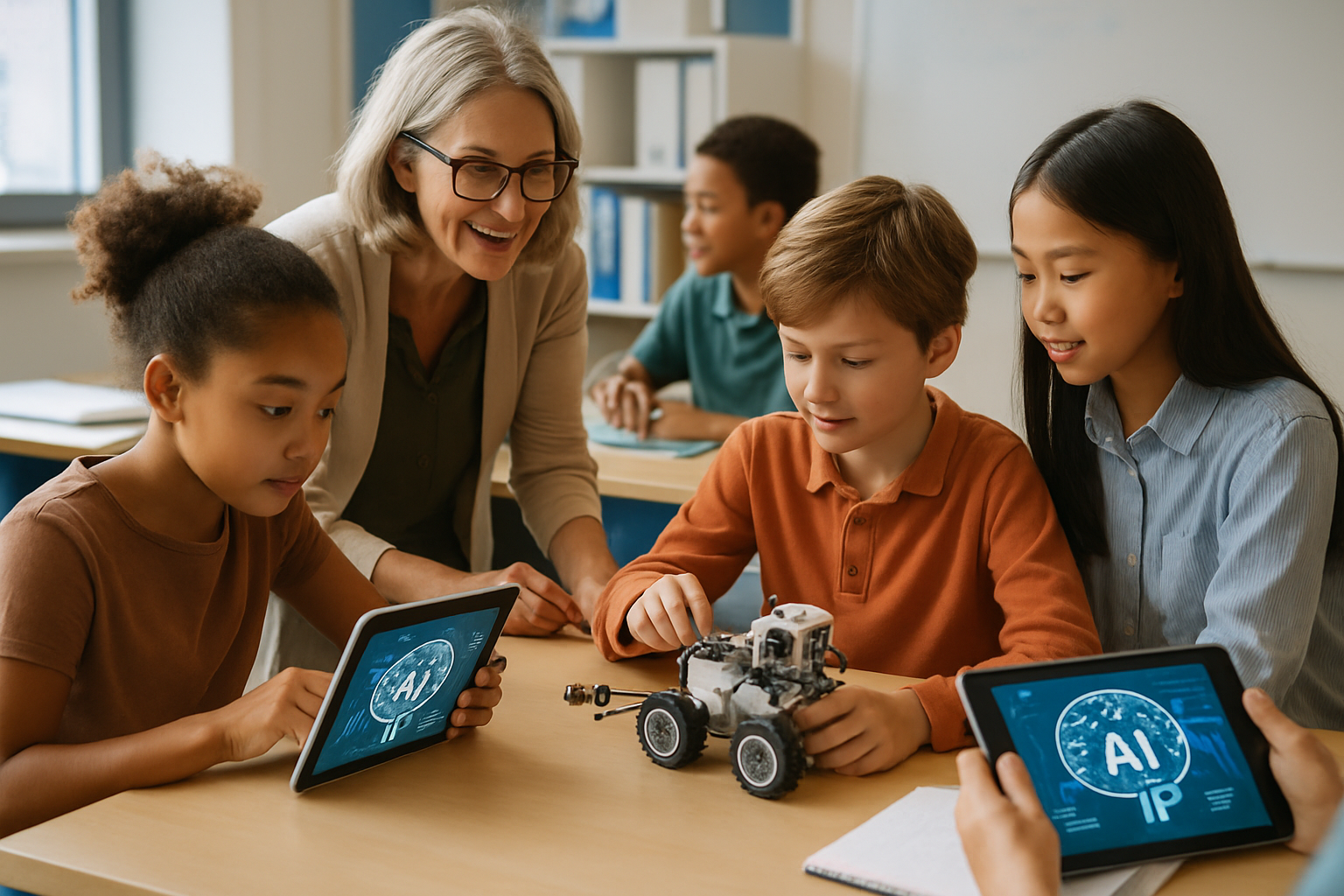
Educational institutions across three continents are implementing groundbreaking technology programs that integrate artificial intelligence, robotics, and digital learning initiatives, marking a pivotal moment in the global transformation of educational systems as schools balance innovation with traditional pedagogical values.
The convergence of artificial intelligence and educational technology has reached a critical juncture in February 2026, with schools and universities worldwide demonstrating both the promise and challenges of integrating advanced digital tools into traditional learning environments. From European digital initiatives to Asian AI frameworks and regional robotics competitions, educational leaders are crafting approaches that enhance rather than replace fundamental human connections in learning.
Estonia's Digital Transformation: Promise and Practical Challenges
Estonia's reputation as a digital pioneer faces scrutiny as the Baltic nation grapples with implementing large-scale educational technology systems. The country's experience illustrates the gap between technological ambition and practical execution that many educational systems worldwide are confronting.
Recent challenges with the SAIS3 high school admissions system demonstrate the importance of thorough testing, realistic timelines, and comprehensive backup planning in educational technology implementations. Schools across Estonia were forced to scramble for alternative solutions when the system failed to meet its deadline, creating administrative burdens and confusion for students and families.
This situation reflects broader patterns observed globally, where educational institutions must balance the promise of digital innovation with the reliability required for core educational functions. The Estonian experience serves as a valuable case study for other nations pursuing similar digital transformation initiatives.
"Educational technology implementation needs careful user experience consideration, system reliability, and backup procedures. New initiatives must enhance rather than disrupt educational delivery."
— Educational Technology Analysis, February 2026
Ireland's Robotics Excellence: Building Tomorrow's Innovators
Ireland's educational system demonstrates remarkable success in fostering technical innovation through robotics programs. Dromore National School in Killygordon has achieved exceptional recognition by winning their category at the VEX Robotics All-Ireland Championships in Cork, also receiving the Skills Award and Teamwork Award.
The school's achievement represents more than individual success; it exemplifies how smaller educational institutions can leverage technology programs to develop critical thinking, problem-solving, and collaborative skills essential for 21st-century success. The program's emphasis on teamwork and skill development rather than mere technical proficiency provides a model for sustainable educational technology integration.
Dromore's success story illustrates the potential for rural and smaller schools to compete on equal footing with larger institutions when provided with appropriate resources and dedicated instruction. The school's achievement positions them to represent Ireland at the World Robotics Championship, showcasing how local educational excellence can achieve international recognition.
Philippines' Strategic AI Framework: Balancing Innovation with Responsibility
The Philippines Department of Education has taken a comprehensive approach to artificial intelligence integration through its collaboration with the National Artificial Intelligence Center for Research and Innovation (NAICRI). This strategic initiative represents one of the most systematic national approaches to AI in education documented globally.
Under Education Secretary Sonny Angara's leadership, the Philippines is developing a framework that emphasizes preparing Filipino students for an AI-integrated future while ensuring "safe, fair, responsible" usage. This approach reflects growing international recognition that successful AI integration requires careful governance and cultural sensitivity rather than unrestricted adoption.
The Philippine model demonstrates how developing nations can leapfrog traditional educational limitations by leveraging strategic partnerships and comprehensive planning. Rather than simply importing foreign technologies, the country is developing indigenous capabilities that serve local needs while maintaining global competitiveness.
Global Context: The 2026 Educational Technology Renaissance
These developments occur within what researchers have termed the "2026 Educational Technology Renaissance" - a coordinated international shift toward thoughtful digital tool integration with traditional educational values. Unlike earlier waves of educational technology adoption, current initiatives emphasize enhancement of human relationships rather than replacement of traditional pedagogical approaches.
Successful implementation models from around the world share common characteristics: sustained political commitment, comprehensive stakeholder engagement, cultural sensitivity, and clear pedagogical objectives. Malaysia's world-first AI-integrated Islamic school combining artificial intelligence with traditional religious learning, Singapore's WonderBot 2.0 heritage education success, and Canadian universities' AI teaching assistants maintaining critical thinking standards all demonstrate effective human-centered approaches.
The global memory crisis, with semiconductor prices surging sixfold and affecting major manufacturers like Samsung, SK Hynix, and Micron, has created infrastructure challenges that paradoxically encourage more thoughtful and efficient technology deployment. This constraint period is forcing educational institutions to focus on high-impact applications rather than technology adoption for its own sake.
Implementation Challenges and Success Factors
Educational institutions worldwide face similar challenges in technology integration: infrastructure limitations, teacher training requirements, funding sustainability, and the need for comprehensive stakeholder engagement. However, successful programs demonstrate that these obstacles can be overcome through strategic planning and sustained commitment.
Key success factors identified across multiple countries include:
- Sustained political and institutional commitment beyond electoral or administrative cycles
- Comprehensive professional development for educators
- Clear pedagogical objectives that guide technology selection rather than technology driving educational goals
- Cultural sensitivity that respects local contexts while embracing necessary innovation
- Adequate resource allocation for long-term sustainability
- Regular evaluation and adaptation based on outcomes rather than assumptions
The Human Element: Preserving Educational Relationships
Perhaps most significantly, successful educational technology programs worldwide demonstrate that effective integration enhances rather than replaces fundamental human connections in learning. The most promising initiatives treat technology as powerful amplification tools serving specific educational goals rather than ends in themselves.
Educational leaders consistently emphasize that no artificial intelligence or technology can replace the concern of teachers for their students, the importance of peer collaboration, or the value of community engagement in learning. The challenge lies in leveraging technological capabilities while preserving the essentially human elements that make education transformative.
"No artificial intelligence or any other technology can replace the concern of teachers for their students. We must continue supporting educator career advancement while thoughtfully integrating technological tools."
— Educational Policy Statement, 2026
Economic Implications and Strategic Significance
The economic implications of educational technology integration extend far beyond immediate implementation costs. Countries implementing comprehensive educational technology programs report improved community resilience, reduced long-term social service demands, and enhanced international competitiveness through strategic human capital development.
Prevention-first approaches to education generate measurable benefits including reduced crisis intervention costs, decreased unemployment rates, and improved workforce productivity. Educational technology investments position nations advantageously in the global knowledge economy while addressing local development needs.
The strategic significance of current educational technology initiatives cannot be overstated. February 2026 represents a critical juncture where decisions made today will influence educational trajectories for the coming decade, affecting global capacity to address climate change, technological disruption, and social cohesion challenges.
Future Trajectory: Balancing Innovation with Wisdom
Looking ahead, the evidence suggests that effective educational transformation requires thoughtful adaptation of technological tools to serve specific cultural, economic, and social needs rather than pursuing standardized global solutions. Success depends on maintaining the irreplaceable value of human creativity, critical thinking, and cultural knowledge while preparing students for an increasingly AI-integrated global economy.
The window for effective action is narrowing as technology advances rapidly, but current initiatives demonstrate multiple pathways for successful educational modernization. The key insight emerging from global experiences is that educational systems must choose carefully what remains uniquely human while harnessing digital tools appropriately.
As educational institutions worldwide navigate this transformation, the examples from Estonia, Ireland, and the Philippines - along with successful programs across Asia, Europe, and the Americas - provide valuable templates for others seeking to balance technological advancement with educational wisdom. The ultimate measure of success will be whether these initiatives enhance human potential while preserving the fundamental relationships that make education meaningful.