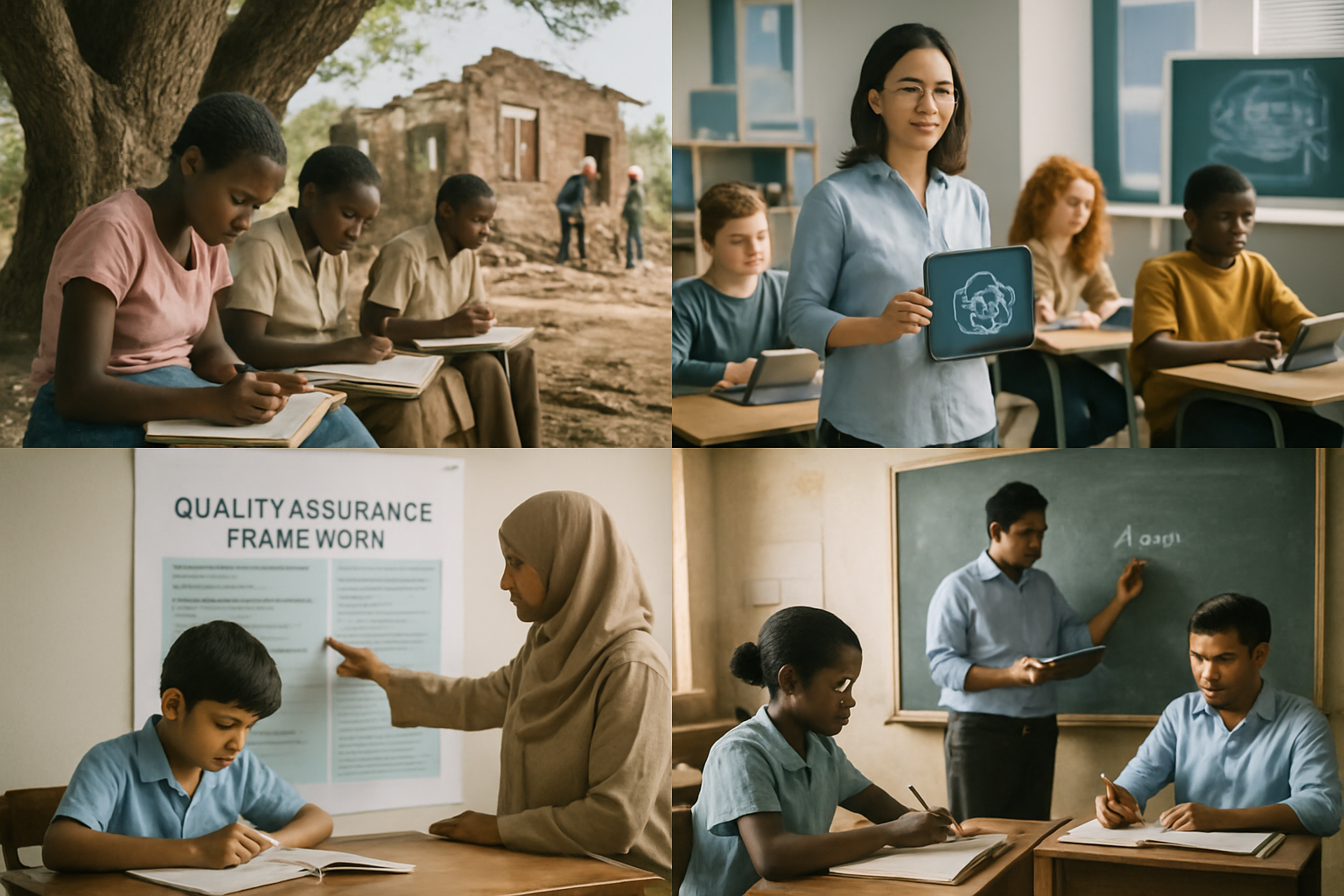
Educational systems across three continents are grappling with catastrophic infrastructure challenges while simultaneously implementing transformative reforms that could reshape how students learn and teachers deliver instruction.
From storm-damaged schools in the Democratic Republic of Congo to evolving literacy approaches in England, the global education landscape in March 2026 presents a stark contrast between crisis and innovation. The challenges facing schools today extend far beyond traditional funding shortfalls, encompassing physical destruction, social equity concerns, and fundamental questions about educational access.
Congo Students Learn Under Open Sky After Devastating Storm
In the Democratic Republic of Congo's Maniema province, 164 students at Iyonga Primary School in Musendo village continue their education among the ruins of their classroom. The school was "almost totally destroyed" by violent winds on February 25, forcing students and teachers to conduct lessons outdoors, exposed to harsh weather conditions.
The scene represents a broader crisis affecting educational infrastructure across the region, where extreme weather events increasingly disrupt learning environments. Students now sit among debris, using improvised seating arrangements while waiting for assistance that has been slow to arrive.
"The situation demonstrates the vulnerability of educational infrastructure in regions already struggling with limited resources,"
— Educational Infrastructure Report, 2026
This crisis occurs against the backdrop of the "2026 Educational Technology Renaissance," a global phenomenon where many nations are implementing sophisticated digital learning tools. The contrast highlights the digital divide's stark reality – while some students access AI-powered learning systems, others lack basic shelter for their lessons.
Barbados Advances Quality Assurance Framework
Meanwhile, Barbados is taking proactive steps to enhance educational standards through systematic reform. Chief Education Officer Dr. Ramona Archer-Bradshaw announced that the Ministry of Educational Transformation will establish a comprehensive quality assurance framework within two years.
The framework, developed in consultation with principals and stakeholders, aims to determine clear standards for teachers and improve overall educational delivery. Dr. Archer-Bradshaw made this announcement during debates on the Appropriation Bill 2026, emphasizing the government's commitment to educational excellence.
Consultations will continue over the next five months, with the first implementation cycle scheduled to begin in October. This structured approach represents a model for systematic educational improvement that contrasts sharply with crisis-driven responses seen elsewhere.
Strategic Implementation Approach
The Barbadian model emphasizes stakeholder engagement and gradual implementation, reflecting lessons learned from international educational reforms. By involving principals and other stakeholders in the development process, the initiative aims to ensure practical applicability and widespread acceptance.
England Reconsiders World Book Day Traditions
In England, educational leaders are rethinking long-standing traditions in response to evolving social concerns. Schools are increasingly moving away from requiring pupils to dress up as literary characters for World Book Day, a shift driven by cost concerns and fears that elaborate costumes might detract from reading for pleasure.
Jonathan Douglas, Chief Executive of the National Literacy Trust, told MPs on the Commons education select committee that many schools have become "incredibly sensitive" to the financial strains that costume preparation can place on disadvantaged families.
"Many schools are taking away the narrative around dressing-up on World Book Day,"
— Jonathan Douglas, National Literacy Trust
This development reflects broader concerns about educational equity and access. The move represents a nuanced understanding of how well-intentioned traditions can inadvertently create barriers for students from lower-income families, potentially undermining the very reading promotion goals they aim to achieve.
Rethinking Educational Traditions
The English example demonstrates how educational systems must continuously evaluate their practices through an equity lens. While World Book Day costume traditions may seem harmless, their potential to exclude or disadvantage certain students has prompted a fundamental reassessment of how literacy is promoted in schools.
This shift aligns with global educational movements emphasizing inclusive practices that ensure all students can participate fully in educational activities regardless of their family's economic circumstances.
Global Context: The 2026 Educational Technology Renaissance
These developments occur within what education experts term the "2026 Educational Technology Renaissance" – a coordinated international movement toward thoughtful digital tool integration while addressing fundamental infrastructure and equity challenges.
Success stories from this movement include Malaysia's world-first AI-integrated Islamic school, which combines artificial intelligence with traditional learning approaches, and Singapore's WonderBot 2.0 heritage education system. These examples demonstrate that technological advancement can coexist with cultural preservation and human-centered learning.
However, the global memory crisis, with semiconductor prices surging sixfold, creates infrastructure bottlenecks that affect technology-dependent educational programs until 2027 when new manufacturing facilities come online. This constraint forces educational systems toward more efficient, sustainable approaches to technology integration.
Balancing Innovation and Equity
The contrast between Congo's outdoor classrooms and advanced digital learning systems elsewhere highlights the challenge of ensuring equitable educational access globally. While technological innovation offers tremendous potential for enhancing learning, basic infrastructure needs must be addressed first.
Success Factors for Educational Reform
Analysis of successful educational transformations reveals several critical factors: sustained political commitment beyond electoral cycles, comprehensive stakeholder engagement, adequate resource allocation for long-term sustainability, and careful balance between technological advancement and human development priorities.
The Barbados quality assurance framework exemplifies these principles through its consultative development process and phased implementation timeline. In contrast, the crisis in Congo demonstrates what happens when educational infrastructure lacks resilience against environmental challenges.
Prevention-First Approaches
Countries implementing comprehensive, prevention-focused educational approaches demonstrate superior outcomes through reduced crisis intervention costs, decreased unemployment rates, and improved workforce productivity. Educational investments that prioritize resilience and equity generate community-wide benefits extending far beyond the classroom.
International Cooperation and Knowledge Sharing
The diverse challenges and solutions across different nations highlight the importance of international cooperation in educational development. Knowledge sharing through bilateral partnerships, multilateral frameworks, and peer-to-peer networks accelerates innovation while helping prevent the repetition of failed approaches.
Regional frameworks are emerging that enable smaller nations to access expertise while contributing their own innovations to the global knowledge base. The Bangladesh-Malaysia educational agreements and Commonwealth Youth Awards represent examples of this collaborative approach.
Adapting Global Solutions to Local Contexts
Effective educational transformation requires adaptation of successful approaches to specific cultural, economic, and social contexts rather than implementing standardized solutions. The English World Book Day evolution demonstrates how global equity concerns can influence local educational practices.
Looking Forward: Critical Juncture for Global Education
March 2026 represents a critical juncture in global educational policy development. The success or failure of current reform initiatives will likely determine educational trajectories for the coming decade, affecting global capacity to address climate change, technological disruption, and social cohesion.
The stakes extend beyond individual educational outcomes to encompass the development of quality educational systems as strategic infrastructure for 21st-century prosperity. Countries that successfully navigate the complex requirements of modern educational transformation position themselves as leaders in preparing citizens for an interconnected world.
"Educational modernization demands both technological adaptation and fundamental attention to infrastructure, equity, and cultural preservation,"
— Global Educational Development Report, 2026
The window for effective coordinated action is narrowing, requiring unprecedented coordination between governments, educational institutions, communities, and international partners. The goal is ensuring that schools become environments for human flourishing rather than sources of exclusion or disadvantage.
The Path Forward
Evidence suggests that effective educational reform in the AI age requires thoughtful integration of technological tools serving specific cultural, economic, and social needs rather than wholesale replacement of human relationships that define authentic education. Success depends on maintaining human creativity, critical thinking, and cultural knowledge while preparing students for a global economy requiring both technical competence and cultural authenticity.
The contrasts visible in March 2026 – from Congo's resilient students learning under open sky to Barbados' systematic quality improvements and England's evolving literacy traditions – demonstrate that educational systems worldwide are adapting to serve human development in an increasingly complex world. The challenge lies in ensuring these adaptations benefit all students, regardless of their circumstances or geographic location.