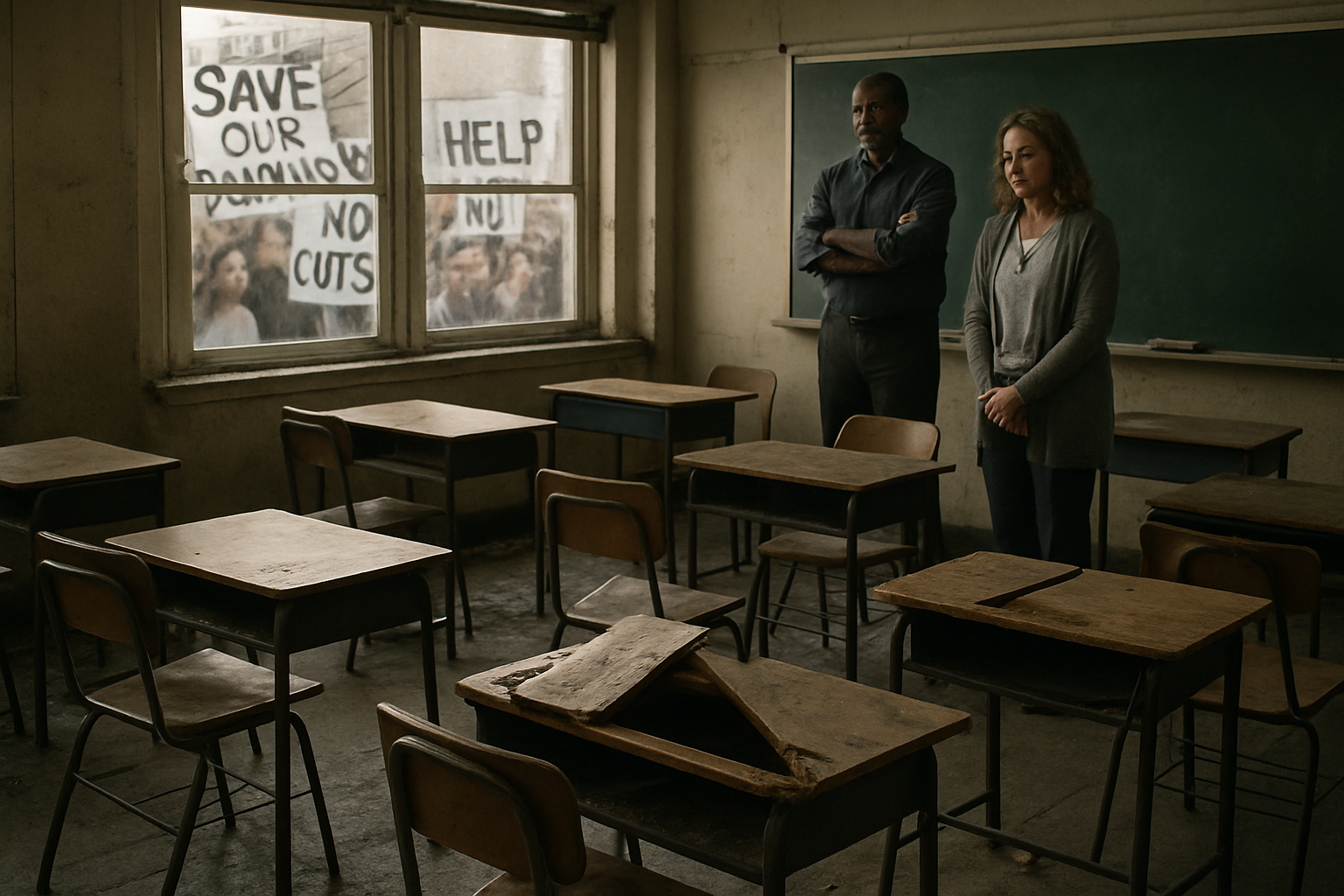
Educational systems across three continents are experiencing unprecedented challenges as Bangladesh grapples with university leadership transitions, New Zealand confronts systematic failures in child safety oversight, and Senegal faces deadly student protests following the tragic death of a medical student during campus unrest.
The convergence of these crises in February 2026 underscores the global nature of educational system failures, spanning administrative instability, regulatory breakdown, and violent confrontations that threaten the fundamental mission of educational institutions to provide safe, stable learning environments.
Bangladesh: University Leadership in Transition
Dhaka University Vice Chancellor Dr. Niaz Ahmad Khan has clarified his intention to step down following upcoming elections, marking another significant transition in Bangladesh's higher education leadership. According to sources from Dhaka Tribune, Khan will continue in his role temporarily "if needed to avoid disruption," citing his achievements in "stabilizing academics, boosting rankings, and restoring democratic processes."
This leadership transition comes at a critical time for Bangladesh's educational sector, which has been working to rebuild institutional credibility and academic standards. The Vice Chancellor's emphasis on continuity suggests ongoing concerns about administrative stability affecting one of the country's most prestigious universities.
The situation reflects broader challenges facing university governance in developing nations, where political pressures and institutional reforms often intersect with academic leadership decisions. Khan's accomplishments in improving university rankings and stabilizing academic operations highlight both the progress made and the fragile nature of these improvements.
New Zealand: Child Safety System Under Fire
New Zealand's educational oversight system faces intense scrutiny following revelations that the Teaching Council has neglected child safety responsibilities, prompting calls for "transformative change" according to a comprehensive review reported by the New Zealand Herald.
Teaching Council chief executive Lesley Hoskin is currently on agreed leave pending an independent investigation into her conduct, highlighting the severity of the institutional failures. The crisis represents a fundamental breakdown in the regulatory framework designed to protect children within New Zealand's education system.
"The review finds that child safety has been systematically neglected, requiring immediate transformative action to restore public confidence in our educational oversight systems."
— New Zealand Herald Report
This revelation is particularly damaging for New Zealand, which has long prided itself on robust child protection frameworks. The crisis suggests that regulatory capture and institutional complacency may have undermined the very systems designed to safeguard children's welfare in educational settings.
The investigation's findings could have far-reaching implications for how educational authorities worldwide approach child safety protocols, particularly in the oversight of teaching professionals and institutional compliance mechanisms.
Senegal: Deadly Campus Violence Rocks UCAD
The University Cheikh Anta Diop of Dakar (UCAD) has become the epicenter of a tragic confrontation between students and authorities, resulting in the death of medical student Abdoulaye Ba during clashes between students and security forces. The incident has sparked nationwide outrage and highlighted deep-seated problems within Senegal's higher education system.
President Bassirou Diomaye Faye faces mounting criticism for his handling of the crisis, with observers calling his response an "incomprehensible error" according to local media coverage. The president's perceived failure to adequately address student grievances has intensified public scrutiny of his administration's education policies.
Senegalese rapper Niit Doff expressed widespread public sentiment, declaring the situation "a shame" and exploding with anger over what he termed "flagrant injustice" suffered by students. His public condemnation reflects the broader social outrage surrounding the university crisis.
Students at UCAD have issued a powerful statement capturing the depth of their desperation: "We are starved, tortured, betrayed, deceived, disappointed, and one of our own has been killed." This declaration reveals the multiple dimensions of crisis facing Senegalese higher education, extending beyond immediate safety concerns to fundamental issues of student welfare and institutional support.
Infrastructure and Resource Crises
The campus crisis at UCAD has been compounded by the closure of university restaurants and deteriorating social conditions, creating a perfect storm of administrative, infrastructural, and social challenges. Students report being denied basic necessities while facing increasing pressure from authorities.
These infrastructure failures reflect broader resource allocation problems affecting educational institutions across developing nations, where competing national priorities often leave universities inadequately funded and poorly maintained.
The restaurant closures at UCAD have eliminated essential food services for thousands of students, many of whom depend on these facilities for their primary daily meals. This crisis illustrates how seemingly administrative decisions can have profound impacts on student welfare and academic performance.
Global Context and Systemic Patterns
These simultaneous crises in Bangladesh, New Zealand, and Senegal reveal troubling patterns in global educational system governance. From administrative transitions and regulatory failures to violent confrontations and resource crises, educational institutions worldwide are struggling to maintain their fundamental missions.
The challenges span developed and developing nations alike, suggesting that educational system vulnerabilities transcend economic development levels. New Zealand's regulatory failures demonstrate that even well-funded systems with strong institutional reputations can experience catastrophic breakdowns in oversight and accountability.
Meanwhile, the situations in Bangladesh and Senegal highlight how political instability and resource constraints create compound pressures on educational institutions, forcing university leaders to navigate complex political and social dynamics while attempting to maintain academic standards.
International Response and Reform Imperatives
These crises occur within the broader context of what experts term the "2026 Educational Technology Renaissance," where institutions worldwide are grappling with rapid technological change, evolving student expectations, and shifting societal demands on education systems.
However, the fundamental challenges revealed in Bangladesh, New Zealand, and Senegal suggest that technological advancement alone cannot address deeper systemic problems related to governance, safety, and resource allocation.
Educational experts emphasize that comprehensive reform requires sustained political commitment, adequate resource allocation, effective oversight mechanisms, and genuine stakeholder engagement. The current crises demonstrate the consequences when these elements are absent or inadequately implemented.
Safety and Security Imperatives
The tragic death of Abdoulaye Ba at UCAD represents the most severe manifestation of educational system failures, where institutional conflicts escalate to fatal violence. This outcome underscores the urgent need for comprehensive conflict resolution mechanisms and de-escalation protocols within educational institutions.
Student safety concerns extend beyond immediate physical security to encompass broader welfare issues including adequate nutrition, housing, healthcare access, and psychological support services. The UCAD crisis illustrates how multiple welfare failures can combine to create explosive social tensions.
Educational institutions worldwide must recognize that student safety encompasses not just protection from external threats, but also ensuring that the institutional environment itself does not become a source of harm through neglect, inadequate resources, or heavy-handed administrative responses.
Path Forward: Systemic Reform Requirements
Addressing these global educational challenges requires coordinated international action and knowledge sharing among educational systems facing similar pressures. The diversity of crises - from leadership transitions to regulatory failures to violent confrontations - demands equally diverse and flexible response strategies.
Successful reform efforts must address multiple dimensions simultaneously: improving governance structures, ensuring adequate resource allocation, strengthening safety protocols, enhancing oversight mechanisms, and creating effective channels for addressing student grievances before they escalate to crisis levels.
The international education community must learn from these failures to prevent similar crises elsewhere. This includes developing early warning systems for institutional instability, creating robust safety nets for student welfare, and establishing rapid response mechanisms for educational emergencies.
Most critically, educational leaders worldwide must recognize that maintaining institutional credibility requires transparent communication, accountability for failures, and genuine commitment to student welfare above all other considerations. The crises in Bangladesh, New Zealand, and Senegal serve as stark reminders of the consequences when these principles are compromised or ignored.