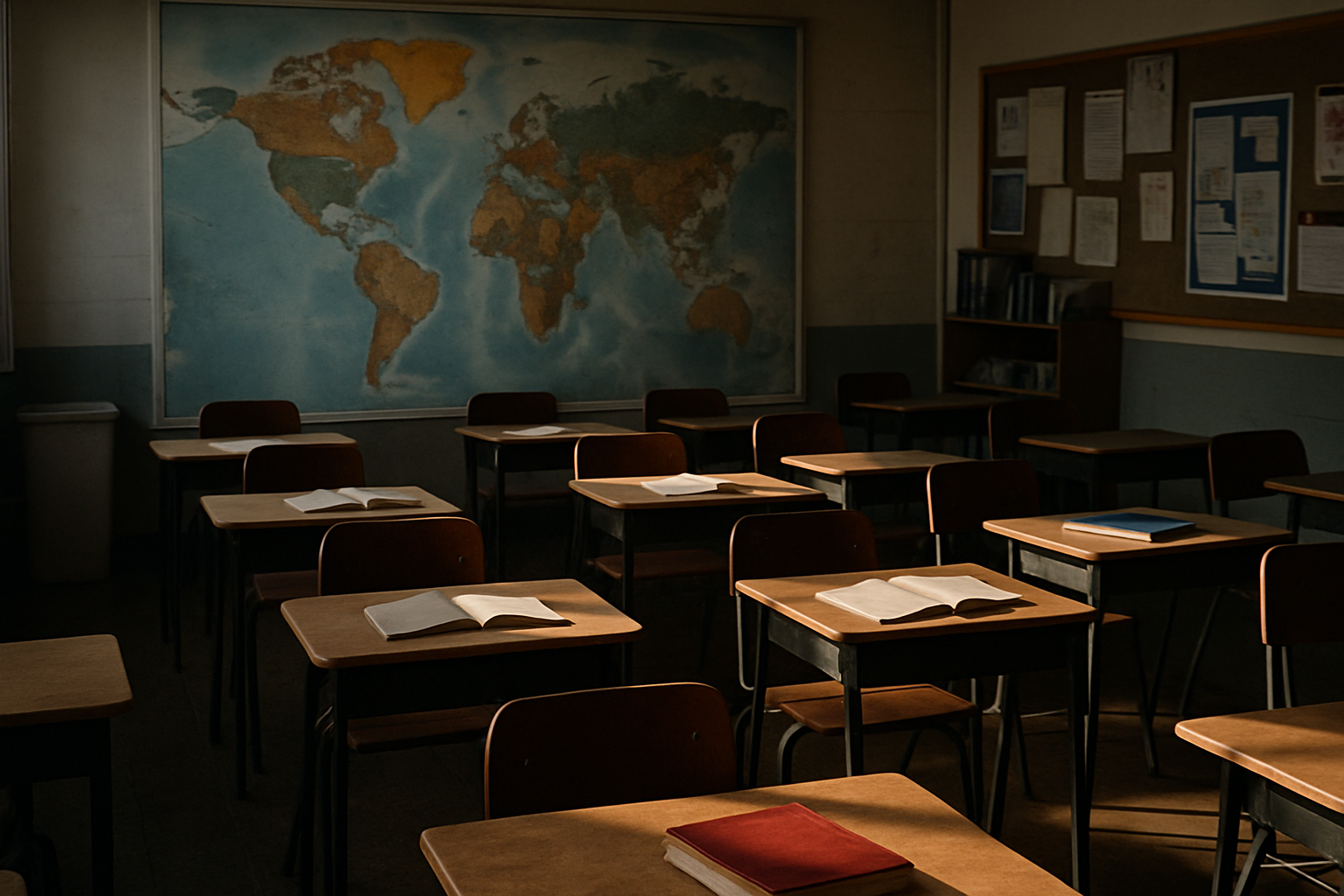
A sweeping analysis of education systems across six countries reveals a deepening global crisis affecting millions of students, as teacher pay disputes, infrastructure failures, and curriculum battles create unprecedented challenges for educational institutions worldwide.
From Estonia's broken teacher salary promises to Mozambique's delayed school openings, education systems are grappling with fundamental issues that threaten the quality and accessibility of learning. This investigation, examining developments across Estonia, Finland, Hungary, Mozambique, New Zealand, and Senegal, exposes systemic failures that extend far beyond individual national borders.
Teacher Compensation Crisis Reaches Breaking Point
In Estonia, the education union has raised serious concerns about unfulfilled government promises regarding teacher salaries. Despite commitments to increase minimum teacher salaries to 1,970 euros starting January 1, 2026, educators report receiving significantly less than promised amounts. The Baltic Times reports that while the state provided necessary funding, the actual implementation has left teachers feeling betrayed by broken commitments.
This compensation crisis reflects broader global trends documented in recent educational assessments. Historical context from February 2026 shows similar struggles worldwide, with countries implementing various strategies to address teacher retention and motivation challenges.
Curriculum Politics and Ideological Battles
Hungary presents perhaps the most stark example of how political ideology has infiltrated educational policy. According to comprehensive research published in Educatio magazine, the Fidesz government's educational policies since 2010 have systematically increased social inequalities while diminishing educational opportunities. The centralization of education has exacerbated rather than resolved existing problems, with researchers noting that only teachers' ability to "maintain the appearance of order" prevents discussion of a "serious crisis."
"The different social groups' opportunities have decreased, the quality has deteriorated, but we cannot speak of a serious crisis only because teachers are still able to maintain the appearance of order."
— Education Researchers, Educatio Magazine
The Hungarian case illustrates how political centralization can undermine educational effectiveness, creating a system that appears functional on the surface while fundamental problems persist beneath.
Infrastructure and Safety Challenges
Infrastructure problems plague education systems globally, with Mozambique facing particularly acute challenges. According to O País reports, several schools will not open on time for the current academic year due to infrastructure deficiencies. This delay affects thousands of students and highlights the critical connection between physical educational infrastructure and learning accessibility.
Finland faces different but equally serious safety concerns within its educational protection systems. Following the death of a young person who escaped from a child welfare placement facility in Pirkanmaa in January, Child Ombudsman officials have emphasized that "these children are in really great danger." The incident, currently under investigation by both police and the Accident Investigation Centre, underscores the complex challenges facing educational and social support systems.
Financial Accessibility and Student Support
New Zealand's School Boards Association has called for reduced uniform costs following the distribution of over 38,000 hardship payments to help parents with school expenses in 2025. This initiative highlights the growing financial barriers facing families in accessing education, even in developed nations with strong social support systems.
The uniform cost issue may seem minor compared to other global education challenges, but it represents a significant barrier to educational participation for economically disadvantaged families. The substantial number of hardship payments demonstrates the scale of financial pressure on families attempting to meet basic educational requirements.
Student Engagement and Assessment Disputes
In Senegal, the Ministry of Education has taken a firm stance against students refusing to participate in evaluations. This "heightened tone" from educational authorities reflects broader challenges in maintaining academic standards and student engagement across different cultural and economic contexts.
The resistance to educational assessments in Senegal connects to broader questions about educational relevance and student motivation that educators worldwide are confronting. When students systematically refuse to engage with evaluation processes, it signals deeper issues within educational systems that extend beyond simple disciplinary concerns.
Global Context and Historical Patterns
These contemporary challenges build upon patterns identified in recent educational developments worldwide. Previous investigations have documented how countries from Taiwan to Uganda are implementing diverse strategies to address post-pandemic educational recovery, including tuition freezes, technology integration, and targeted interventions for specific demographic groups.
The current crisis represents an intensification of long-standing issues rather than entirely new phenomena. Malaysia's innovative AI-integrated Islamic schools and Taiwan's historic tuition freeze demonstrate that some countries are finding creative solutions, while others struggle with more fundamental systemic problems.
Systemic Analysis: Common Threads
Several common themes emerge across these diverse national contexts:
- Resource Allocation Disputes: Whether involving teacher salaries in Estonia or infrastructure in Mozambique, funding remains a critical challenge
- Political Interference: Hungary's experience demonstrates how ideological considerations can compromise educational effectiveness
- Accessibility Barriers: From New Zealand's uniform costs to Mozambique's infrastructure delays, various factors limit educational access
- Safety and Protection Concerns: Finland's child welfare challenges highlight the broader protective responsibilities of educational systems
- Student Engagement Issues: Senegal's assessment resistance reflects global challenges in maintaining educational relevance and motivation
Economic and Social Implications
The cumulative impact of these educational challenges extends far beyond immediate classroom concerns. When education systems fail to deliver quality, accessible learning opportunities, entire societies face long-term consequences in terms of economic competitiveness, social mobility, and democratic participation.
Countries implementing successful interventions, such as Taiwan's comprehensive student support programs and Malaysia's technology integration initiatives, demonstrate that strategic investments can yield significant returns. However, the scale of challenges documented across Estonia, Hungary, Mozambique, and other nations suggests that more fundamental systemic reforms may be necessary.
Looking Forward: Reform Imperatives
The evidence from these six countries suggests that educational systems worldwide require comprehensive reforms addressing multiple dimensions simultaneously. Piecemeal solutions addressing individual symptoms—whether teacher pay, infrastructure, or student engagement—prove insufficient when systemic problems persist across multiple areas.
Successful educational reform requires coordinated attention to resource allocation, political governance, accessibility barriers, safety protocols, and student engagement strategies. The contrasting experiences documented across different national contexts provide valuable lessons for policymakers worldwide, but also underscore the complexity of implementing effective educational change.
As education systems continue to evolve in response to post-pandemic challenges, demographic changes, and technological innovations, the experiences documented in Estonia, Finland, Hungary, Mozambique, New Zealand, and Senegal offer crucial insights into both the pitfalls to avoid and the strategies that show promise for creating more effective, equitable, and accessible educational opportunities for all students.