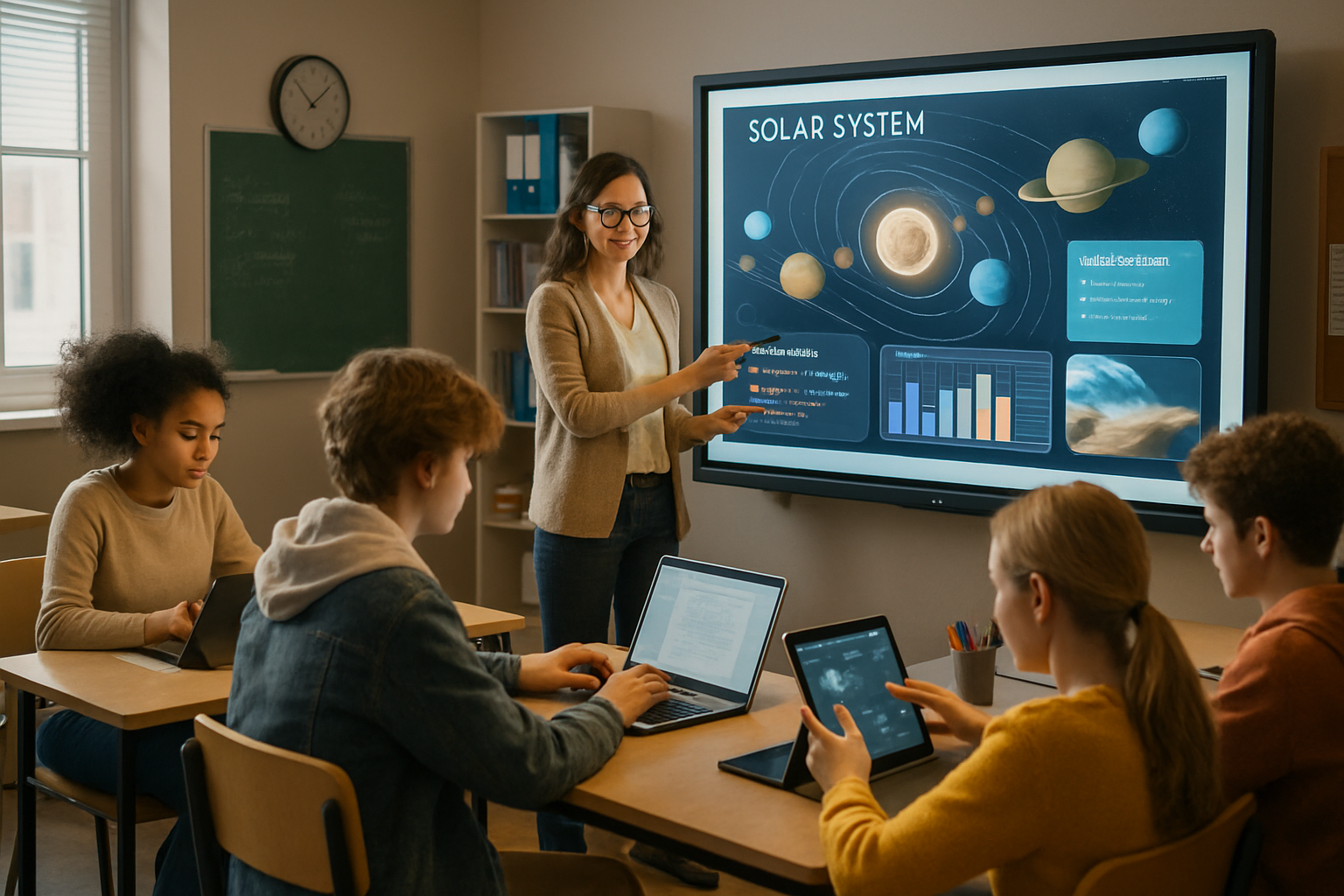
Educational systems worldwide are undergoing their most significant transformation since the post-World War II expansion, with institutions from Bolivia's mountainous regions to Vietnam's rapidly growing cities pioneering innovative approaches to digital learning that preserve cultural values while embracing technological advancement.
In Bolivia's El Alto district, the República del Japón B school became the latest recipient of the "Líderes Digitales para el Cambio Social" (Digital Leaders for Social Change) project, as the country advances its comprehensive digital education initiative. First Lady María Elena Urquidi de Paz and Education Minister Beatriz García presided over the technology equipment delivery, emphasizing that the program goes beyond hardware provision to cultivate "a generation of students with digital skills, critical thinking, and leadership capabilities."
Simultaneously, Vietnam faces unprecedented educational expansion challenges as Hanoi prepares to construct nearly 1,000 new schools by 2045 to accommodate a student population growing by tens of thousands annually. The draft master plan, open for public consultation until March 23, addresses critical overcrowding issues with some classes reaching 60 students.
The 2026 Educational Technology Renaissance
These developments represent what experts are calling the "2026 Educational Technology Renaissance" - a coordinated international movement emphasizing thoughtful digital tool integration with traditional educational values rather than wholesale technological replacement. This transformation addresses multiple dimensions simultaneously: technological integration, teacher development, student welfare, and fiscal sustainability.
Malaysia has emerged as a global leader with the world's first AI-integrated Islamic school, achieving an remarkable 97.82% teacher placement rate while successfully combining artificial intelligence with traditional religious and academic learning approaches. Singapore's WonderBot 2.0 conversational AI system has revolutionized heritage education, while Canadian universities have implemented AI teaching assistants that maintain critical thinking standards rather than replacing human judgment.
Bolivia's approach exemplifies this balanced integration strategy. The project utilizes Enseña por Bolivia as the pedagogical component, ensuring that technology serves educational goals rather than becoming an end in itself. The initiative has already demonstrated success in rural Santa Cruz areas, reinforcing the government's commitment to integrating "technology, connectivity, and educational excellence" across diverse geographic regions.
Infrastructure Challenges and Creative Solutions
The global transformation faces significant infrastructure constraints, particularly the ongoing memory crisis that has driven semiconductor prices sixfold higher, affecting companies like Samsung, SK Hynix, and Micron. This shortage creates bottlenecks for AI-powered educational programs until new manufacturing facilities come online in 2027.
Vietnam's infrastructure challenges are particularly acute, with the national government requiring 986 new schools over the next two decades. The massive construction program reflects not just population growth but also urbanization pressures as families migrate to cities for economic opportunities. Class sizes hitting 60 students underscore the urgency of addressing both physical infrastructure and educational quality simultaneously.
However, these constraints have paradoxically driven innovation toward more efficient, sustainable technology integration approaches. Educational institutions are discovering that the most successful programs treat technology as amplification tools serving educational goals rather than wholesale replacements for human relationships.
"The meta del proyecto no se limita a la entrega de equipos tecnológicos, sino a impulsar una generación de estudiantes con habilidades digitales, pensamiento crítico y capacidades de liderazgo."
— Bolivia Education Ministry Statement
Cultural Preservation Within Global Competitiveness
One of the most significant aspects of this educational transformation is how different nations maintain cultural authenticity while embracing global competencies. Bolivia's program specifically emphasizes developing students who can "integrate fully into the challenges of the contemporary world" while maintaining strong cultural foundations.
Malaysia's AI-integrated Islamic school model demonstrates how technological advancement can enhance rather than replace cultural transmission, creating graduates who are globally competitive yet culturally grounded. This approach contrasts sharply with standardized solutions, showing that effective educational modernization requires adaptation to specific cultural, economic, and social contexts.
The success factors identified across multiple nations include sustained political commitment beyond electoral cycles, comprehensive stakeholder engagement incorporating educators, students, families, and communities, and adequate resource allocation for long-term sustainability.
Economic Implications and Strategic Investment
Countries implementing comprehensive, prevention-focused educational approaches demonstrate superior economic outcomes through reduced crisis intervention costs, decreased unemployment, and improved workforce productivity. Educational investments are increasingly viewed as strategic infrastructure for 21st-century prosperity rather than cost centers.
Vietnam's billion-dollar school construction program represents one of the largest educational infrastructure investments in Southeast Asia. The initiative addresses immediate capacity needs while positioning the country for long-term economic competitiveness in an AI-integrated global economy.
Bolivia's digital education investment creates self-reinforcing cycles where educational excellence supports economic development, enabling further educational investment. The program's focus on rural areas specifically addresses historical inequities that have limited economic opportunities in mountainous regions.
International Cooperation and Knowledge Sharing
The 2026 Educational Technology Renaissance demonstrates unprecedented international cooperation through bilateral partnerships, multilateral frameworks, and peer-to-peer knowledge sharing networks. This distributed cooperation model proves more resilient than traditional top-down approaches, allowing culturally responsive strategies while maintaining evidence-based standards.
Regional frameworks are emerging that enable smaller nations to access expertise while contributing innovations to the global knowledge base. Bangladesh-Malaysia partnerships, Commonwealth Youth Awards, and African-Asian initiatives illustrate diverse collaboration pathways that respect sovereignty while sharing successful approaches.
Educational experts emphasize that effective transformation requires technology serving educational goals rather than replacing the fundamental human relationships that define authentic education. The most promising initiatives worldwide prioritize human-centered approaches that treat technology as enhancement tools.
Looking Forward: A Critical Juncture
March 2026 represents what analysts call a critical juncture in global educational policy development. The success or failure of current reform initiatives will determine educational trajectories for the coming decade, affecting global capacity to address climate change, technological disruption, and social cohesion through quality educational systems.
Vietnam's massive construction program and Bolivia's digital integration initiative provide valuable templates for other developing nations facing similar challenges. Their approaches demonstrate that educational modernization requires balancing technological advancement with human development, global competencies with local identity, and innovation with traditional educational wisdom.
The evidence suggests that the future belongs to educational systems that successfully integrate advanced technologies while preserving the fundamental human relationships, critical thinking skills, and cultural authenticity that define meaningful education. As these pioneering programs demonstrate results, they contribute to a growing global understanding of education as strategic infrastructure essential for human prosperity and democratic governance.
The transformation documented in Bolivia and Vietnam reflects a broader international recognition that educational excellence creates competitive advantages for nations while strengthening communities and preserving cultural heritage. Their success in balancing innovation with tradition may well establish the template for educational modernization worldwide.