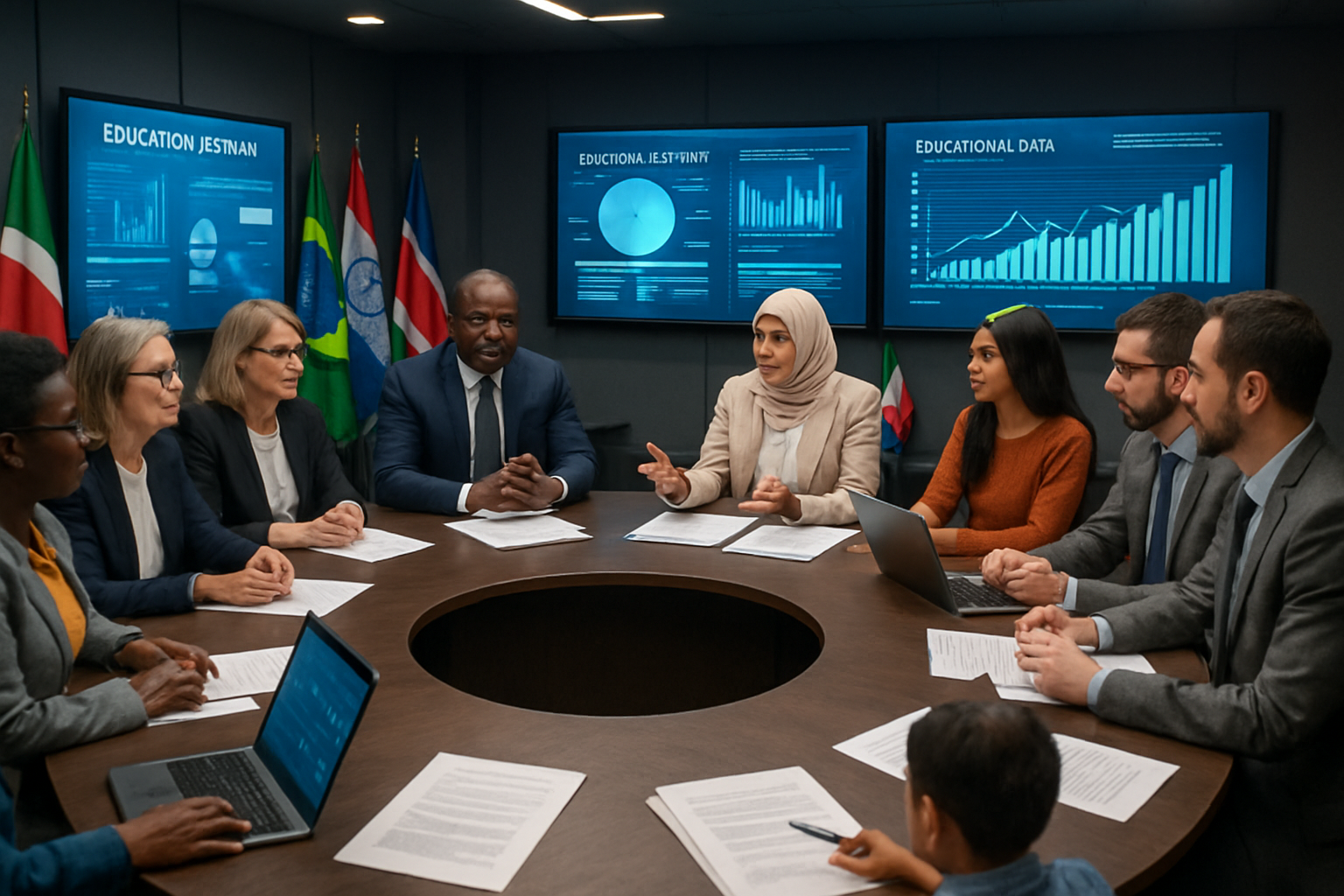
A comprehensive analysis of educational developments across Angola, Paraguay, and Pakistan reveals a coordinated global movement toward educational transformation, with each nation pursuing distinct yet complementary strategies to address systemic challenges in their educational sectors.
The week of February 6, 2026, marked significant educational policy developments across three continents, as governments grappled with the complex task of modernizing educational systems while addressing fundamental structural issues that have persisted for decades.
Angola's Leadership Transition Sparks Educational Reform Debate
In Angola, President João Lourenço's decision to replace Education Minister Luísa Grilo with Erika Linete Batalha de Carvalho Aires has generated intense debate about the country's educational priorities and reform strategies. The ministerial change, announced on February 6, 2026, comes at a critical juncture for Angola's education sector, which faces substantial infrastructure and quality challenges.
Admar Jinguma, Secretary General of the National Teachers' Union (SINPROF), expressed skepticism about the leadership change, arguing that Angola's educational problems require "a commitment and a political decision at the highest level" rather than personnel adjustments. This perspective reflects broader concerns about the systemic nature of educational challenges in post-conflict societies.
The criticism from both union leaders and political activists suggests that Angola's educational system requires comprehensive reform beyond administrative changes. José Carlos de Almeida, an MPLA militant, echoed concerns that superficial adjustments fail to address the underlying structural issues affecting educational quality and accessibility across the country.
"The problems in the education sector depend on a commitment and a political decision at the highest level."
— Admar Jinguma, SINPROF Secretary General
Paraguay's Cultural Investment Strategy
Meanwhile, Paraguay demonstrated a different approach to educational enhancement through cultural development. The National Fund for Culture and Arts (Fondec) launched its comprehensive 2026 national call for proposals, representing a significant investment in cultural and artistic education across the country.
The initiative, announced on February 6, 2026, aims to "strengthen cultural and artistic production by civil society" while "expanding access to culture throughout Paraguayan territory." This approach recognizes the crucial role that cultural education plays in developing well-rounded citizens and preserving national identity.
The Fondec program operates under the principles of cultural rights and positions culture as an "axis of integral development." This holistic approach to education extends beyond traditional academic subjects to include artistic expression, cultural preservation, and community engagement as essential components of national educational strategy.
Paraguay's model demonstrates how smaller nations can leverage cultural investment to enhance educational opportunities, particularly in rural and underserved communities where traditional educational infrastructure may be limited.
Pakistan's Comprehensive Curriculum Reform Initiative
Pakistan represents the most ambitious educational reform effort among the three nations, with the National Curriculum Council (NCC) Wing of the Ministry of Federal Education and Professional Training convening the National Curriculum Summit 2026 on February 11-12. This landmark gathering brings together senior political leadership, policymakers, curriculum experts, educators, researchers, assessment specialists, and technologists from across the country.
The summit, operating under the theme "New National Curriculum of Pakistan," serves as a critical forum for advancing comprehensive curriculum reform and educational transformation. The initiative builds upon implementation experiences of the existing National Curriculum of Pakistan (NCP) while charting a forward-looking pathway aligned with both national priorities and global educational trends.
The comprehensive nature of Pakistan's approach, involving multiple stakeholder groups and development partners, reflects the complexity of educational reform in populous developing nations. The summit's focus on both reflection and future planning demonstrates a mature approach to policy development that considers both practical implementation challenges and strategic long-term goals.
Pakistan's initiative occurs within a broader context of South Asian educational modernization, building on recent developments in neighboring countries while addressing the specific needs of Pakistan's diverse population and economic development goals.
Global Context and Emerging Patterns
These three national initiatives reflect broader global trends in educational reform that have characterized 2026 as a year of educational transformation. The diverse approaches taken by Angola, Paraguay, and Pakistan illustrate how different nations are adapting international best practices to their specific contexts and challenges.
Recent global educational developments include Malaysia's implementation of AI-integrated Islamic schools, Taiwan's historic university tuition freeze benefiting 910,000 students, and comprehensive reforms across European nations addressing everything from teacher shortages to digital literacy challenges.
The February 2026 educational landscape demonstrates a shift from crisis-response approaches to proactive, comprehensive reform strategies. Nations are increasingly recognizing that educational transformation requires sustained political commitment, adequate resource allocation, and broad stakeholder engagement.
Technology Integration and Cultural Preservation
A common thread among successful educational reforms in 2026 has been the balance between technological advancement and cultural preservation. While nations like Singapore have pioneered AI-powered learning systems such as WonderBot 2.0, and Canada has implemented responsible AI classroom integration, the emphasis remains on enhancing rather than replacing human-centered learning.
Paraguay's cultural investment strategy exemplifies this approach, using modern funding mechanisms and administrative systems to support traditional artistic and cultural education. This model has proven particularly effective in preserving indigenous knowledge while preparing students for participation in the global economy.
Pakistan's curriculum summit includes technology specialists alongside traditional educators, recognizing that 21st-century educational success requires both technological literacy and strong foundational knowledge in core academic disciplines.
Challenges and Implementation Considerations
The experiences of these three nations highlight common challenges facing educational reform worldwide. Infrastructure limitations, teacher training needs, funding constraints, and political instability continue to affect implementation success across different contexts.
Angola's leadership transition illustrates the ongoing challenge of maintaining reform momentum despite political changes. The criticism from education unions suggests that sustainable reform requires institutional commitment that transcends individual appointments or administrative adjustments.
Paraguay's approach through cultural funding demonstrates how nations with limited resources can leverage existing strengths to enhance educational opportunities, though the long-term sustainability of such programs depends on continued political support and economic stability.
Pakistan's comprehensive summit approach represents the gold standard for stakeholder engagement, but the challenge will be translating consultation outcomes into practical implementation strategies that can be sustained across diverse provincial contexts.
International Cooperation and Knowledge Sharing
The timing of these initiatives reflects the growing importance of international cooperation in educational development. Recent partnerships, such as the Bangladesh-Malaysia higher education MOU and various Commonwealth educational initiatives, demonstrate how nations are learning from each other's experiences while adapting strategies to local contexts.
The global educational transformation occurring in 2026 benefits from unprecedented information sharing and technical cooperation. Digital platforms enable rapid dissemination of successful practices, while international organizations provide frameworks for coordinated development efforts.
However, successful implementation ultimately depends on local capacity building, community engagement, and political commitment to sustained reform efforts. The diversity of approaches taken by Angola, Paraguay, and Pakistan demonstrates that there is no one-size-fits-all solution to educational challenges.
Looking Forward: Sustainable Development Goals
These educational reform initiatives contribute to broader international development goals, particularly Sustainable Development Goal 4, which calls for ensuring "inclusive and equitable quality education and promoting lifelong learning opportunities for all" by 2030.
The progress made by these three nations in early 2026 suggests that the global education community is gaining momentum toward achieving these ambitious targets. However, success will require continued international cooperation, innovative financing mechanisms, and adaptation to emerging challenges such as climate change impacts on educational infrastructure.
The integration of cultural education (Paraguay), systematic curriculum reform (Pakistan), and leadership accountability (Angola) represents a comprehensive approach to educational development that addresses multiple dimensions simultaneously rather than pursuing piecemeal reforms.
As these initiatives develop throughout 2026, they will provide valuable lessons for the global education community about effective strategies for transforming educational systems in diverse contexts. The success or failure of these efforts will influence educational policy development worldwide and shape the trajectory of international educational cooperation in the coming decade.