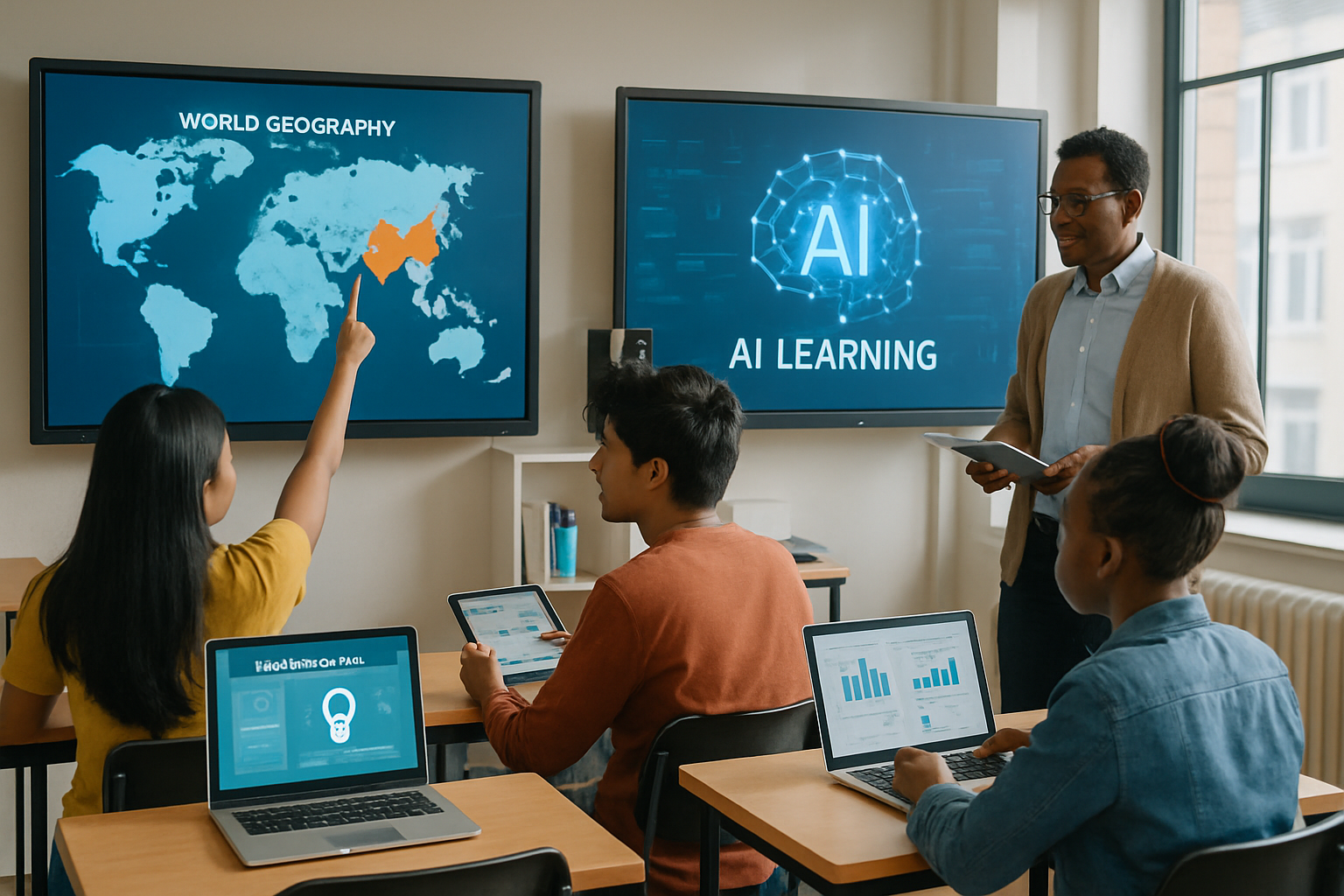
Educational systems across three continents are undergoing unprecedented transformation as the Philippines announces plans for a revolutionary trimester academic calendar, India accelerates digital assessment technologies, and Kenya modernizes examination registration systems, marking the latest developments in the global 2026 Educational Technology Renaissance.
The Philippine Department of Education (DepEd) has unveiled ambitious plans to implement a trimester system for students from kindergarten to Grade 12, targeting the 2026-2027 school year. Education Secretary Sonny Angara described the proposal as part of a "holistic approach" to quality education, emphasizing that the initiative aims to provide "longer, continuous learning time, better curriculum pacing, and less administrative burden for our teachers."
This radical departure from the traditional academic structure represents one of the most significant educational reforms in Southeast Asian history. Under the current Philippine system, the school year begins in June and concludes in March, featuring four quarters with scheduled breaks in October and December. The trimester model promises to revolutionize how educational content is delivered and absorbed, potentially serving as a template for other developing nations seeking to optimize academic calendars.
Digital Assessment Revolution Gains Momentum
Parallel developments in India showcase the accelerating shift toward digital educational technologies. Following the Central Board of Secondary Education (CBSE) pioneering efforts, Punjab Board has announced comprehensive on-screen evaluation of answer books for 2026 examinations, representing a fundamental transformation in how student performance is assessed across the world's largest educational system.
This digital evaluation revolution addresses multiple challenges simultaneously: reducing human error in assessment, enabling more consistent grading standards, facilitating faster result processing, and creating comprehensive data analytics for educational improvement. The shift reflects India's broader commitment to leveraging technology for educational advancement, building on the success of initiatives like Kerala Infrastructure and Technology for Education (KITE) AI-integrated entrance training programs.
The technological transformation extends beyond mere digitization. As documented in our analysis of Asia-Pacific educational developments, India's approach emphasizes accessibility and inclusive development, ensuring that AI-powered personalized learning analytics serve students across diverse socioeconomic backgrounds while maintaining educational equity as a core principle.
Streamlined Administrative Systems Emerge
Kenya's education ministry has announced that registration for the Kenya Primary School Education Assessment (KPSEA) will commence February 16, closing March 16, while Kenya Certificate of Secondary Education (KCSE) registration begins simultaneously, concluding March 31. This streamlined approach reflects broader administrative modernization efforts across African educational systems.
While seemingly procedural, these registration improvements represent critical infrastructure development in educational governance. Efficient examination systems form the backbone of educational quality assurance, enabling accurate student assessment, transparent academic progression, and reliable data collection for policy development.
Global Context and Regional Patterns
These developments occur within the broader context of what international observers have termed the "2026 Educational Technology Renaissance" – a coordinated global transformation encompassing Malaysia's AI-integrated Islamic schools, Singapore's WonderBot 2.0 conversational learning systems, and Taiwan's historic three-year tuition freeze affecting 910,000 students.
The Philippines' trimester proposal demonstrates sophisticated understanding of educational psychology and administrative efficiency. Longer, uninterrupted learning periods allow for deeper subject mastery, while reducing administrative transitions that often disrupt academic momentum. The initiative addresses teacher workload concerns by minimizing bureaucratic requirements, enabling educators to focus on instruction rather than administrative compliance.
India's digital assessment advancement represents the culmination of years of technological infrastructure development. The country's experience with UGC NET examinations, which recently declared results for over 5,100 Junior Research Fellowship candidates, provides the technical foundation for scaling digital evaluation across secondary education. This progression from higher education to secondary schooling demonstrates methodical, evidence-based implementation rather than rushed technological adoption.
Implementation Challenges and Solutions
Educational transformation at this scale faces significant obstacles. Global memory crisis conditions, with semiconductor prices surging sixfold, create infrastructure bottlenecks that may persist until 2027 when new fabrication facilities come online. These constraints particularly affect AI-powered educational systems requiring substantial computational resources.
Teacher training represents another critical challenge. Malaysia's remarkable achievement of 97.82% teacher placement rates (42,315 of 43,257 positions filled) provides a model for addressing workforce development needs. Successful educational reform requires not only policy changes but comprehensive professional development ensuring educators can effectively implement new systems.
Cultural adaptation emerges as equally important. Educational innovations must enhance traditional pedagogical strengths rather than replace fundamental teaching-learning relationships. The success of culturally sensitive approaches, such as Bhutan's integration of Gross National Happiness philosophy with modern educational technology, demonstrates how traditional values can coexist with technological advancement.
Economic and Social Implications
The economic implications of these educational reforms extend far beyond classroom improvements. Countries investing in comprehensive educational transformation report measurable improvements in student outcomes, enhanced international competitiveness, and stronger foundations for knowledge-based economic development.
The Philippines' trimester system could optimize resource utilization while improving learning outcomes. India's digital assessment revolution promises cost efficiency through reduced paper consumption, faster processing times, and more accurate evaluation methods. Kenya's streamlined registration systems reduce administrative costs while improving accessibility for students across the country's diverse geographic regions.
Social implications prove equally significant. Educational modernization often catalyzes broader social transformation by demonstrating institutional capacity for change, building public confidence in government effectiveness, and creating momentum for additional reforms across multiple sectors.
International Cooperation and Knowledge Sharing
The success of these individual national initiatives depends increasingly on international cooperation and knowledge sharing. Bangladesh-Malaysia educational partnerships, Commonwealth Youth Awards programs, and peer-to-peer collaboration networks provide mechanisms for sharing best practices, avoiding common implementation pitfalls, and scaling successful innovations across diverse contexts.
Regional organizations play crucial roles in facilitating this cooperation. The Association of Southeast Asian Nations (ASEAN) educational initiatives, African Union education programs, and European Union educational technology partnerships create frameworks for coordinated development while respecting national sovereignty and cultural differences.
Technology Integration Principles
Successful educational technology integration requires adherence to several key principles emerging from international experience. Technology must serve clear pedagogical objectives, ensuring digital tools enhance rather than distract from learning goals. Cultural sensitivity remains paramount, with technological solutions adapted to local values, languages, and educational traditions.
Balance between innovation and traditional educational values proves essential. Countries achieving sustainable educational transformation maintain this equilibrium by using technology to amplify human connections rather than replace them, supporting rather than supplanting teacher expertise, and preserving cultural knowledge while expanding global competencies.
Future Implications and Global Impact
The convergence of Philippine calendar innovation, Indian digital assessment advancement, and Kenyan administrative modernization represents more than isolated national reforms. These developments contribute to a global educational transformation that may determine how societies prepare citizens for increasingly complex 21st-century challenges.
Success in these initiatives could establish new international standards for educational governance, technology integration, and academic quality assurance. Conversely, implementation failures might set back educational modernization efforts and undermine confidence in technology-enhanced learning systems.
The broader implications extend to global competitiveness, democratic governance, and social cohesion. Countries successfully modernizing educational systems while maintaining cultural authenticity and educational equity will likely emerge as leaders in the global knowledge economy, while those failing to balance innovation with tradition may face increasing marginalization in international academic and economic networks.
Sustaining Educational Transformation
Long-term success requires sustained political commitment, adequate resource allocation, comprehensive stakeholder engagement, and realistic implementation timelines. Educational transformation cannot be achieved through policy declarations alone but demands persistent effort, continuous adaptation, and unwavering focus on student outcomes rather than technological novelty.
The February 2026 developments in the Philippines, India, and Kenya represent critical junctures in this global educational evolution. Their success or failure will provide valuable lessons for other nations considering similar reforms while contributing to our understanding of how traditional educational systems can adapt to contemporary challenges without losing their essential character and cultural grounding.
As these initiatives unfold throughout 2026 and beyond, they will serve as living laboratories for educational innovation, providing real-world evidence about the effectiveness of different approaches to modernizing educational systems while maintaining quality, equity, and cultural relevance in an interconnected world.