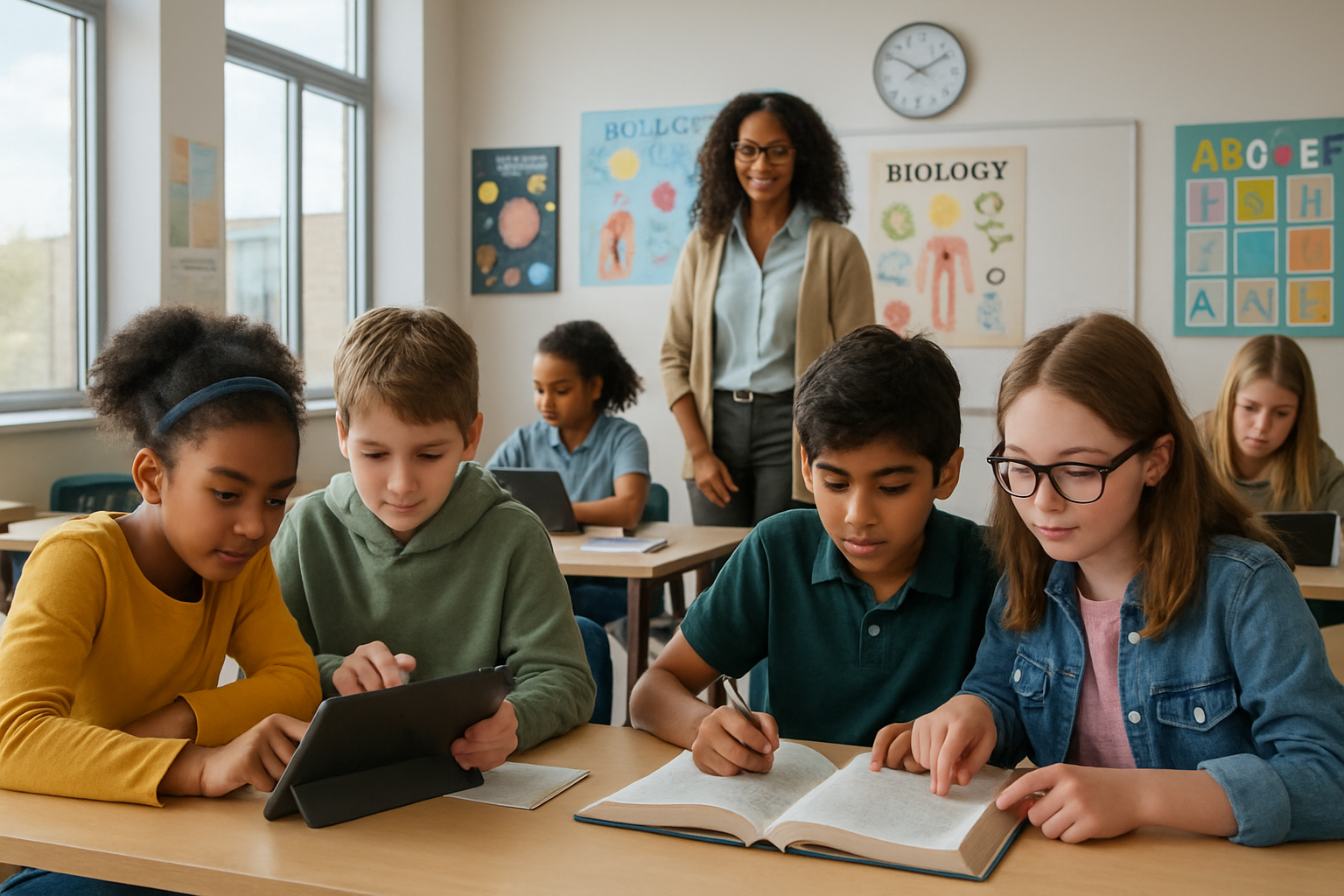
Educational institutions worldwide are implementing sweeping reforms aimed at improving learning outcomes and expanding accessibility, with initiatives ranging from addressing literacy challenges in Estonia to pioneering hybrid learning models in the Philippines and introducing new language curricula in Kenya.
The latest developments across four countries demonstrate a coordinated global movement toward educational modernization, reflecting the ongoing "2026 Educational Technology Renaissance" that emphasizes thoughtful integration of digital tools with traditional educational values while addressing fundamental accessibility concerns.
Estonia Confronts Literacy Crisis with Systematic Interventions
Estonia faces a concerning trend as the Programme for the International Assessment of Adult Competencies (PIAAC) Survey of Adult Skills reveals that the proportion of adults with low functional reading skills has increased significantly. This development represents a critical challenge for a nation that has built its reputation on digital innovation and educational excellence.
The findings indicate that nearly one-fifth of Estonian adults now struggle with functional reading skills, a situation that demands immediate attention from educational authorities. This literacy crisis highlights the importance of prevention-first approaches in education, where early intervention and systematic support can prevent long-term academic challenges.
"Functional literacy is the foundation of all learning and democratic participation. When adults struggle with basic reading skills, it affects their ability to contribute meaningfully to society and the economy."
— Educational Expert on Adult Literacy
Kenya Embraces Multilingual Education with Chinese Language Integration
Kenya's Teachers Service Commission (TSC) has announced ambitious plans to introduce Chinese language instruction across all schools nationwide, reflecting the country's recognition of shifting global dynamics and the increasing importance of Sino-African partnerships.
This groundbreaking initiative will require extensive teacher training programs to ensure educators are adequately prepared to implement the new subject effectively. The TSC emphasized that specialized training will be essential for successful rollout, positioning Kenya as a pioneer in multilingual education within the African context.
The Chinese language program represents more than just linguistic education—it reflects Kenya's strategic positioning in global affairs and its commitment to preparing students for an increasingly interconnected world where multiple language competencies provide significant advantages.
El Salvador Demonstrates Educational Equity Through Universal Support
El Salvador's Ministry of Education has implemented a comprehensive approach to educational equity through its systematic distribution of school packages to students across the country. The most recent initiative involved the Centro Educativo Abel Wilfredo Velasco Cárcamo in northern Ahuachapán, where authorities replaced uniforms and shoes that did not fit properly with appropriately sized items.
This attention to seemingly minor details—ensuring proper fit of school uniforms and shoes—exemplifies a holistic approach to educational support that recognizes how basic needs affect learning outcomes. When students lack proper clothing or feel uncomfortable due to ill-fitting uniforms, their ability to focus on academic content can be significantly compromised.
The initiative forms part of broader institutional efforts to improve learning conditions in public educational centers nationwide, prioritizing student wellbeing and comfort as essential components of effective education. These efforts include distributing complementary articles from school packages, reinforcing support for families and ensuring students have all necessary supplies for their educational process.
Philippines Pioneers Flexible Work Arrangements for Educational Professionals
The Philippines Department of Education has approved work-from-home (WFH) arrangements every Friday for school-based personnel during the end-of-school-year break, representing an innovative approach to educational administration that balances professional flexibility with operational requirements.
This policy recognizes that different types of educational work have varying location requirements and that professional satisfaction can be enhanced through flexible arrangements that don't compromise educational quality. The initiative reflects broader understanding that teacher satisfaction and wellbeing directly impact student outcomes.
Global Context of Educational Transformation
These developments occur within the broader context of the "2026 Educational Technology Renaissance"—a coordinated international movement toward thoughtful integration of digital tools with traditional educational values. Success factors identified across multiple countries include sustained political commitment beyond electoral cycles, comprehensive stakeholder engagement, and careful balance between technological advancement and human development priorities.
Countries implementing prevention-first educational approaches consistently demonstrate superior economic outcomes through reduced crisis intervention costs, decreased unemployment, and improved workforce productivity. Educational investments are increasingly viewed as strategic infrastructure for 21st-century prosperity rather than mere cost centers.
Implementation Challenges and Success Strategies
The global semiconductor crisis, which has driven memory chip prices to increase sixfold, is creating infrastructure bottlenecks for technology-dependent educational programs until new manufacturing facilities come online in 2027. This constraint is paradoxically driving innovation toward more efficient, sustainable technology integration approaches that emphasize educational enhancement rather than wholesale replacement of human learning relationships.
Successful educational reform initiatives share common characteristics: sustained political commitment that survives electoral cycles, comprehensive stakeholder engagement including educators, students, families, and communities, and adequate resource allocation for long-term sustainability. Cultural sensitivity and adaptation to local contexts prove superior to standardized solutions.
Economic and Strategic Implications
Educational investments generate measurable returns through enhanced community resilience, reduced long-term social service demands, and improved public health outcomes. Countries implementing comprehensive educational reforms report creating self-reinforcing cycles where educational excellence supports economic development, enabling further investment in human capital.
International cooperation has evolved beyond traditional financial assistance toward comprehensive support including cultural integration, language acquisition, and ongoing development systems. Regional frameworks enable smaller nations to access expertise while contributing innovations to global knowledge bases.
Future Trajectory and Critical Considerations
The success or failure of current reform initiatives will significantly determine educational trajectories for the coming decade, affecting global capacity to address climate change, technological disruption, and social cohesion through quality educational systems.
Educational systems must prepare students for an AI-integrated global economy while preserving human creativity, critical thinking, and cultural knowledge that define authentic educational excellence. The challenge lies in scaling successful approaches to match the pace of global challenges while respecting diversity of cultural contexts.
Evidence suggests that effective educational modernization requires maintaining human relationships that define meaningful education while embracing necessary technological advancement. The future belongs to educational systems that successfully integrate advanced technologies while preserving fundamental teacher-student-community relationships and cultural authenticity.
Path Forward
Current developments across Estonia, Kenya, El Salvador, and the Philippines provide valuable templates for worldwide educational transformation. Each nation demonstrates different approaches—Estonia addressing literacy foundations, Kenya expanding linguistic competencies, El Salvador ensuring comprehensive student support, and the Philippines innovating professional arrangements.
The window for effective coordinated action is narrowing as technological change accelerates and global challenges intensify. Success requires unprecedented coordination between governments, educational institutions, private sector partners, and international organizations to ensure schools become environments for human flourishing rather than sources of limitation.
These educational reforms represent a fundamental test of whether institutions can serve human development while adapting to rapidly changing global conditions. The stakes include whether millions of young people will have access to educational experiences that prepare them for success while preserving the essentially human elements that make learning transformative and meaningful.