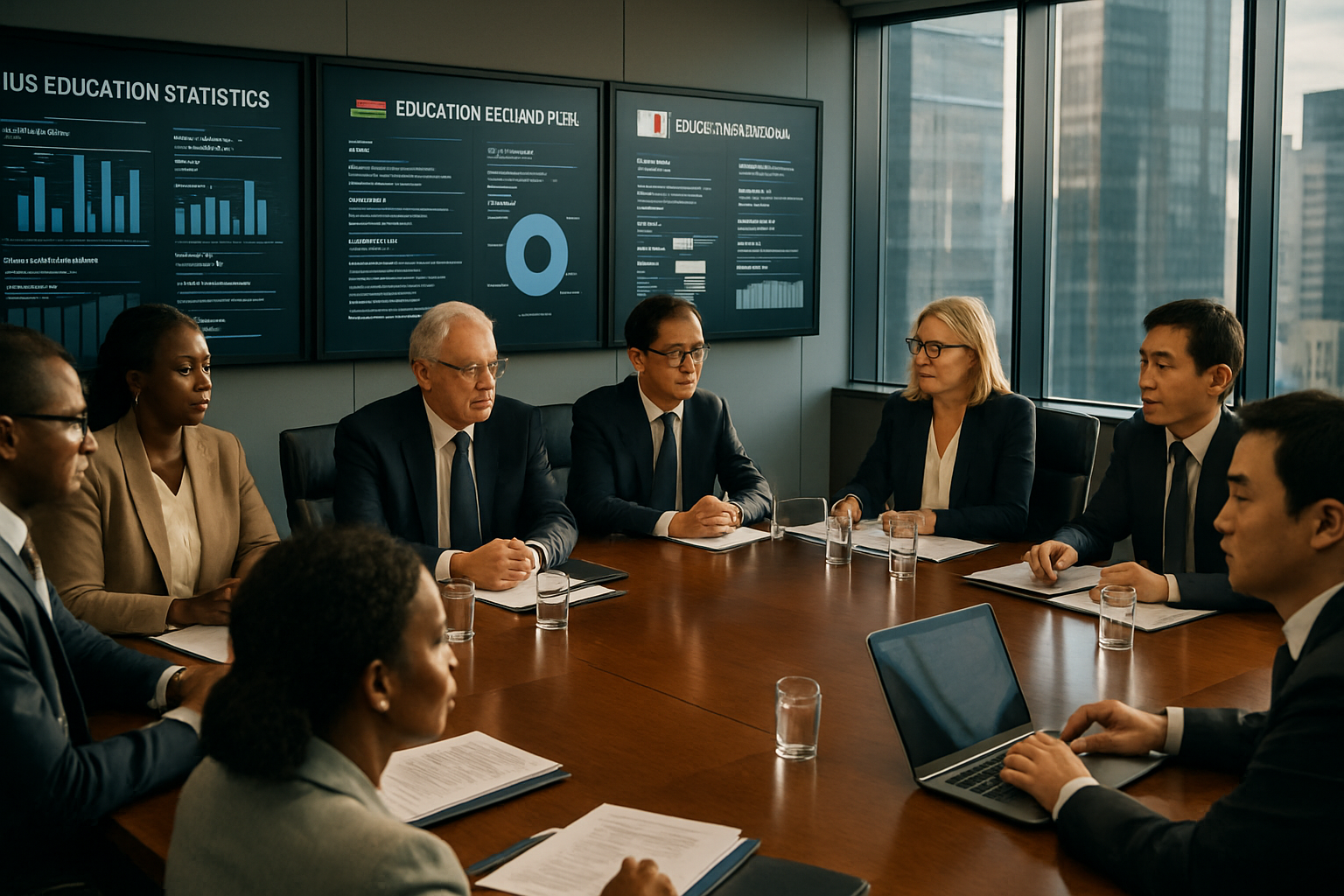
Educational systems across six nations are undergoing unprecedented transformation as governments and organizations implement comprehensive reforms addressing safety, technology integration, and international cooperation in response to evolving 21st-century learning demands.
From Dominica's disaster-preparedness equipment delivery to Cyprus's specialized academic partnerships, educational initiatives spanning multiple continents demonstrate coordinated efforts to modernize learning infrastructure while maintaining cultural authenticity and academic excellence.
Emergency Preparedness Meets Interactive Learning
In Dominica, IsraAID has completed a groundbreaking handover of essential media and learning equipment to 17 early childhood learning centers, creating a dual-purpose educational infrastructure that bridges interactive learning with disaster preparedness. The contribution package includes mini projectors, projector screens, Bluetooth speakers, and megaphones designed to modernize classroom instruction while strengthening emergency communication during safety drills.
IsraAID Country Director Mrs. Velma Moses Joseph emphasized during the handover ceremony that "safe schools create stronger communities." The initiative addresses the critical need for educational institutions that can function effectively during both normal operations and emergency situations, recognizing the intersection between learning environments and community safety infrastructure.
International Academic Partnerships Expand
Cyprus continues advancing its position as a Mediterranean educational hub through strategic international partnerships. The Cyprus Brain and Neuroscience Institute announced three new scientific scholarships targeting specialized fields including brain research, neuroscience, and genetics. These opportunities represent Egypt's Ministry of Higher Education's commitment to expanding international collaboration and accessing cutting-edge research facilities.
Meanwhile, the Philippines has launched the Dr. Magdalena Canag Cabaraban Memorial Fund, honoring a pioneering social scientist who demonstrated that "scholarship must not just serve journals but serve communities." The fund was established during the 2026 International Scientific Conference of the Philippine Population Association, emphasizing the importance of research that directly benefits society.
Crisis Response and Virtual Learning Adaptation
Peru faces significant challenges as the "Volvamos a clases Perú" collective announced protests against the Ministry of Education's decision to extend virtual classes until March 13 due to the country's ongoing energy crisis. The situation highlights the complex balance between educational continuity and infrastructure limitations, with parent groups demanding voluntary return to in-person instruction while authorities manage energy shortages affecting traditional classroom operations.
The controversy demonstrates broader global discussions about the role of virtual learning in educational systems and the importance of maintaining flexibility in educational delivery methods during infrastructure challenges.
Elite Mathematics Program in Vietnam
Vietnam is positioning itself as a regional leader in specialized education through an innovative mathematics program led by Fields Medal laureate Ngo Bao Chau. The Vietnam Institute for Advanced Study in Mathematics announced that Chau will personally interview and select students for a new honors math program at the country's two national universities.
The program offers comprehensive support including tuition waivers and monthly stipends of up to VND15 million (US$573), representing a significant investment in mathematical talent development. This initiative marks Chau's return to focus on Asian educational development after 15 years in the United States, emphasizing the growing trend of international academic talent contributing to home region development.
Infrastructure Development Challenges
Portugal continues addressing educational infrastructure needs with ongoing construction projects at schools in Leiria. Municipal authorities indicate that completion of the educational park development will require two additional academic years, highlighting the complex timeline and resource requirements for comprehensive educational infrastructure modernization.
These infrastructure projects represent broader global patterns where educational authorities balance immediate learning needs with long-term facility improvements, often requiring creative temporary solutions to maintain educational continuity during construction periods.
Global Technology Integration Trends
The educational developments occur within what experts are calling the "2026 Educational Technology Renaissance" - a coordinated international movement toward thoughtful digital tool integration with traditional educational values. Malaysia has achieved remarkable success with 97.82% teacher placement rates while pioneering the world's first AI-integrated Islamic school combining artificial intelligence with traditional religious and academic learning.
Singapore's WonderBot 2.0 heritage education system and Canada's responsible AI teaching assistants demonstrate successful models for maintaining critical thinking standards while leveraging technological advancement. These initiatives emphasize technology serving educational goals rather than replacing fundamental human relationships in learning environments.
Economic and Strategic Implications
Educational investments are increasingly viewed as strategic infrastructure for 21st-century economic competitiveness. Prevention-first educational approaches demonstrate superior economic outcomes through reduced crisis intervention costs, decreased unemployment, and improved workforce productivity. Countries implementing comprehensive educational reforms report enhanced community resilience, reduced social service demands, and improved public health outcomes.
The economic implications extend beyond immediate educational costs to long-term national competitiveness, with educational excellence creating self-reinforcing cycles where economic development supports further educational investment, attracting international partnerships and developing innovative economies.
Implementation Challenges and Solutions
Global educational transformation faces significant infrastructure challenges, including a ongoing semiconductor crisis affecting technology-dependent programs until new manufacturing facilities come online in 2027. This situation has forced educational systems toward more efficient, sustainable technology integration approaches that enhance rather than replace human learning relationships.
Success factors identified across multiple educational reform initiatives include sustained political commitment beyond electoral cycles, comprehensive stakeholder engagement incorporating educators, students, families and communities, adequate resource allocation for long-term sustainability, and careful balance between technological advancement and human development priorities.
International Cooperation Models
Educational cooperation is evolving beyond traditional financial assistance toward comprehensive support including cultural integration, language acquisition, and ongoing support systems addressing holistic student development needs. International partnerships enable knowledge sharing, technical assistance, and coordinated development efforts that prevent duplication of failed approaches while accelerating innovation.
Regional frameworks enable smaller nations to access expertise while contributing innovations to global knowledge bases, demonstrating that effective educational transformation requires adaptation to specific cultural, economic, and social contexts rather than standardized solutions.
Future Directions and Strategic Significance
March 2026 represents a critical juncture in global educational policy development, with current reform initiatives likely determining educational trajectories for the coming decade. The stakes include global capacity for addressing climate change, technological disruption, and social cohesion through quality educational systems serving as strategic infrastructure for 21st-century prosperity.
Successful educational transformation requires unprecedented coordination between technological innovation and educational wisdom, global competencies and local identity, efficiency and educational equity. Educational institutions that successfully navigate these requirements position themselves as leaders in preparing citizens for complex global challenges while preserving cultural knowledge essential for human flourishing.
The evidence suggests that effective educational modernization requires thoughtful technological tool adaptation serving specific cultural, economic, and social needs rather than wholesale replacement of human relationships that define authentic education. Success depends on maintaining human creativity, critical thinking, and cultural knowledge while preparing students for an interconnected global economy requiring both technical competence and cultural authenticity.