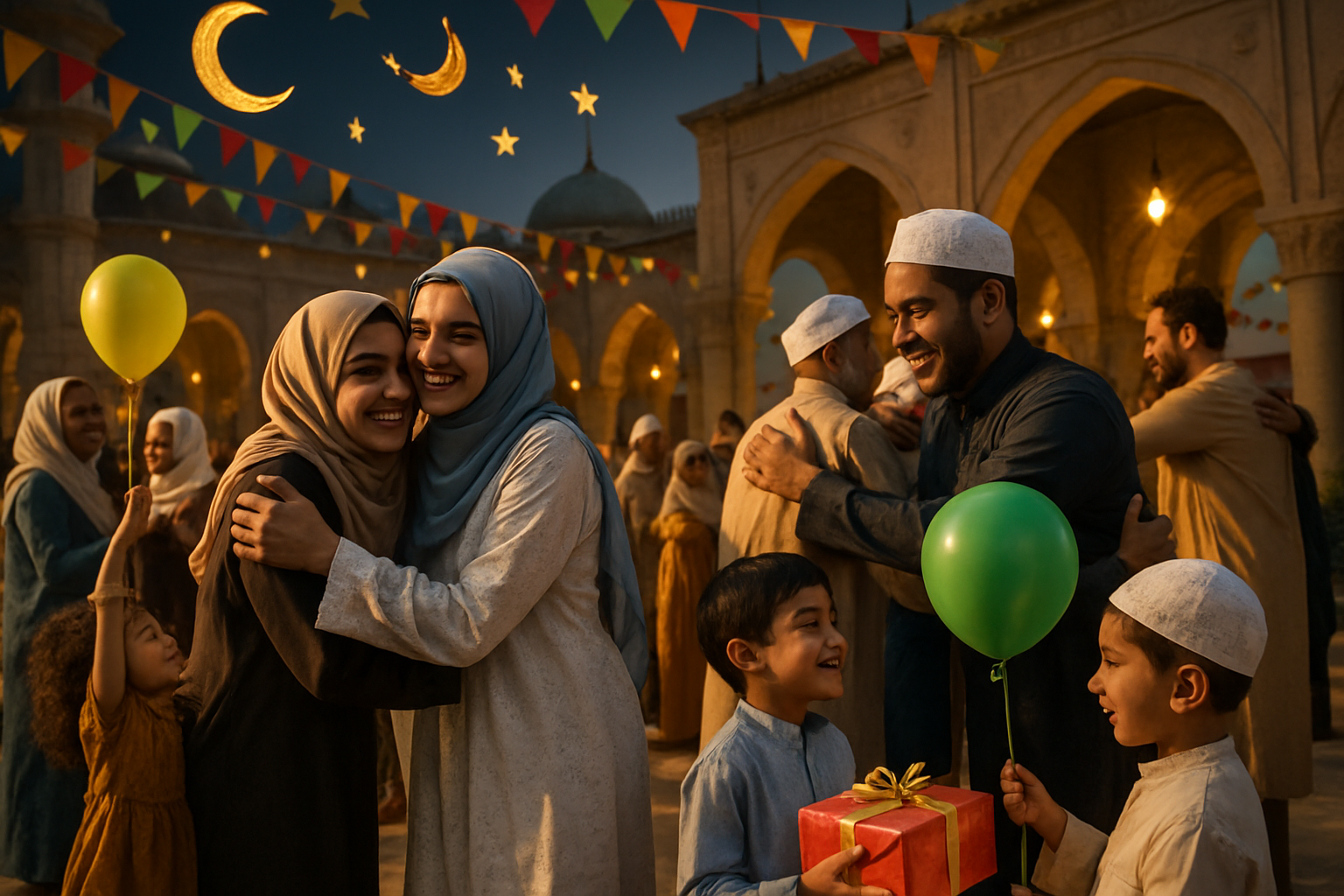
Nearly 2 billion Muslims across the globe celebrated Eid al-Fitr on Friday, March 20, 2026, marking the joyous conclusion of Ramadan 1447 AH in what religious leaders and international observers have described as the most internationally coordinated Islamic observance in modern history.
The celebrations, which began following moon sighting confirmations on March 19, represent the culmination of a month-long period of fasting, prayer, and spiritual reflection that saw unprecedented levels of international cooperation and cultural unity spanning from Senegal to Guyana, and from Burkina Faso to the Democratic Republic of Congo.
Presidential and Religious Leadership Messages
The scale and significance of this year's celebrations were underscored by messages from heads of state across the Islamic world. In Senegal, President Bassirou Diomaye Faye delivered a powerful address at the Grande Mosquée de Dakar, emphasizing the need to extend Ramadan's values of solidarity and compassion throughout the year.
"The lessons we have learned during this blessed month must not end with the celebration," President Faye told the gathered faithful. "They must become the foundation upon which we build our society."
— President Bassirou Diomaye Faye, Senegal
In Guyana, President Dr. Irfaan Ali continued his theme of national unity through shared prosperity, telling the Muslim community that "prosperity, like faith, must be nurtured and shared." Prime Minister Mark Phillips echoed these sentiments, calling for unity, compassion, and generosity as Guyana continues its path of development.
West African Celebrations Emphasize Unity
Across West Africa, Eid celebrations took on particular significance as communities emerged from the challenges of recent years with renewed hope and solidarity. In Burkina Faso, the Ahmadiyya Muslim Community called for extending Ramadan's spiritual essence into daily life, with religious leaders emphasizing the teachings of Prophet Muhammad and the importance of maintaining spiritual discipline beyond the holy month.
The city of Dédougou in Burkina Faso witnessed thousands of faithful gathering at the grand mosque and public spaces for the Eid prayer led by Grand Imam Mamadou Bâ. In his sermon, Imam Bâ invited the community to continue cultivating values of peace, forgiveness, and solidarity long after Ramadan's conclusion.
"The month that we have just completed teaches us patience, love of our neighbor, and living together. These values must continue to guide us throughout the year."
— Grand Imam Mamadou Bâ, Dédougou
International Coordination and Diplomacy
This year's Eid celebrations concluded what has been widely recognized as the most sophisticated international coordination of Islamic observance in history. Saudi Arabia's religious diplomacy program distributed 2.2 million Quran copies and translations to 120 countries, along with 1,000 tons of dates and the deployment of 91 imams to 49 nations to support Muslim communities worldwide.
The level of governmental accommodation was equally unprecedented. Educational institutions across Muslim-majority countries modified schedules to 9-10 AM start times, while businesses in countries like Egypt extended operating hours until 2:00 AM to accommodate evening social activities during iftar.
Technology Meets Tradition
The celebration also demonstrated the successful integration of modern technology with ancient spiritual practices. Mobile applications for prayer times, Quranic recitation, and charitable giving enabled global diaspora participation across time zones, while social media platforms facilitated virtual family connections for separated communities.
This technological synthesis maintained spiritual authenticity while adapting to contemporary global realities, creating what religious scholars describe as a template for future international religious observances.
Calls for Peace and Unity
In the Democratic Republic of Congo, Senator Salomon Idi Kalonda used the occasion to call upon the Muslim community both nationally and globally to cultivate peace. His message, shared on social media, emphasized the importance of unity among Congolese of all religious backgrounds during this period of celebration.
These calls for peace and interfaith solidarity resonated across multiple continents, reflecting Eid's role not only as a Muslim celebration but as a moment of broader cultural and spiritual significance that transcends religious boundaries.
Economic and Social Impact
The celebrations generated substantial economic activity through traditional Eid shopping for clothing, food, and gifts. The global Muslim diaspora contributed billions to local economies, while charitable giving reached unprecedented levels during both Ramadan and Eid, supporting conflict-affected populations and displaced persons worldwide.
Record-breaking donations were directed toward refugees, internally displaced persons, and communities facing humanitarian challenges, demonstrating the festival's emphasis on social responsibility and community support.
Historic Ramadan's Legacy
The 2026 Ramadan period, which concluded with these Eid celebrations, was marked by several historic achievements. It was the first time since 1967 that such extensive international coordination was achieved in religious observance. The month saw successful integration of traditional practices with contemporary organizational capabilities, creating lasting frameworks for international religious cooperation.
Educational institutions implemented innovative accommodations, such as Finland's "fasting parks" - dedicated quiet spaces for Muslim students during lunch periods - which have now been adopted as a model by schools across Europe and North America.
Looking Forward
Religious leaders across all celebrating nations emphasized that the true success of Ramadan 2026 would be measured not by the scale of its observance, but by how well its lessons of compassion, discipline, and community solidarity are maintained throughout the coming year.
As the celebrations continue into the weekend across different time zones and communities, the 2026 Eid al-Fitr stands as a testament to the enduring power of religious tradition to unite diverse communities while adapting to the realities of an interconnected world.
The success of this year's coordinated approach provides a template for future religious observances, demonstrating how ancient spiritual traditions can find meaningful contemporary expression through international cooperation, technological integration, and inclusive governmental policies that serve both individual spiritual growth and collective solidarity across cultural and national boundaries.