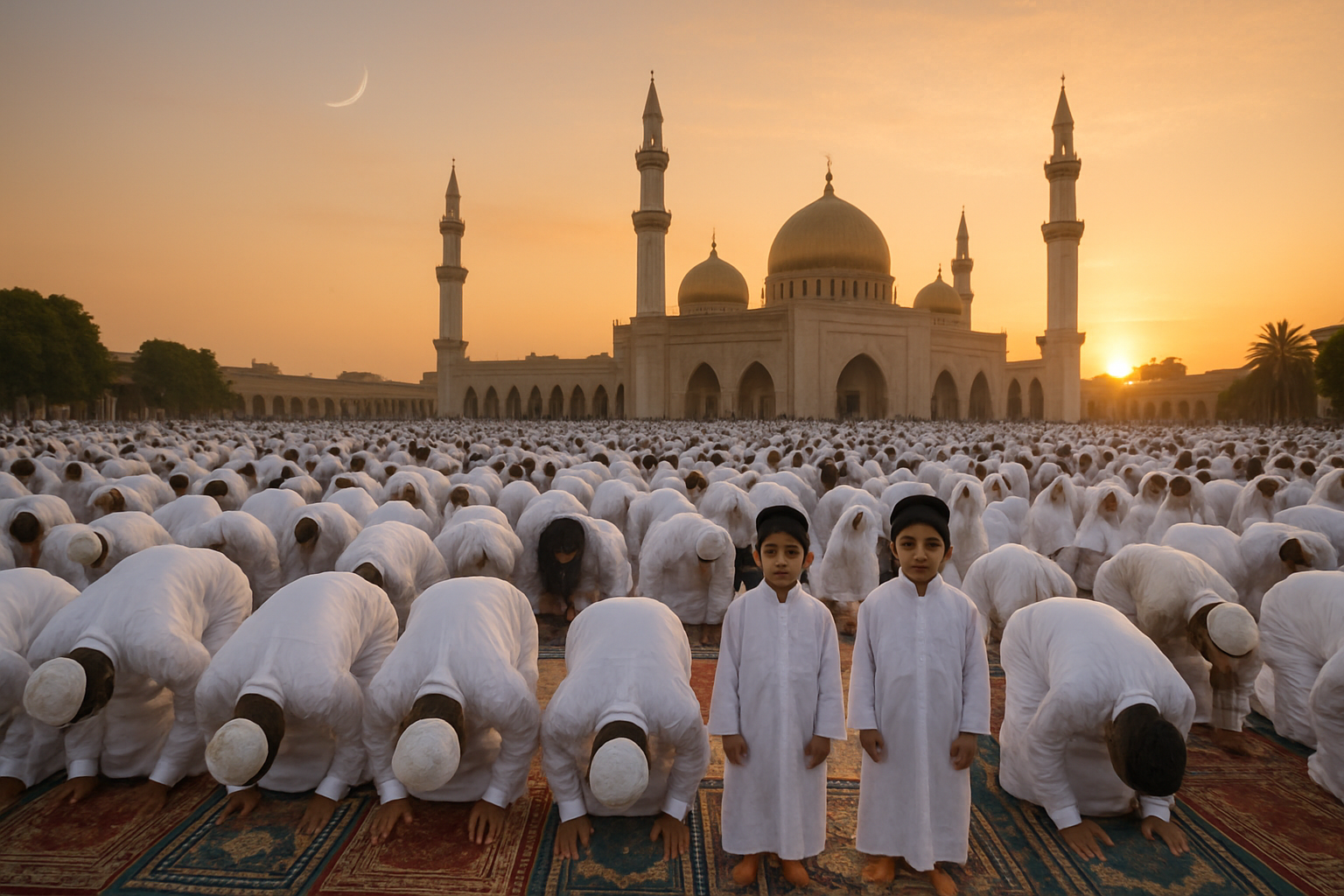
Muslims around the world are beginning their celebrations of Eid al-Fitr, the joyous festival marking the end of the holy month of Ramadan, with countries across different continents announcing celebration dates between March 20 and March 21, 2026.
The global Muslim community of nearly 2 billion people is concluding what has been described as one of the most internationally coordinated Ramadan observances in modern Islamic history, with celebrations now beginning based on local moon sighting confirmations and astronomical calculations.
Global Celebration Timeline Emerges
According to various Islamic authorities worldwide, the majority of Muslim-majority countries are celebrating Eid al-Fitr on Friday, March 20, 2026. Algeria's National Committee for Crescents reported that Brunei became the first country to announce the holiday for Saturday, March 21, following unsuccessful moon sighting attempts on Thursday evening.
Singapore's Mufti officially announced that Muslims in the city-state will celebrate Hari Raya Puasa on March 21, noting that Friday marks the completion of Ramadan's 30 days. This follows the traditional Islamic lunar calendar system where months can last either 29 or 30 days depending on moon visibility.
In Pakistan, the Central Ruet-i-Hilal Committee was scheduled to meet in Islamabad to determine the official date through moon sighting, with Chairman Maulana Abdul Khabir Azad presiding over the proceedings. The committee's decision carries significant weight for the country's 240 million population, including approximately 220 million Muslims.
Regional Coordination and Variations
The coordination of Eid celebrations reflects the sophisticated international cooperation that characterized Ramadan 2026. Saudi Arabia's unprecedented religious diplomacy program, which distributed 2.2 million Quran copies to 120 countries and dispatched 91 imams to 49 nations, set the tone for global Muslim unity during the holy month.
However, regional variations persist, demonstrating Islam's cultural diversity while maintaining spiritual unity. Different countries announce their Eid dates based on local moon sighting committees, with some following Saudi Arabia's lunar determinations while others rely on their own astronomical observations.
In Bosnia and Herzegovina, Reisul-ulema Husein-ef. Kavazović delivered a special Eid message emphasizing community support and solidarity. The message reflected the country's unique position as a European Muslim-majority nation, highlighting themes of mutual assistance and strength in doing good.
Government Preparations and Accommodations
Governments across the Muslim world have made extensive preparations for the Eid celebrations. Mozambique's Minister of Labour, Gender and Social Action, Ivete Alana, granted special leave to all public and private sector workers practicing Islam on March 20, 2026, though this doesn't apply to essential services.
The workplace accommodations reflect a broader pattern of governmental support that characterized Ramadan 2026, including modified working hours, extended business operations, and enhanced security measures for religious gatherings.
Celebrations Amid Regional Challenges
This year's Eid celebrations occur against a backdrop of significant regional challenges, particularly in conflict-affected areas. In Gaza, Palestinians are observing their first Eid since ongoing conflicts, with France 24 reporting that the holiday "highlights everything that has been lost" while still serving as an important spiritual anchor for the community.
The resilience of Eid celebrations in difficult circumstances underscores the festival's fundamental importance in Islamic culture, serving as a source of hope, community solidarity, and spiritual renewal regardless of external challenges.
Cultural and Economic Impact
Eid al-Fitr represents one of the most significant cultural and economic events in the Islamic calendar, typically involving increased consumer spending on clothing, food, gifts, and travel. The festival's economic impact extends far beyond Muslim-majority countries, with businesses worldwide adapting to serve Muslim communities during this important period.
The celebrations also demonstrate the successful integration of technology with traditional practices. Mobile applications for prayer times, Quranic recitation, and charitable giving have enabled global diaspora participation across different time zones while maintaining the essential spiritual character of the observance.
Interfaith Recognition and Global Unity
The 2026 Eid celebrations continue a trend of increased interfaith recognition, with non-Muslim leaders and institutions extending greetings and acknowledging the significance of the festival. This reflects growing global awareness of Islamic practices and the contributions of Muslim communities worldwide.
The festival's themes of spiritual purification, charitable giving, family bonds, and community solidarity resonate beyond religious boundaries, offering universal values that contribute to social harmony and international understanding.
Looking Forward
As Muslims worldwide begin their Eid al-Fitr celebrations, the festival marks not just the end of Ramadan but also the continuation of the spiritual and community bonds strengthened during the holy month. The successful international coordination of Ramadan 2026, characterized by unprecedented cooperation and technological integration while maintaining traditional authenticity, sets a positive precedent for global religious observance.
The celebration of Eid al-Fitr 2026 demonstrates how ancient spiritual traditions continue to find meaningful expression in contemporary global society, serving fundamental human needs for spiritual meaning, community connection, and cultural identity across nearly 2 billion Muslims worldwide.
As the festival unfolds over the coming days, it will undoubtedly strengthen the bonds of family, community, and global Muslim unity that have been cultivated throughout Ramadan 2026, while providing a joyous conclusion to what has been described as one of the most successfully coordinated religious observances in modern Islamic history.