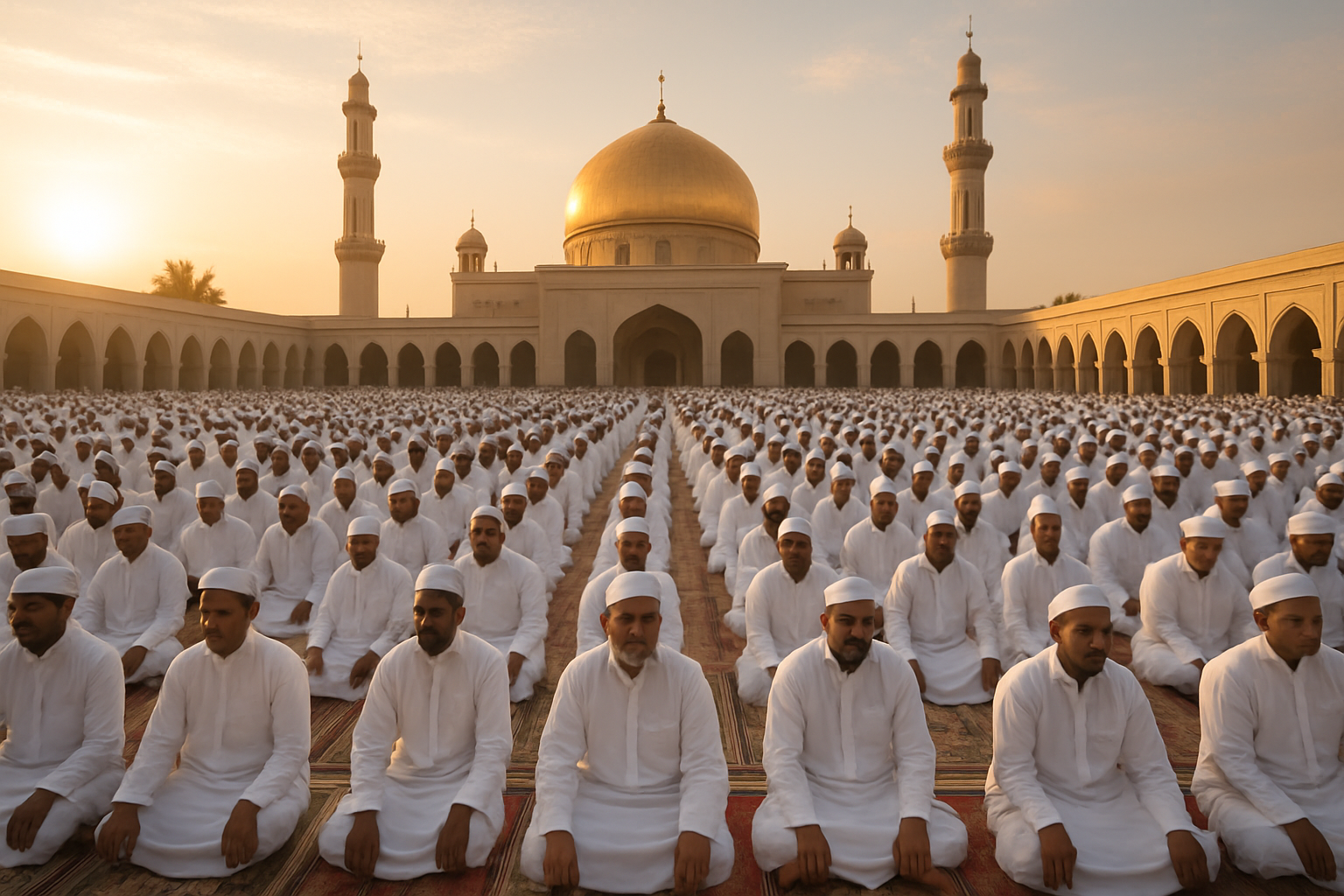
Nearly 2 billion Muslims around the world celebrated Eid al-Fitr on March 20, 2026, marking the joyous conclusion of the holy month of Ramadan with prayers, family gatherings, and charitable giving, while many called for peace amid escalating regional tensions in the Middle East.
The festival, which traditionally celebrates spiritual renewal and community unity, took on added significance this year as celebrations occurred against the backdrop of ongoing conflicts affecting Muslim communities from Lebanon to Gaza, and recent tensions between Pakistan and Afghanistan.
Global Celebrations United by Faith
From the bustling streets of Algiers to the prayer grounds of Ouagadougou, Muslims gathered in unprecedented numbers for the Eid prayers that mark the end of the month-long dawn-to-sunset fasting period. In Algeria, governors across the country led prayers alongside local authorities and citizens, embodying the spirit of national unity that characterizes the celebration.
The Algerian Ministry of Interior reported exceptional commitment from traders who maintained essential services during the holiday, with 55,738 merchants participating in special duty rotations to ensure continuous supply of basic goods and services - reflecting the community spirit that defines Eid al-Fitr.
In Burkina Faso, President Ibrahim Traoré joined the Muslim community for prayers in Ouagadougou, calling for strengthened social cohesion as the nation faces security challenges. The celebration at Place de la Nation saw Imam Cheikh Abdallah Ouédraogo leading prayers and emphasizing messages of peace and stability for the country.
Prayers for Peace Amid Regional Conflicts
This year's Eid celebrations were particularly poignant as they coincided with ongoing conflicts affecting several Muslim-majority regions. In Gaza, Palestinians celebrated their first Eid under a fragile ceasefire that has held for six months, with families making the most of the relative calm despite continued hardships and restrictions on aid.
Lebanese Muslims, facing displacement and uncertainty due to escalating tensions with Israel, found solace in the spiritual significance of the day even as many celebrated far from their homes. The humanitarian crisis affecting over 450,000 displaced Lebanese civilians added urgency to prayers for peace and stability.
"This Eid reminds us that faith endures, communities persevere, and hope survives even in the most challenging times."
— Religious Leader in Beirut
In the Philippines, Vice President Sara Duterte joined Muslim communities in celebrating while offering fervent prayers for world peace, specifically mentioning the ongoing Middle East crisis in her remarks to the faithful.
Regional Leaders Call for Unity
Across West Africa, the celebrations emphasized themes of national unity and peace. In Sierra Leone's capital Freetown, where the day was declared a public holiday, Mayor Yvonne Aki-Sawyerr participated in community celebrations, demonstrating the inclusive nature of the festivities that bring together people of all backgrounds.
Canadian Muslims, representing one of the largest Muslim communities in North America, gathered at mosques across the country, with many celebrations broadcast to include diaspora communities unable to travel due to ongoing global tensions. The Richmond Jamia Masjid in British Columbia saw particularly large gatherings, reflecting the growing Muslim population in Canada.
In Kuwait, military and civilian leaders conducted traditional visits to military installations and care facilities, with Army Chief of Staff General Khalid al-Shareaan emphasizing the high morale of forces and the importance of national unity. Similar visits occurred across the Gulf region, where leaders praised the commitment of security forces during the holiday period.
Economic and Social Impact
The celebration had significant economic implications, with Saudi Arabia's meteorological services forecasting varied weather conditions that would affect travel and outdoor celebrations across the Kingdom. The National Center for Meteorology predicted moderate to heavy rainfall across several regions, prompting authorities to prepare contingency plans for outdoor prayer gatherings.
Traditional Eid shopping provided a boost to retail sectors across Muslim-majority countries, with families purchasing new clothes, preparing special foods, and exchanging gifts. The economic activity was particularly welcomed given the challenging global economic climate affected by ongoing conflicts and energy price volatility.
Technology Bridges Distances
Modern technology played a crucial role in connecting Muslim communities worldwide, with virtual gatherings enabling separated families to share in the celebrations. Mobile applications facilitating prayer schedules, Quranic recitations, and charitable giving saw record usage as diaspora communities from Europe to North America participated in the global celebration.
Social media platforms were flooded with Eid greetings in dozens of languages, creating a digital tapestry of celebration that transcended geographical boundaries and brought together the global Muslim community despite physical distances caused by travel restrictions and regional conflicts.
Charitable Giving Reaches Record Levels
The tradition of Zakat al-Fitr - obligatory charity given at the end of Ramadan - took on added significance this year, with unprecedented amounts directed toward conflict-affected populations and displaced communities. Organizations across the Muslim world reported record-breaking charitable donations, reflecting the community's commitment to supporting those most in need.
From Nigeria to Indonesia, Muslim communities organized extensive food distribution programs, medical assistance, and financial support for refugees and internally displaced persons. The charitable response demonstrated the practical application of Islamic principles during times of crisis.
Historical Significance and Hope
The 2026 Eid al-Fitr celebrations will be remembered as a testament to the resilience of religious traditions and community bonds in the face of unprecedented global challenges. Despite restricted access to some holy sites, travel disruptions, and ongoing conflicts, the essential message of the festival remained constant: spiritual purification, community solidarity, and hope for a peaceful future.
Religious leaders across the Islamic world emphasized that while conflicts may limit physical gatherings in some regions, they cannot diminish the human capacity for faith, community, and hope. From grand mosques to makeshift prayer areas, the celebration demonstrated that spiritual traditions transcend physical limitations.
As Muslims worldwide concluded their month of fasting, reflection, and increased devotion, the global celebration served as a reminder of shared values and common humanity. The prayers for peace that echoed from mosques around the world reflected not just religious devotion, but a universal human longing for stability, justice, and understanding in an increasingly complex world.
The festival's emphasis on forgiveness, reconciliation, and community support provided hope that ancient traditions of compassion and unity could serve as bridges in times of division, offering a path toward healing and peace for communities affected by conflict across the globe.