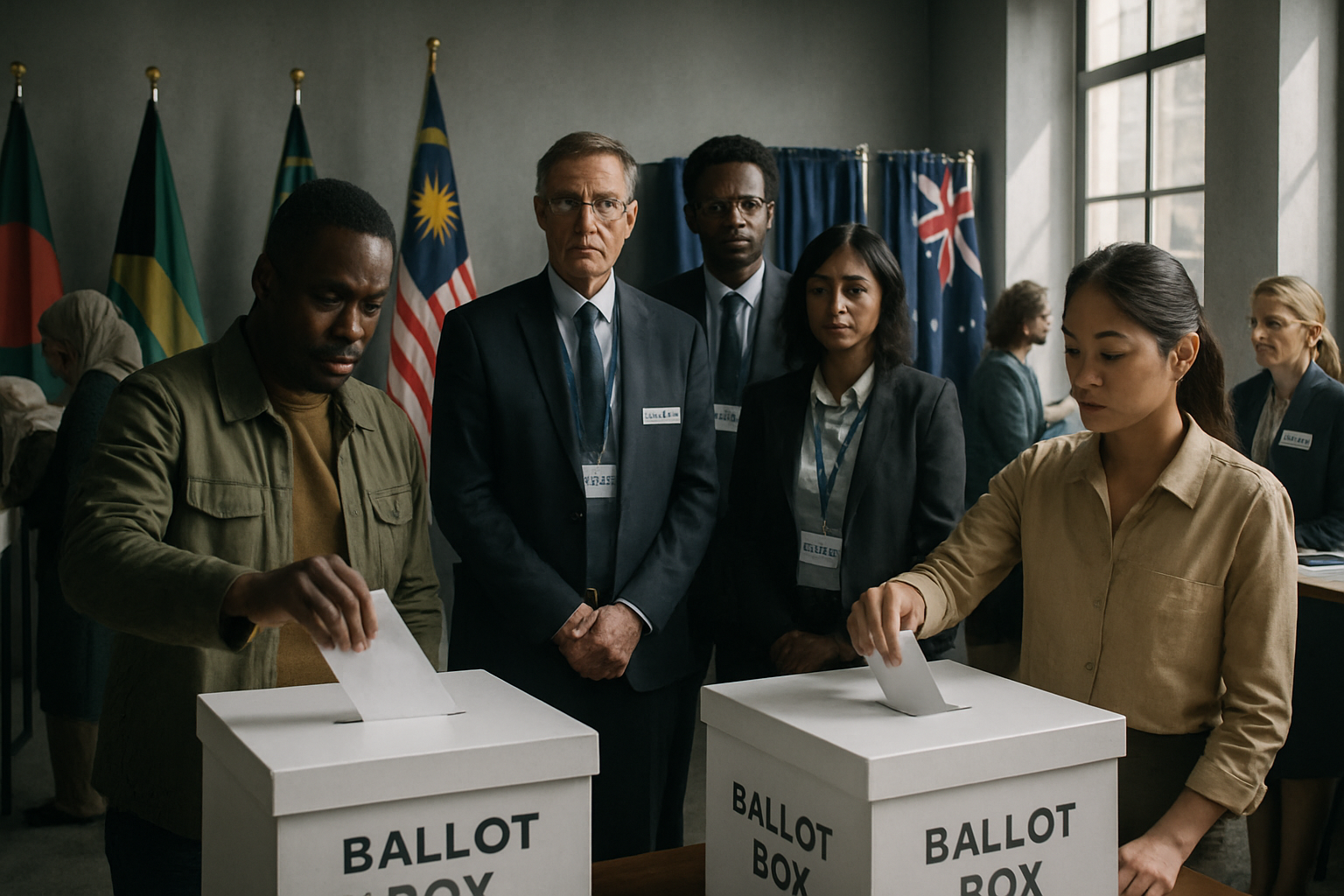
February 2026 has witnessed an unprecedented wave of electoral activity spanning continents, with Bangladesh completing its remarkable democratic transformation just days after Tarique Rahman was sworn in as Prime Minister, while nations from the Bahamas to New Zealand prepare for their own pivotal campaigns.
The month's political developments represent more than routine electoral cycles—they demonstrate how democratic processes worldwide are adapting to meet evolving citizen expectations while facing challenges from technological disruption, economic pressures, and international influences.
Bangladesh: From Uprising to Governance
The most dramatic transformation comes from Bangladesh, where the February 17, 2026 swearing-in of Prime Minister Tarique Rahman marked the culmination of the world's first successful Gen Z-led democratic uprising. Rahman's Bangladesh Nationalist Party (BNP) achieved a decisive victory with 212 of 299 parliamentary seats, ending Sheikh Hasina's 15-year authoritarian rule that was toppled by student-led protests in August 2024.
The new government now faces the complex challenge of transitioning from opposition to governance. Rahman, who returned from 17 years of London exile in December 2025, has acknowledged inheriting "fragile economy, ineffective institutions, weak law and order" from the previous regime. His administration must implement the July Charter—principles emerging from the uprising that demand institutional accountability and democratic reforms.
"This is a historic moment that completes Bangladesh's transition from street uprising to institutional democracy through peaceful electoral means."
— Chief Adviser Professor Muhammad Yunus, during the handover ceremony
The electoral process itself set new standards for democratic participation. Historic overseas voting enabled 883,000 postal ballots, including 444,436 from expatriates through the innovative ICPV system. The election received unprecedented international legitimacy through 394 observers from 27 countries—the largest monitoring mission in Bangladesh's recent history.
What makes Bangladesh's case particularly significant is the role of youth demographics. The 55 million voters aged 18-37, comprising 44% of the electorate and dubbed the "uprising generation," fundamentally altered political expectations. Rather than traditional party loyalty, they demanded accountability, transparency, and effective governance—principles that now define the political landscape.
The Bahamas: Steady Democratic Competition
While Bangladesh represents revolutionary change, the Bahamas exemplifies steady democratic evolution. The Progressive Liberal Party (PLP) has officially launched its election campaign, with the party positioning itself as the guardian of democratic values and economic progress. The campaign comes as the Free National Movement (FNM) has finalized its candidate roster, notably excluding certain controversial figures while embracing new voices.
The Caribbean nation's electoral preparations demonstrate the importance of candidate selection processes in maintaining democratic credibility. The FNM's decision to ratify candidates based on legal standing and public trust reflects how democratic parties must balance loyalty with accountability.
International Recognition and Regional Impact
The international community's response to these electoral developments reveals shifting diplomatic priorities. Bangladesh's democratic transformation has received congratulations from Malaysian Prime Minister Anwar Ibrahim, who praised it as a "triumph of democracy," while US officials have expressed readiness to work with Rahman's government.
This diplomatic recognition carries strategic weight. The interim government under Nobel laureate Muhammad Yunus had already achieved a significant US trade breakthrough—reducing tariffs to 19% with zero rates for textiles using US materials—signaling improved bilateral relations that the new government must sustain.
For regional stability, Bangladesh's success provides a template for peaceful political change through youth-led movements. The success could influence upcoming elections in Nepal and other South Asian nations facing similar demographic pressures and governance challenges.
Challenges Facing New Democracies
Despite the celebrations, significant challenges remain. Bangladesh's new government must address transitional justice concerns regarding the mass killings during the 2024 uprising, with approximately 1,400 deaths demanding accountability. The July Charter implementation requires constitutional and institutional reforms while managing relationships with India, China, and other regional powers.
The economic challenges are equally daunting. Years of authoritarian mismanagement have left Bangladesh with institutional weaknesses that cannot be resolved through electoral victory alone. The new government must rebuild investor confidence, revive key industries like garments, and maintain the diplomatic gains achieved during the transition period.
Democratic Innovation and Future Trends
The electoral innovations emerging from this global wave point toward future democratic trends. Bangladesh's successful implementation of overseas voting could influence neighboring countries to expand diaspora political participation. The use of extensive international monitoring provides a template for ensuring electoral legitimacy in contested environments.
Technology's role in these elections has been both challenging and empowering. While Bangladesh successfully conducted its election despite security concerns and logistical challenges, other nations continue to grapple with issues ranging from digital disinformation to ensuring voting access across diverse populations.
The youth demographic's decisive influence in Bangladesh signals broader generational political shifts occurring globally. Young voters' emphasis on institutional accountability over traditional party affiliations suggests that democratic systems worldwide must adapt to meet evolving expectations for responsive governance.
Regional Security and Cooperation
These electoral developments occur within a broader context of regional security cooperation and great power competition. Bangladesh's democratic consolidation affects South Asian stability patterns, potentially influencing cooperation frameworks from SAARC to broader Indo-Pacific strategic alignments.
The success of democratic transitions through mass mobilization provides hope for peaceful conflict resolution globally. However, it also demonstrates the importance of strong institutions capable of channeling popular demands through legitimate electoral processes rather than violent alternatives.
Looking Forward: Sustaining Democratic Momentum
As February 2026 concludes, the electoral developments across these nations demonstrate both the resilience and fragility of democratic institutions. Bangladesh's successful transition from uprising to governance provides a powerful example of democratic renewal, while ongoing campaigns elsewhere show the continuous work required to maintain democratic legitimacy.
The international community's role in supporting these processes—through observation missions, diplomatic recognition, and economic cooperation—remains crucial. The template established by Bangladesh's transformation, with its emphasis on youth participation, international oversight, and peaceful transition, offers lessons for democratic movements worldwide.
However, the true test lies not in electoral victory but in effective governance that addresses citizen needs while preserving democratic institutions. As Rahman's government begins its tenure and other nations approach their electoral moments, the global democratic community watches to see whether the promise of renewed democratic engagement can translate into sustained democratic governance.
The electoral wave of February 2026 represents more than political change—it embodies the ongoing evolution of democratic practice in response to contemporary challenges. Success in these endeavors could strengthen democratic resilience globally, while failure might embolden authoritarian alternatives. The stakes, therefore, extend far beyond national borders to the future of democratic governance itself.