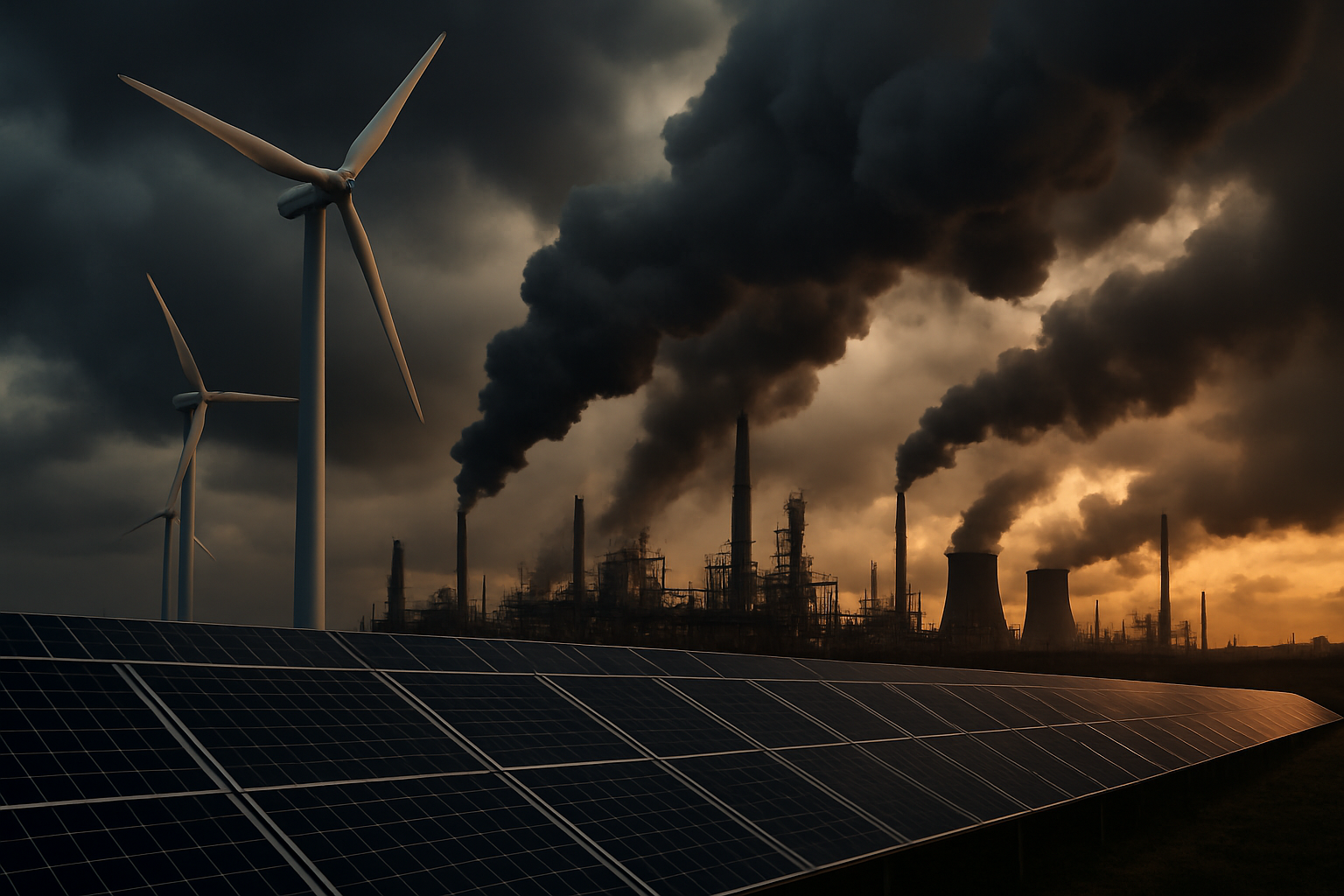
A perfect storm of geopolitical tensions and soaring energy prices has catalyzed the most significant global push toward renewable energy independence since the 1970s oil crisis, with nations scrambling to implement emergency measures while simultaneously accelerating long-term clean energy transitions.
The current crisis, triggered by Iran's closure of the Strait of Hormuz affecting 40% of global oil transit, has sent oil prices soaring past $100 per barrel for the first time since 2022. Brent crude peaked at $119.50 while West Texas Intermediate jumped a record 18.98% to $108.15, marking the most severe energy emergency in decades.
Brazil's Historic Climate Commitment
Against this backdrop of energy insecurity, Brazil has announced what many consider the most ambitious climate plan by any major economy. The South American nation unveiled targets to reduce carbon emissions by an unprecedented 49-67% by 2030, positioning itself as a crucial player in global climate action through innovative South-South cooperation frameworks.
The Brazilian plan leverages the country's vast renewable resources and biodiversity assets while addressing critical deforestation challenges. This framework represents a fundamental shift from traditional aid models, positioning developing nations as environmental solution providers rather than aid recipients.
"This historic moment for the entire cryptocurrency market demonstrates how energy crises can accelerate the transition to sustainable alternatives."
— Energy Policy Analyst, commenting on global renewable momentum
Emergency Responses Across Continents
The energy crisis has prompted immediate governmental responses worldwide. The International Energy Agency announced the largest strategic petroleum reserve release in its 50-year history—400 million barrels from 32 countries, double the amount released during the 2022 Ukraine crisis.
European nations have implemented comprehensive emergency measures reminiscent of the 1970s oil shocks. France deployed 500 fuel station inspectors to prevent price manipulation, while Hungary imposed immediate price caps on gasoline and diesel to protect consumers from "war-driven price explosions."
The crisis has exposed dangerous over-dependencies on strategic chokepoints, with the 21-mile Strait of Hormuz proving to be a single-point failure for modern global logistics. Over 150 oil and LNG tankers remain stranded in the Persian Gulf, carrying billions of dollars worth of cargo.
Renewable Energy Acceleration
The supply chain disruptions have intensified focus on renewable energy independence. China's dominance of critical materials—controlling 60% of production and 90% of refining capacity for lithium, cobalt, and rare earth elements—has highlighted supply chain vulnerabilities that nuclear and renewable technologies must navigate.
In response, the US-EU-Japan Critical Minerals Partnership has expanded to include 55 countries and seven African suppliers, attempting to diversify supply chains away from Chinese control. Estonia continues to demonstrate renewable leadership with 88% renewable electricity and continental Europe's largest battery storage facility serving 90,000 households.
Environmental Context and Climate Urgency
These developments occur during an unprecedented climate period. January 2026 marked the 19th consecutive month of temperatures exceeding 1.5°C above pre-industrial levels, demonstrating that human-induced climate change is fundamentally overriding natural climate variability, including La Niña cooling effects.
The sustained warming has created a critical window for environmental action, as ecological systems approach thresholds that could trigger irreversible changes. The current energy crisis has paradoxically accelerated discussions about green transition strategies that were previously considered too ambitious or politically challenging.
Economic and Geopolitical Implications
The crisis has revealed the economic advantages of renewable energy investment. Countries implementing comprehensive environmental protection demonstrate greater economic resilience and attract sustainable investment across multiple sectors, from eco-tourism to green technology manufacturing.
Financial markets have responded dramatically to the energy disruption. Pakistan's KSE-100 index suffered its largest single-day decline in history, falling 8.97%, while South Korea's KOSPI dropped 12% before circuit breakers were triggered. Central banks, including the European Central Bank and Bank of Japan, are coordinating unprecedented emergency liquidity measures.
Technology Integration and Innovation
Successful environmental initiatives now demonstrate sophisticated integration of cutting-edge technology with traditional ecological knowledge and community-based management. Advanced digital monitoring, automated efficiency controls, and AI-powered systems are becoming standard requirements for renewable energy infrastructure.
Small modular reactors (SMRs) featuring enhanced safety systems and factory manufacturing capabilities are gaining renewed attention as European nations reconsider nuclear energy. Commission President Ursula von der Leyen recently declared abandoning nuclear power a "strategic error," announcing €200 million in guarantees for innovative nuclear technologies.
Looking Forward: Critical Choices Ahead
The convergence of energy crisis and climate urgency has created what analysts describe as a critical juncture between reactive crisis management and proactive ecosystem service management. The choices made in the coming months will determine whether global society can develop the adaptive capacity necessary to protect essential environmental systems while maintaining economic stability.
Recovery timelines remain uncertain, as they depend on diplomatic and military developments rather than predictable economic factors. Unlike weather-related disruptions, the current crisis requires fundamental restructuring of global energy architecture to reduce dependence on volatile geopolitical regions and strategic chokepoints.
As the window for effective environmental action continues to narrow, the current crisis may prove to be either a catalyst for the rapid transformation needed to address climate challenges, or a preview of the routine environmental conditions societies will face in the coming decade without coordinated global action.
The template being set by current responses—from Brazil's ambitious climate commitments to Europe's emergency energy measures—will influence approaches to energy security, climate adaptation, and international cooperation for decades to come. Success in managing this crisis could establish frameworks for future nuclear crisis resolution, while failure might accelerate military solutions and reshape geopolitical relationships across the globe.