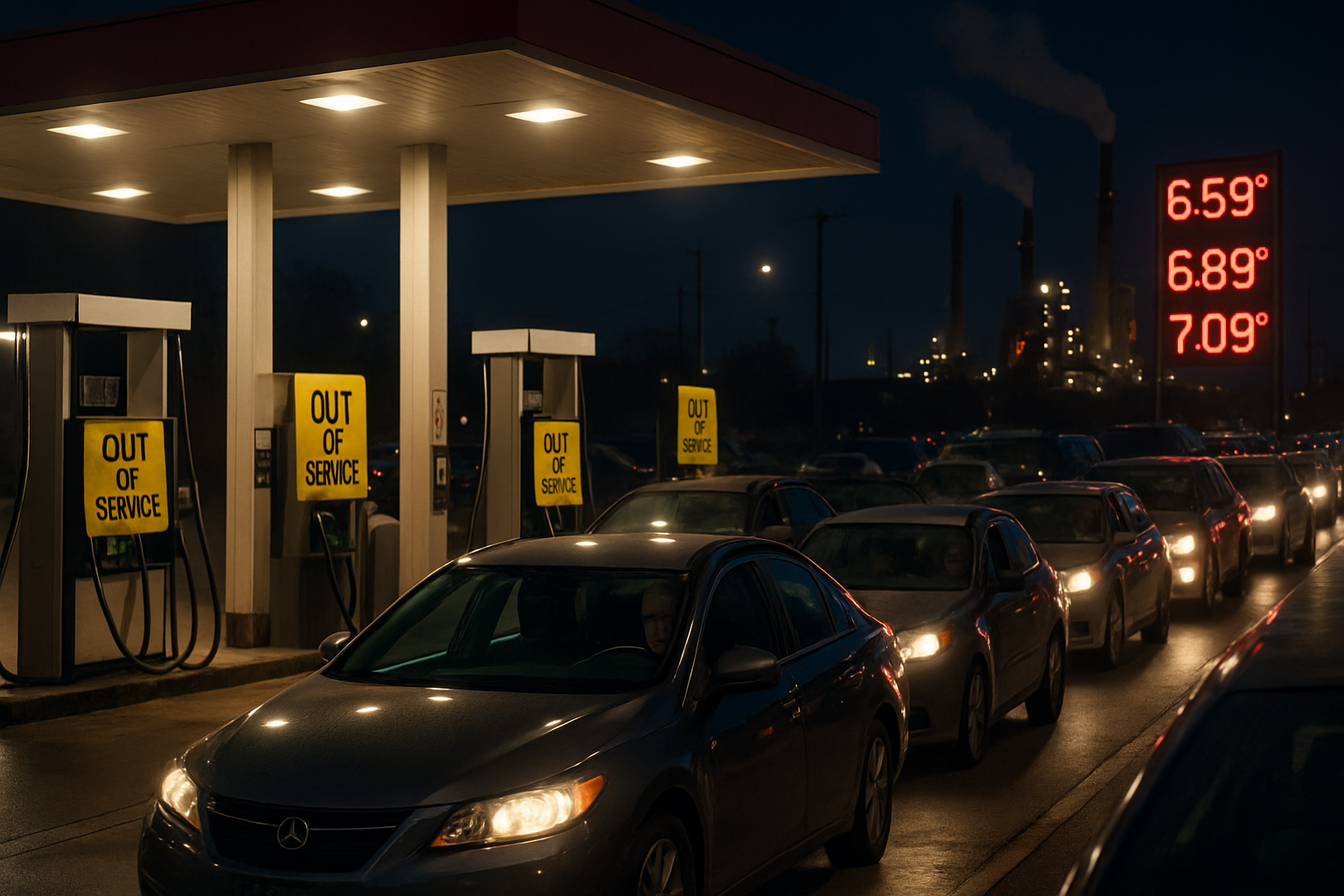
A global energy crisis of unprecedented proportions continues to unfold across continents, with fuel prices reaching historic highs and supply shortages affecting millions of people as the Middle East conflict enters its second month, creating ripple effects from European gas stations to Luxembourg fairgrounds.
The crisis, triggered by Iran's Revolutionary Guard closure of the Strait of Hormuz in March 2026, has evolved from a regional conflict into the most severe global energy emergency since the 1970s oil shocks. The strategic chokepoint, which normally handles 40% of global seaborne oil transit, remains blocked as diplomatic efforts have failed to resolve the escalating tensions.
Price Surges Hit Consumers Worldwide
From Austria's demands for greater fuel price transparency to Pakistan's emergency petroleum levy cuts, governments are scrambling to protect consumers from soaring energy costs. In Pakistan, Prime Minister Shehbaz Sharif announced an Rs80 per litre reduction in petroleum levies, bringing petrol prices down to Rs378 per litre amid widespread public anger over fuel costs that had reached Rs458 per litre.
The crisis has revealed stark regional variations in impact. In Luxembourg, the traditional Easter carnival in Esch-sur-Alzette struggles with low attendance as operators face mounting fuel costs for generators and transportation. "The rising fuel and energy costs are making our profession increasingly difficult," local carnival operators reported, highlighting how the energy crisis affects even cultural activities.
"This is the most severe energy security crisis in decades, exposing dangerous single-chokepoint vulnerabilities that require fundamental restructuring of global energy architecture."
— Samuel Ciszuk, Energy Security Analyst
Transportation companies across multiple countries have implemented fare increases of up to 30% to offset rising operational costs. Pakistan's transporters, despite government subsidies, argue that relief measures remain insufficient to counter the dramatic surge in diesel prices.
Government Emergency Responses
Austria has taken a particularly proactive approach, with officials demanding greater transparency in international fuel pricing mechanisms and calling for enhanced EU oversight. The Austrian government's analysis reveals how international price drivers are affecting domestic markets, prompting calls for more effective competition in fuel pricing.
Pakistan's response illustrates the political pressure governments face during such crises. After implementing what officials described as "unprecedented" fuel price increases, the government quickly reversed course following public backlash, with cabinet members voluntarily forgoing their salaries for six months as an austerity measure.
The energy crisis has also prompted discussions about electricity price increases, with Pakistan's Power Minister hinting at potential utility cost adjustments as the energy shortage affects not only petroleum but also natural gas and furnace oil supplies.
Regional Supply Chain Disruptions
European nations face mounting pressure as fuel prices approach critical thresholds. Portugal has announced further increases in gasoline and diesel prices, while Sri Lanka's President Anura Kumara Dissanayake has implemented fuel rationing and raised prices by a third since the Middle East war began, with electricity costs increasing by up to 40%.
The International Energy Agency (IEA) has coordinated the largest strategic petroleum reserve release in its 50-year history, deploying 400 million barrels from 32 countries – more than double the reserves released during the 2022 Ukraine crisis. Japan alone is releasing 80 million barrels, marking the first such deployment since the 2011 Fukushima disaster.
Economic and Social Impacts
The energy crisis extends far beyond fuel pumps, affecting carnival operators, small businesses, and essential services. In Luxembourg, the reduced carnival attendance reflects broader consumer behavior changes as families reassess spending priorities amid soaring energy costs.
Pakistan's introduction of a motorcycle fuel subsidy program demonstrates governments' efforts to protect vulnerable populations. The targeted relief package aims to cushion low and middle-income citizens from the worst effects of fuel price volatility, though questions remain about the subsidy's continuation following recent price adjustments.
Infrastructure Strain and Adaptation
The crisis has exposed critical vulnerabilities in global energy infrastructure. The closure of a single 21-mile waterway has demonstrated the dangerous over-dependence on strategic chokepoints for energy security. Alternative routes through the Arabian Peninsula lack sufficient capacity, creating inevitable bottlenecks and cost increases.
Aviation has been particularly hard hit, with over 18,000 flights cancelled globally and jet fuel costs surging 122% from $85-90 to $150-200 per barrel. Major airlines have implemented emergency fare increases, fundamentally altering international travel patterns.
Looking Forward: Long-term Implications
Energy experts warn that recovery timelines remain uncertain, unlike weather-related disruptions that follow predictable patterns. The crisis depends on military and diplomatic resolution of the Middle East conflict, making traditional economic forecasting models largely ineffective.
Governments are accelerating discussions about energy independence, strategic reserve capacity, and supply diversification, though experts note that meaningful infrastructure changes require years or decades to implement. The crisis has dramatically increased the urgency of renewable energy transitions and reduced dependence on volatile geopolitical regions.
"Countries worldwide are recognizing that this crisis represents a template-setting moment for 21st-century energy security planning."
— Qatar Energy Minister Saad Al Kaabi
Global Coordination Efforts
The international response has demonstrated both the possibilities and limitations of global coordination during energy crises. While the IEA's historic reserve release represents unprecedented cooperation, individual countries have also implemented divergent policies ranging from price caps to market interventions.
Financial markets have reflected the severity of the crisis, with Pakistan's KSE-100 experiencing its largest single-day decline in history and South Korea implementing circuit breakers as international investors seek safer assets amid the uncertainty.
As the crisis continues into April 2026, governments face the challenge of balancing immediate consumer relief with long-term energy security planning. The events of recent months have fundamentally altered how nations approach energy policy, supply chain resilience, and international cooperation in an increasingly volatile world.
The ongoing situation represents more than an energy crisis – it has become a test of global institutions, international cooperation, and the resilience of interconnected economic systems in the face of geopolitical instability. The outcomes will likely influence energy security policies and international relations for decades to come.