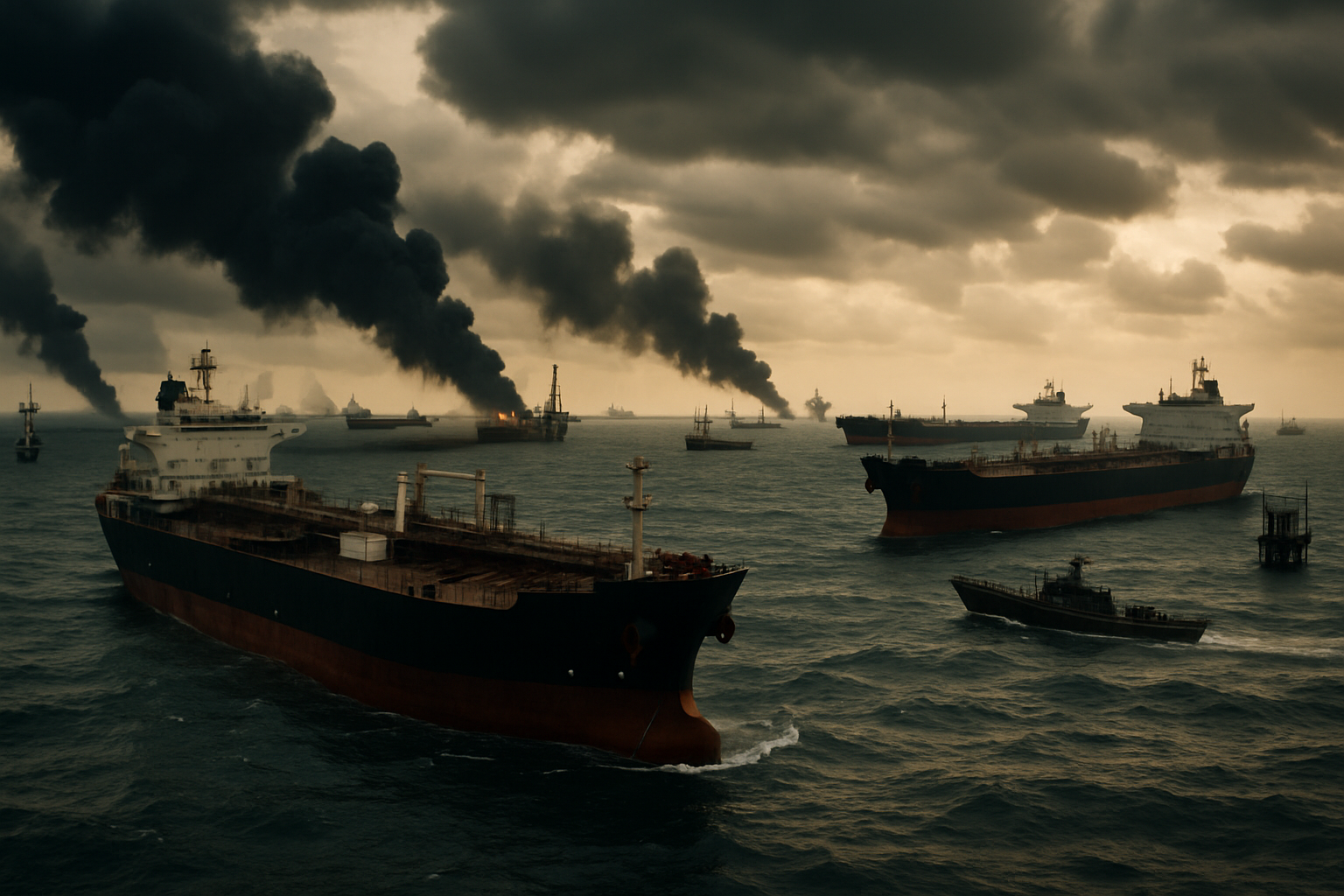
Oil prices surged to their highest levels since June 2025, with Brent crude jumping 10% to $80 per barrel, as escalating Middle East conflict threatens the strategic Strait of Hormuz through which 40% of global seaborne oil transit passes daily.
The energy crisis intensified dramatically on March 3, 2026, following Iran's declaration that the Strait of Hormuz was "unsafe" for commercial shipping, effectively closing the world's most critical energy chokepoint. Major shipping companies Maersk and MSC have suspended operations in the Persian Gulf, leaving over 150 oil and LNG tankers stranded, representing billions of dollars in cargo unable to reach global markets.
Unprecedented Market Volatility
Natural gas prices have experienced equally dramatic surges, rising 24% in Europe and 78% in the United States as supply concerns spread beyond crude oil. European gas prices rocketed 50% higher, reaching €47.32/MWh - the highest since February 2025. Qatar, the world's largest LNG producer, has halted production at its Ras Laffan and Mesaid facilities following Iranian drone attacks, with QatarEnergy expected to declare force majeure on LNG supplies.
OPEC+ held an emergency meeting approving a 206,000 barrel per day production increase for April, but analysts confirm this is insufficient to offset the shipping disruption affecting the Strait of Hormuz. Alternative routes around the Arabian Peninsula add significant time and costs, making them inadequate for current demand levels.
"The duration and intensity of the conflict will be key to the value of the energy sector. The closure of the Strait of Hormuz has sent prices soaring,"
— Energy Market Analyst
Global Economic Ripple Effects
The energy crisis has triggered widespread economic impacts far beyond the Middle East. Pakistan's KSE-100 stock index crashed 15,071 points (-8.97%), forcing trading suspensions, while Dow futures dropped 400-570 points overnight. Sweden is predicting electricity price increases of 10-20 öre with gasoline prices rising 1-2 kronor per liter.
The aviation industry faces unprecedented disruption with over 18,000 flights cancelled worldwide as Iran, Iraq, Israel, UAE, Qatar, Syria, Kuwait, and Bahrain simultaneously closed their airspace. Dubai International Airport, the world's busiest, has been completely shut down due to missile damage, creating a comprehensive transportation crisis affecting hundreds of thousands of passengers globally.
Historical Context and Nuclear Diplomacy Collapse
The current crisis follows the complete breakdown of US-Iran nuclear diplomacy despite recent progress. Geneva talks had achieved a "broad agreement on guiding principles" - the most significant diplomatic development since the JCPOA collapse in 2018. However, fundamental disagreements proved insurmountable when Iran excluded ballistic missiles and regional proxies as "red lines" for nuclear-only talks, while the US demanded comprehensive agreements including missiles, armed groups, and human rights.
Iran continues enriching uranium to 60% purity - approaching the 90% weapons-grade threshold - with experts confirming the country possesses over 400kg of enriched uranium, sufficient material for multiple weapons if weaponized. The diplomatic failure has created a template-setting moment for 21st-century crisis management, demonstrating the fragility of modern diplomatic frameworks in the multipolar era.
Regional Coalition Under Strain
An unprecedented regional coalition of Saudi Arabia, UAE, Qatar, and Egypt that had been backing the diplomatic process is now severely strained as Iranian retaliation has targeted member territories directly. Egyptian President Sisi condemned attacks on "sisterly Arab countries," warning of "comprehensive chaos."
Confirmed casualties across the region include one civilian killed in Abu Dhabi from missile debris, employee injuries at Kuwait Airport from drone strikes, and eight injured in Qatar despite successful Patriot missile interceptors neutralizing 65 missiles and 12 drones.
Nuclear Governance Crisis Context
The energy crisis occurs against the backdrop of a broader nuclear governance breakdown. The New START treaty expired on February 5, 2026 - the first time in over 50 years without US-Russia nuclear constraints. Combined with China's nuclear expansion, UN Secretary-General António Guterres has warned that nuclear risks are at their "highest in decades."
This context makes the current crisis a template-setting moment for international conflict resolution, with success in containing the escalation potentially providing a framework for future nuclear disputes, while failure may accelerate military solutions over diplomatic engagement globally.
Supply Chain Vulnerabilities Exposed
The Persian Gulf serves as a critical hub for global trade extending far beyond energy, affecting everything from consumer goods to industrial materials. The 21-mile-wide Strait of Hormuz is geographically irreplaceable for regional oil exports, highlighting the over-dependence on strategic chokepoints in global supply chains.
Strategic petroleum reserves provide only a temporary buffer during sustained disruptions of this magnitude. The crisis has accelerated discussions about supply chain diversification, but such transitions require years or decades to implement effectively.
Looking Forward
The current situation represents the most serious threat to global energy security in decades. Market recovery depends entirely on the resolution of military operations and diplomatic normalization, with traditional monetary policy tools proving largely ineffective against structural disruptions affecting critical infrastructure and geopolitical relationships.
As of March 3, 2026, the international community faces its most dangerous moment since the Cold War's end, testing regional war prevention, global energy security, nuclear governance credibility, and international law enforcement mechanisms simultaneously. The stakes include not only immediate energy market stability but also the fundamental principles of the post-WWII international order.
With multiple nations evacuating civilians from 15+ Middle Eastern countries and aviation networks severely compromised, this crisis will likely reshape approaches to energy security planning, geopolitical risk management, and international crisis resolution for decades to come.