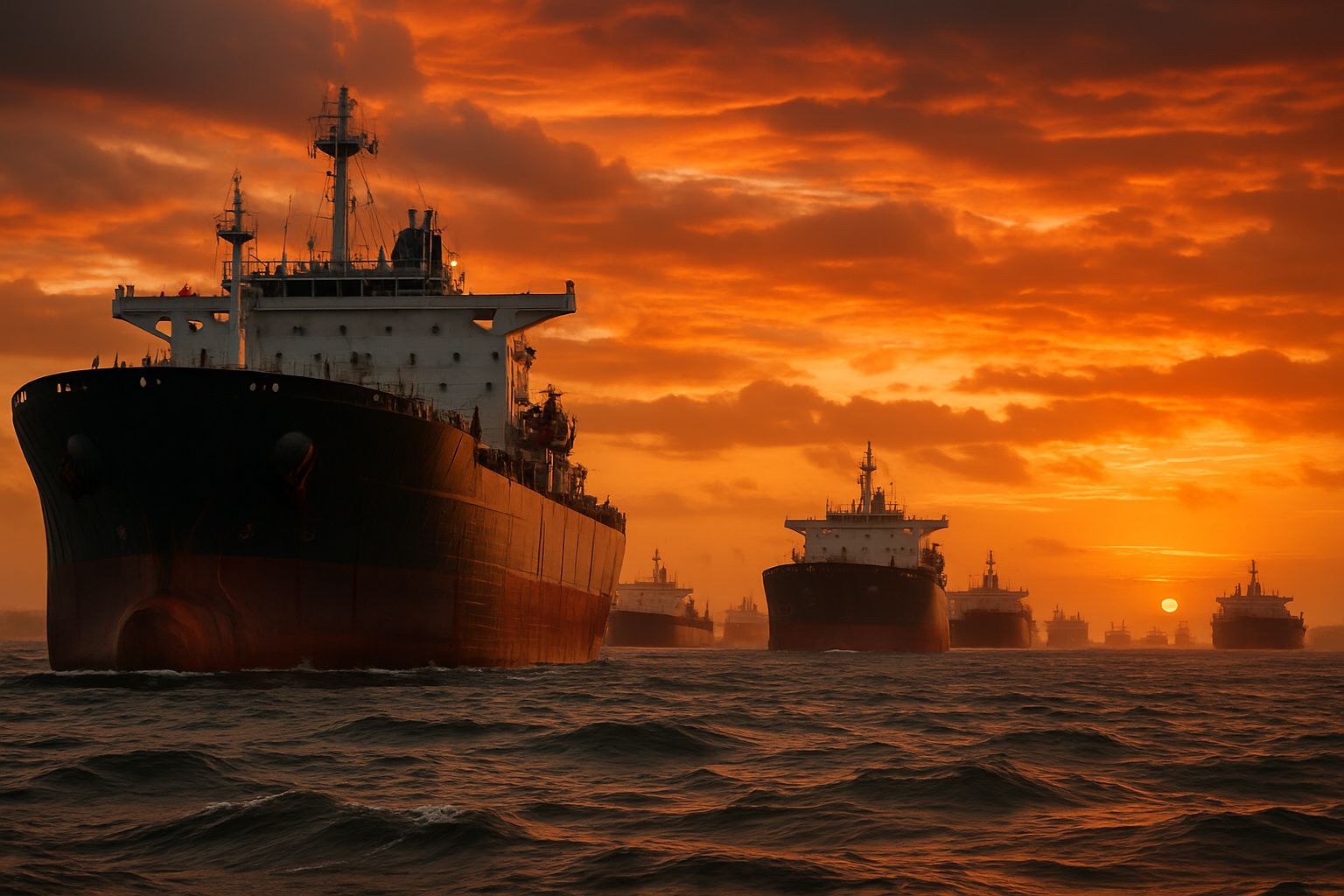
The global economy faces its most severe energy crisis since the 1970s oil shocks as Middle East conflicts drive fuel prices to unprecedented levels, forcing transport companies worldwide to implement emergency surcharges while governments deploy strategic petroleum reserves in the largest coordinated response in modern history.
Oil prices have surged past $100 per barrel for the first time since 2022, with Brent crude reaching a peak of $119.50 and West Texas Intermediate jumping 18.98% to $108.15 in what represents the largest single-day increase on record. The crisis stems from Iran's Revolutionary Guard declaring the strategic Strait of Hormuz "unsafe for shipping," effectively closing the critical waterway that handles 40% of the world's seaborne oil transit.
Transport Industry Under Unprecedented Pressure
The immediate impact on global transportation has been catastrophic. South African delivery company The Courier Guy has joined DHL and other major logistics firms in implementing temporary surcharges on air parcels, citing airline ticket and cargo price increases triggered by the conflict. The move reflects a broader industry crisis as jet fuel costs have soared from $85-90 per barrel to $150-200 per barrel, representing increases of up to 122%.
In Europe, fuel prices are approaching critical thresholds. Greek petrol stations report gasoline nearing €2 per liter, while Slovakia's energy analysts predict fuel price increases of 2-7 cents due to rising crude oil costs and Middle Eastern tensions. The situation has forced governments across the continent to consider emergency measures, with France deploying 500 fuel station inspectors to prevent price manipulation and Romania outlining five scenarios to prevent diesel from exceeding 10 lei per liter.
Aviation Industry in Crisis Mode
The aviation sector faces its most severe operational challenge since the COVID-19 pandemic. Over 18,000 flights have been cancelled worldwide as eight Middle Eastern countries simultaneously closed their airspace, creating the most comprehensive regional aviation disruption in modern history. Dubai International Airport, the world's busiest with over 86 million passengers annually, remains completely shut down due to missile damage.
"Airlines cannot schedule around closed airspace indefinitely. The industry faces a fundamental reconsideration of route planning and risk assessment that will affect operations for years to come."
— Industry Expert, Aviation Crisis Analysis
Major carriers including Emirates, Air France-KLM, Wizz Air, and Bulgaria Air have suspended Middle Eastern operations indefinitely, severing critical Europe-Asia hub connections and forcing complex rerouting strategies that dramatically increase operational costs.
Historic Government Response
The International Energy Agency (IEA) has announced the largest strategic petroleum reserve release in its 50-year history, coordinating the deployment of 400 million barrels from 32 member countries—more than double the 182.7 million barrels released during the 2022 Ukraine crisis. Japan leads the effort with 80 million barrels starting March 16, marking the first deployment since the 2011 Fukushima disaster, while Germany has confirmed participation and the United States is expected to be the largest contributor.
The coordinated response reflects the unprecedented nature of the crisis. Japan's participation is particularly significant given the country's 95% dependence on Middle Eastern oil, with 70% transiting through the now-closed Strait of Hormuz. Energy Secretary Christopher Wright is even considering lifting additional Russian oil sanctions to help stabilize global supply.
Global Consumer Impact
The crisis has created a cascade of consumer price increases across every continent. Sweden faces electricity increases of 10-20 öre and gasoline price rises of 1-2 kronor per liter, with the Malmö region most exposed due to continental market integration. Ireland reports heating oil approaching €2 per liter in what officials describe as "brazen rip-offs," while Austria confronts 20% fuel cost increases that labor unions condemn as "war-driven price explosions."
The situation is even more dire in developing nations. Pakistan, already facing its highest South Asian fuel costs at Rs321.17 per liter, has implemented wartime austerity measures including four-day government work weeks. Bangladesh has imposed fuel rationing affecting 170 million people, while Bosnia-Herzegovina has been reduced to just two days of gas reserves.
Supply Chain Vulnerabilities Exposed
Beyond energy, the crisis has revealed the dangerous over-dependence of global supply chains on strategic chokepoints. The Persian Gulf serves as a critical trade hub for consumer goods and industrial materials worldwide, with the 21-mile Strait of Hormuz representing a single-point failure for modern logistics systems.
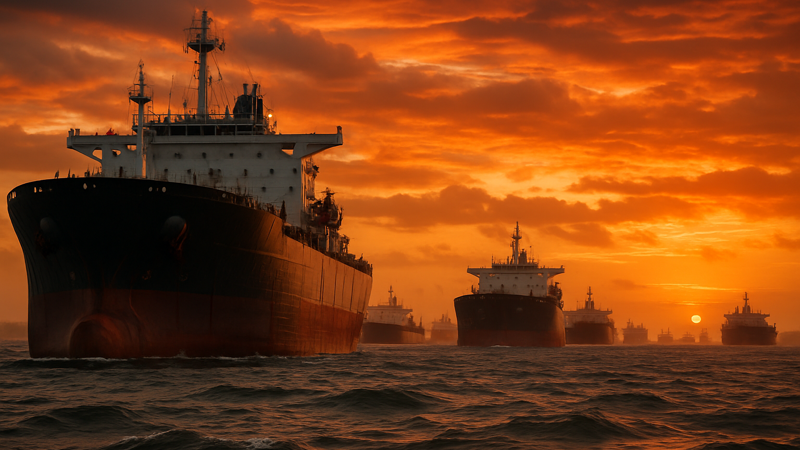
Major shipping companies Maersk and MSC have suspended operations entirely, leaving over 150 oil and LNG tankers stranded in the Persian Gulf with billions of dollars in cargo value. Manufacturing industries dependent on Gulf networks—including automotive, electronics, and textiles—face severe disruptions. China has suspended refined fuel exports, while Singapore retailers report logistics cost increases of 30% for some goods.
Financial Markets in Turmoil
Global financial markets have responded with historic declines. Pakistan's KSE-100 index suffered its largest single-day decline in history, falling 8.97%, while South Korea's KOSPI dropped 12%, triggering circuit breakers as the Korean won hit a 17-year low. The volatility has forced major companies to postpone expansion plans, with PayPal's $1.1 billion IPO among the casualties.
Central banks are coordinating emergency responses, with the European Central Bank and Bank of Japan implementing emergency liquidity measures. However, traditional monetary policy tools prove limited in addressing supply-side disruptions caused by geopolitical infrastructure damage.
Energy Architecture Under Siege
Qatar's halting of LNG production at Ras Laffan and Mesaid facilities has eliminated approximately 20% of global LNG exports. Natural gas prices have exploded 24% in Europe and 78% in the United States, reaching €47.32/MWh—the highest level since February 2025. Qatar Energy Minister Saad Al Kaabi has warned that Gulf states may declare force majeure "within weeks," with oil potentially approaching $150 per barrel in a scenario he warns could "bring down the economies of the world."
"This represents the most severe energy security crisis in decades. Single-chokepoint vulnerabilities have been exposed in a way that requires fundamental restructuring of global energy systems."
— Samuel Ciszuk, Energy Security Analyst
Long-term Implications and Recovery Challenges
Unlike natural disasters or technical failures, recovery from this crisis depends entirely on military operations resolution and diplomatic normalization—factors with unpredictable timelines. The situation has forced a fundamental reconsideration of energy security planning, with experts calling for reduced dependence on volatile geopolitical regions and strategic chokepoints.
The crisis coincides with the expiration of the New START nuclear arms treaty on February 5—the first time in over 50 years without US-Russia nuclear constraints—as Iran continues uranium enrichment at 60% purity with over 400kg of weapons-grade material. UN Secretary-General António Guterres has declared nuclear risks to be at their "highest in decades," making this crisis a template-setting moment for 21st-century conflict resolution.
Template for Future Crisis Management
The international community faces what UN officials describe as "the greatest test of multilateral cooperation in crisis management of the modern era." The coordinated response—from strategic petroleum reserves deployment to massive civilian evacuations—will establish precedents for how the world manages similar crises in an increasingly volatile geopolitical environment.
Success in containing the crisis could provide a framework for future nuclear and energy security challenges. Failure risks accelerating military solutions over diplomatic ones, reshaping Middle Eastern geopolitics for decades while encouraging nuclear proliferation globally and undermining diplomatic credibility worldwide.
As energy architecture requires years or decades to diversify away from strategic chokepoints, the current crisis serves as a stark reminder of the vulnerabilities inherent in modern global systems. The decisions made in the coming weeks will reverberate through international relations for decades, determining whether diplomatic or military solutions become the default framework for 21st-century conflict resolution.