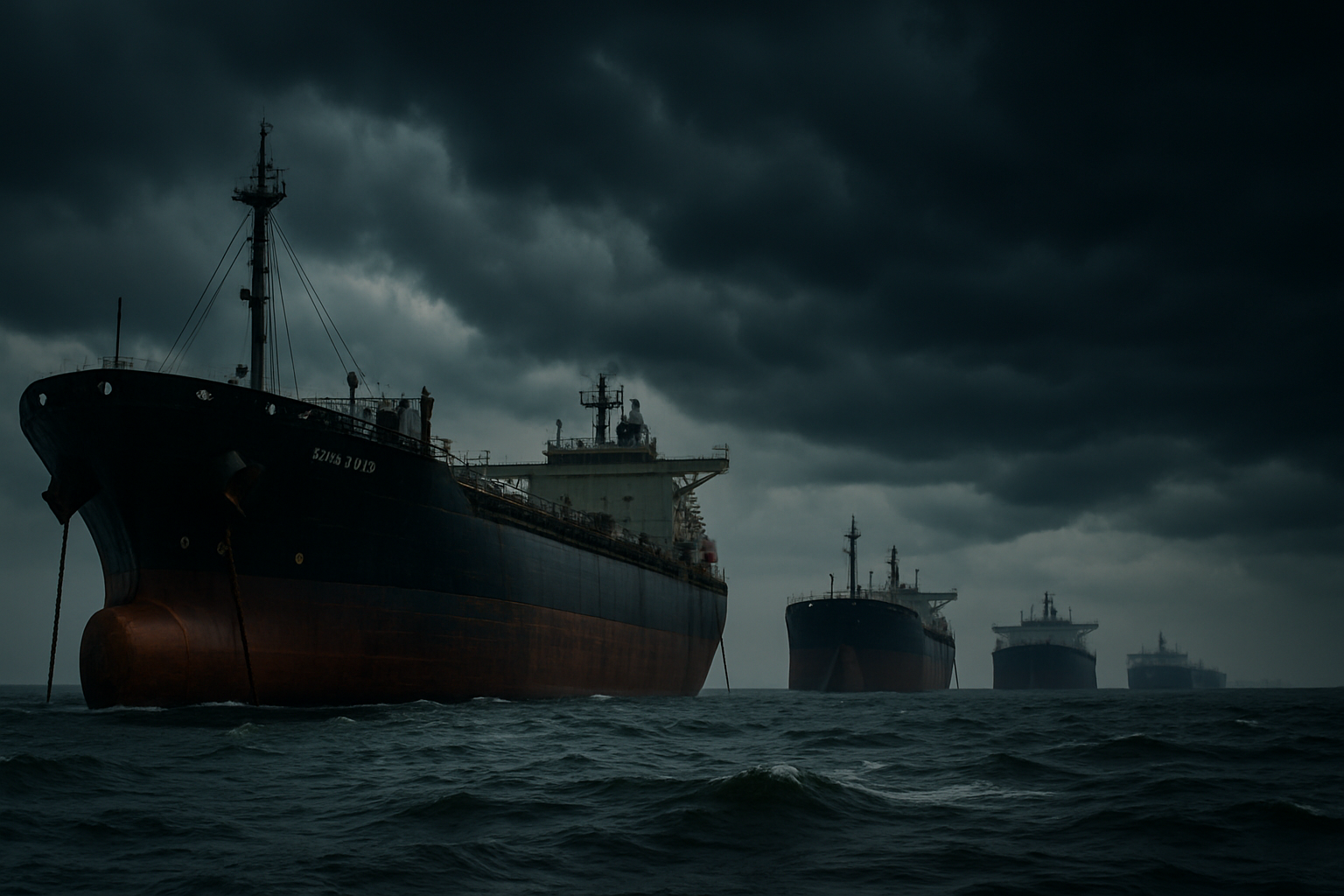
The global energy market faces its most severe crisis since the 1970s oil shocks as Ukrainian strikes have disabled 40% of Russia's oil export capacity while Middle East conflicts push crude prices past $100 per barrel for the first time since 2022.
According to Reuters analysis, at least 2 million barrels per day of Russian oil export capacity has been temporarily knocked offline through a combination of Ukrainian attacks on infrastructure and international detention of Russia's "shadow fleet" tankers. This represents the most serious disruption to Russian oil supplies in modern history.
Devastating Impact on Russian Energy Infrastructure
The crisis has reached unprecedented levels with Finnish maritime tracking showing no tankers at the Koivisto port near Vyborg following recent drone strikes. The port, a crucial terminal for Russian oil exports, appears to have suspended operations entirely according to shipping surveillance data.
Russian oil export capacity disruption comes at the worst possible time, as Reuters notes, coinciding with oil prices exceeding $100 per barrel due to the ongoing war between the United States, Israel, and Iran. The timing has created a perfect storm affecting global energy markets.
"This is the most serious disruption to oil supplies in Russia's modern history, and it's happening just as oil prices have exceeded $100 per barrel due to the war [between the US and Israel] with Iran."
— Reuters Analysis
Global Supply Chain Reverberations
The energy crisis extends far beyond Russia's borders, with fuel shortages beginning to filter through global supply chains. In Australia, rising fuel costs are prompting supermarkets and transport operators to adjust pricing structures, signaling broader economic impacts ahead.
Australian fuel markets face particular vulnerability as supply disruptions compound existing price pressures. The government has responded by enhancing regulatory oversight, with consumer watchdogs gaining new powers to impose harsher penalties on suppliers found manipulating fuel prices during the crisis.
Slovakia, heavily dependent on Russian energy supplies, faces acute challenges as former finance minister Ivan Mikloš warns that government measures are merely populist responses masking deeper structural issues. "Slovakia is kicking problems down the road," Mikloš stated, highlighting concerns about energy dependence and weak wage growth.
Price Volatility and Market Response
The confluence of Russian supply disruptions and Middle East tensions has created extraordinary volatility in global energy markets. Oil prices have surged past the psychologically important $100 threshold, with analysts warning of further increases if supply disruptions persist.
Australia's government has launched a $100 million crackdown on fuel "cartel behavior," empowering regulators to investigate pricing practices more aggressively. However, critics question whether new rules adequately address price gouging during crisis conditions.
The pricing pressure extends beyond crude oil to refined products, with fuel tax policies coming under scrutiny. Australian motorists face some of the world's highest fuel taxes relative to other developed nations, adding to cost-of-living pressures during the supply crisis.
Geopolitical Dimensions and Strategic Implications
The energy crisis reflects broader geopolitical realignments as Ukraine's capability to strike deep into Russian territory demonstrates unprecedented reach. The targeting of critical energy infrastructure represents a significant escalation in conflict tactics, with global economic consequences.
European nations face particular exposure given their historical reliance on Russian energy supplies. While many countries have diversified their energy sources since Russia's 2022 invasion of Ukraine, the complete disruption of major export terminals creates new supply challenges.
Intelligence analysts suggest the coordinated nature of strikes on Russian infrastructure indicates sophisticated planning and possible international coordination, though specific details remain classified.
Economic and Consumer Impact
Rising fuel costs are already translating into higher prices across multiple sectors. Transportation companies report significant increases in operational costs, while freight and logistics networks face mounting pressure to pass costs onto consumers.
The retail sector shows early signs of price adjustment, with major supermarket chains beginning to factor higher fuel costs into their pricing models. Food distribution networks, heavily dependent on trucking and shipping, face particular challenges in maintaining profit margins while absorbing energy cost increases.
Energy-intensive industries including manufacturing, mining, and agriculture confront difficult decisions about production levels and investment plans amid volatile energy prices and uncertain supply security.
International Response and Market Intervention
Governments worldwide are implementing emergency measures to address supply disruptions and price volatility. Strategic petroleum reserves are being evaluated for potential releases, while regulatory frameworks are being strengthened to prevent market manipulation.
The International Energy Agency has called emergency meetings to coordinate responses among member nations. Contingency plans include accelerated renewable energy deployment, enhanced energy efficiency measures, and potential rationing systems if shortages worsen.
Central banks are closely monitoring inflation impacts from energy price increases, with monetary policy makers facing difficult trade-offs between supporting economic growth and controlling inflation pressures.
Long-term Energy Security Implications
The current crisis underscores fundamental vulnerabilities in global energy systems overly dependent on geopolitically unstable regions. Energy security experts argue that the disruption validates arguments for accelerated diversification of supply sources and enhanced domestic production capacity.
Renewable energy advocates point to the crisis as evidence of the urgent need to transition away from fossil fuel dependence. However, the immediate timeline for such transitions remains measured in decades rather than months or years.
Strategic energy storage capacity is likely to receive increased attention from policymakers seeking to buffer against future supply shocks. The crisis demonstrates how rapidly global energy systems can be disrupted by regional conflicts.
Market Outlook and Recovery Prospects
Energy market analysts remain divided on the duration and ultimate severity of the current crisis. Optimistic scenarios envision supply restoration within months as alternative sources compensate for Russian shortfalls. However, pessimistic projections warn of prolonged disruption if conflicts escalate further.
The situation's evolution depends heavily on geopolitical developments, particularly the trajectory of conflicts in Ukraine and the Middle East. Market volatility is expected to persist until clearer resolution emerges from these ongoing tensions.
Investment in alternative supply routes and backup infrastructure is likely to accelerate, though such projects typically require years to complete. The current crisis may mark a turning point toward more resilient and diversified global energy architecture.