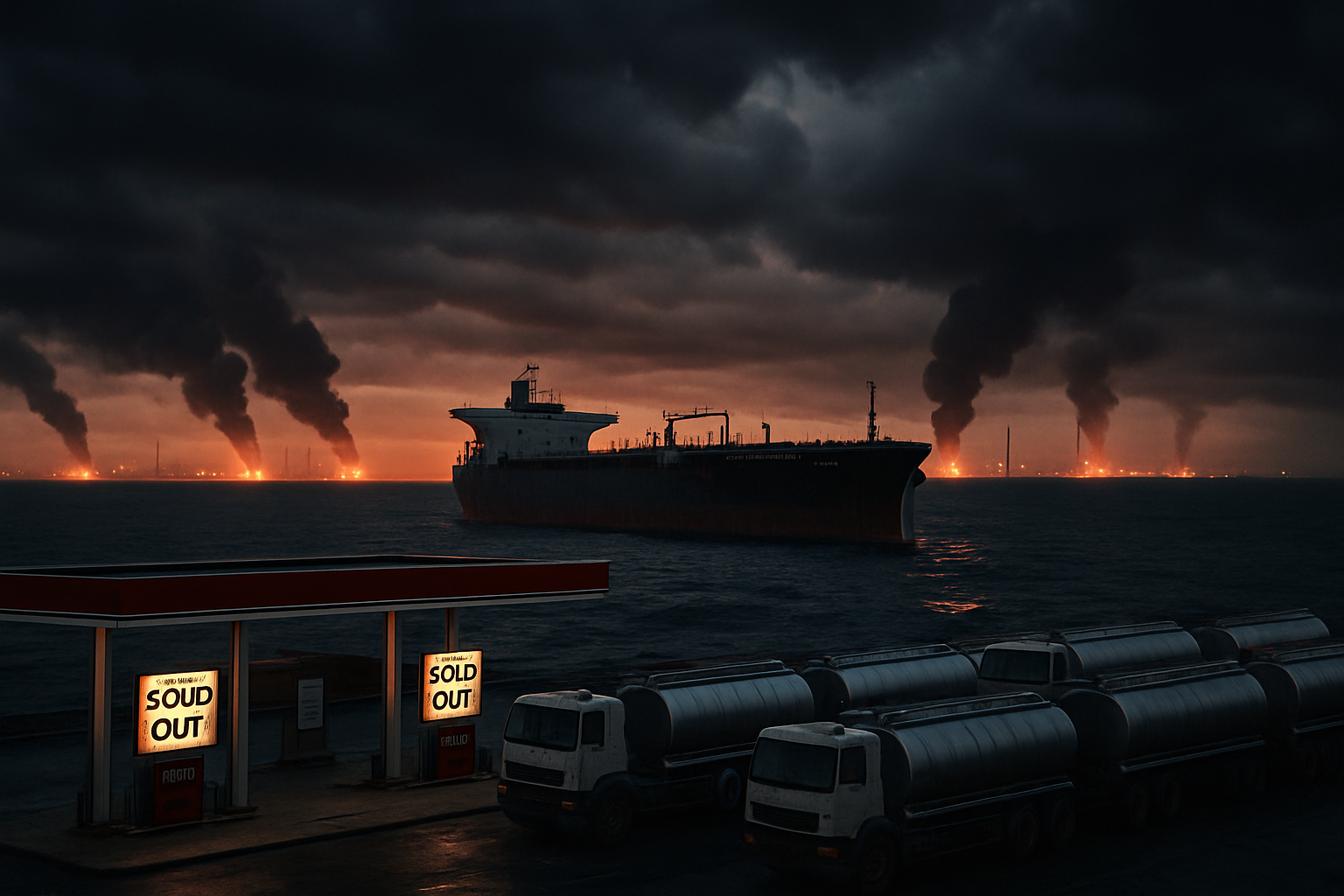
A devastating global energy crisis has reached critical proportions as nations worldwide implement emergency fuel rationing and face unprecedented supply disruptions, driven by the ongoing Middle East conflict that has effectively closed the Strait of Hormuz and paralyzed international energy markets.
Bangladesh became the latest country to introduce comprehensive fuel rationing on Sunday as the war in the Middle East deepened an energy crunch, creating long queues at petrol stations and mounting public anger. The country of 170 million people, which imports 95 percent of its oil and gas needs, has seen its energy security collapse following US and Israeli attacks on Iran and Tehran's retaliatory strikes throughout the Gulf region.
The Bangladesh Petroleum Corporation (BPC) has restricted fuel sales for most vehicles, with authorities capping fuel purchases across multiple categories as the nation struggles to maintain basic transportation and industrial operations.
Europe Faces Historic Energy Emergency
Across Europe, the crisis has reached alarming proportions. In Bosnia and Herzegovina, energy reserves have dwindled to critically low levels, with natural gas supplies sufficient for only two days according to local reports. The situation represents one of the most severe energy shortages since World War II, as Middle Eastern supply disruptions compound existing vulnerabilities.
In Malta, Prime Minister Robert Abela warned that without government subsidies, fuel prices would be up to 45 percent more expensive than current levels - a scenario he described as a "catastrophe." Speaking at a Labour Party event, Abela explained that without state intervention, petrol would cost 38 cents more per liter and diesel 45 cents more, representing increases that would devastate household budgets across the Mediterranean island nation.
South American Nations Declare Energy Emergencies
Peru has faced a dual energy crisis, with a natural gas leak in a Camisea pipeline in the Cusco region creating an emergency in the supply of Compressed Natural Gas (CNG) for vehicles. The disruption has already begun impacting urban transportation systems nationwide, prompting the government to announce emergency measures to manage available fuel supplies.
The Ministry of Transport and Communications (MTC) has prioritized public mass transport and implemented temporary labor measures to reduce transportation demand. In response to the crisis, Peru's Ministry of Economy and Finance announced economic support for taxi drivers who had invested in converting their vehicles to natural gas, providing temporary compensation to help offset the financial impact of the supply shortage.
African Nations Counter Panic and Misinformation
In Senegal, the national petroleum company PETROSEN issued an urgent communique on Sunday to counter viral social media rumors announcing an imminent shortage of gas, gasoline, and diesel. The company moved quickly to dispel the misinformation, which had begun to create panic buying and market disruptions across the West African nation.
The speed of PETROSEN's response highlighted how rapidly energy security concerns can destabilize markets, even when supplies remain adequate. The incident underscored the fragile state of global energy confidence as the Middle East crisis continues to unfold.
US Energy Markets Under Severe Pressure
The United States has not escaped the global energy turmoil, with gasoline and diesel prices rising significantly due to the war with Iran restricting oil and fuel exports. According to reports from Reuters, fuel prices jumped more than 10 percent in a single week as oil prices surged above $90 per barrel - the highest levels in years - exacerbating inflation's toll on American consumers.
The energy crisis has exposed the vulnerability of global supply chains that have become increasingly dependent on Middle Eastern oil and gas exports. With the Strait of Hormuz - through which 40 percent of global seaborne oil transits - effectively closed due to Iranian Revolutionary Guard declarations that the waterway is "unsafe," alternative supply routes are struggling to meet global demand.
Historical Context and Unprecedented Scale
Drawing on extensive analysis from energy security experts, this crisis represents the most severe disruption to global energy markets since the oil crises of the 1970s. However, the current situation is complicated by several unique factors that make it potentially more devastating than previous energy emergencies.
The closure of the Strait of Hormuz represents a single-point failure that has exposed the fragility of modern energy logistics. Unlike weather-related disruptions or technical failures, this crisis depends entirely on the resolution of military operations and diplomatic normalization between the conflicting parties. Traditional monetary policy tools have proven limited in their effectiveness against such structural geopolitical disruptions.
Natural gas prices have exploded across global markets, with increases of 24 percent in Europe and 78 percent in the United States. Qatar, which supplies approximately 20 percent of global LNG exports, has been forced to halt production at its Ras Laffan and Mesaid facilities due to Iranian infrastructure attacks. This has created severe shortages in European markets, where gas prices have reached €47.32 per megawatt-hour - the highest levels since February 2025.
Transportation and Aviation Networks Collapse
The energy crisis has been accompanied by an unprecedented collapse in global aviation networks. Over 18,000 flights have been cancelled worldwide - the most extensive disruption since the COVID-19 pandemic. Eight Middle Eastern countries have simultaneously closed their airspace, creating the most comprehensive regional aviation shutdown in modern history.
Dubai International Airport, the world's busiest with over 86 million passengers annually, remains completely shut down due to missile damage. This has effectively severed critical Europe-Asia air connections, stranding hundreds of thousands of passengers globally and forcing airlines to implement emergency protocols including enhanced fuel loading and complex rerouting through alternative hubs.
Economic Ripple Effects Worldwide
The financial markets have responded with alarm to the unfolding crisis. Pakistan's stock exchange suffered its largest single-day decline in history, falling 8.97 percent, while South Korean markets plunged 12 percent with circuit breakers activated. The Korean won hit a 17-year low as investors fled from positions in AI and memory chip companies.
Major corporations have been forced to reassess their operations and expansion plans. PayPal postponed its $1.1 billion US IPO indefinitely due to market volatility, while numerous technology companies are delaying major announcements and reconsidering international expansion strategies.
Government Emergency Responses
Nations worldwide have activated emergency protocols rivaling the scale of responses seen during the Arab Spring in 2011. Japan is considering deploying its national oil stockpiles for the first time since the 2011 Fukushima disaster, as the country depends on the Middle East for 95 percent of its oil supplies, with 70 percent typically transiting through the now-closed Strait of Hormuz.
The European Union is rapidly developing emergency options to reduce energy prices and provide state aid to energy-intensive industries. Several member states, including Sweden, are predicting electricity price increases of 10-20 öre and gasoline price rises of 1-2 kronor per liter.
Central banks, led by the European Central Bank and Bank of Japan, are coordinating emergency liquidity provisions to prevent broader financial contagion. However, traditional monetary policy tools are showing limited effectiveness against these structural geopolitical disruptions.
Long-term Implications and Recovery Challenges
Energy security experts warn that the recovery timeline remains highly uncertain, as it depends entirely on military operations resolution and diplomatic normalization rather than predictable factors like weather patterns or technical repairs. The aviation industry cannot engage in long-term scheduling while multiple airspaces remain closed, and energy markets remain volatile with critical transit routes blocked.
The crisis has exposed fundamental vulnerabilities in global energy architecture, particularly the over-dependence on strategic chokepoints like the 21-mile-wide Strait of Hormuz. Alternative routes through the Arabian Peninsula have proven inadequate in terms of capacity, with significant time and cost penalties that make them unsuitable replacements for the primary shipping lanes.
Supply chains extending far beyond energy sectors have been severely disrupted. Manufacturing in automotive, electronics, and textiles industries that depend on Persian Gulf logistics networks are experiencing severe operational challenges. The Persian Gulf serves as a critical trade hub for consumer goods and industrial materials worldwide, not just energy products.
Diplomatic Context and Nuclear Implications
The current crisis emerged following the complete collapse of US-Iran nuclear diplomacy, despite achieving a "broad agreement on guiding principles" breakthrough in Geneva talks - representing the most progress since the JCPOA collapse in 2018. However, fundamental scope disagreements proved insurmountable, with Iran excluding ballistic missiles and regional proxies as "red lines" while the US demanded comprehensive agreements covering missiles, armed groups, and human rights issues.
The breakdown occurred within a broader nuclear governance crisis context, as the New START treaty expired on February 5 - marking the first time in over 50 years without US-Russia nuclear constraints. Combined with China's nuclear expansion, UN Secretary-General António Guterres has warned that nuclear risks are at their "highest level in decades."
Regional Coalition Under Strain
An unprecedented diplomatic coalition of Saudi Arabia, UAE, Qatar, and Egypt that had been supporting diplomatic solutions has come under severe strain as Iranian retaliation operations have directly targeted member territories. The UAE reported one civilian killed in Abu Dhabi, while Kuwait suffered 32 injuries from airport strikes, and Qatar sustained eight casualties despite successfully intercepting 65 missiles and 12 drones using Patriot defense systems.
Egyptian President Abdel Fattah el-Sisi condemned attacks on "sisterly Arab countries," warning of "comprehensive chaos" spreading throughout the region. This regional coalition fracture has significant implications for Middle Eastern stability and energy security cooperation.
Looking Ahead: Template-Setting Crisis
March 2026 represents a watershed moment for global energy security, exposing strategic chokepoint vulnerabilities and interconnected supply chain fragility that characterize modern international commerce. Energy security analysts describe this as the most dangerous international crisis since the end of the Cold War, affecting regional war prevention, global energy markets, nuclear governance credibility, and international law enforcement simultaneously.
The crisis serves as a template-setting moment for 21st-century conflict resolution, with implications extending decades beyond current events. Success in containing the escalation could provide a framework for future nuclear crisis resolution and strengthen diplomatic precedents. However, failure may accelerate military solutions over diplomatic engagement, potentially reshaping Middle Eastern geopolitics for decades while encouraging nuclear proliferation globally and undermining diplomatic credibility worldwide.
The international community faces its greatest test of multilateral cooperation and crisis management in the modern era. The coming weeks will determine whether this crisis remains a contained regional confrontation or expands into a broader Middle Eastern war with worldwide implications for energy markets, supply chains, aviation networks, and the fundamental principles governing international stability in the post-World War II order.
As nations implement emergency rationing, deploy strategic reserves, and coordinate unprecedented evacuation operations, the world confronts the reality that in an interconnected global economy, regional conflicts can instantly transform into worldwide emergencies affecting hundreds of millions of people across all continents.