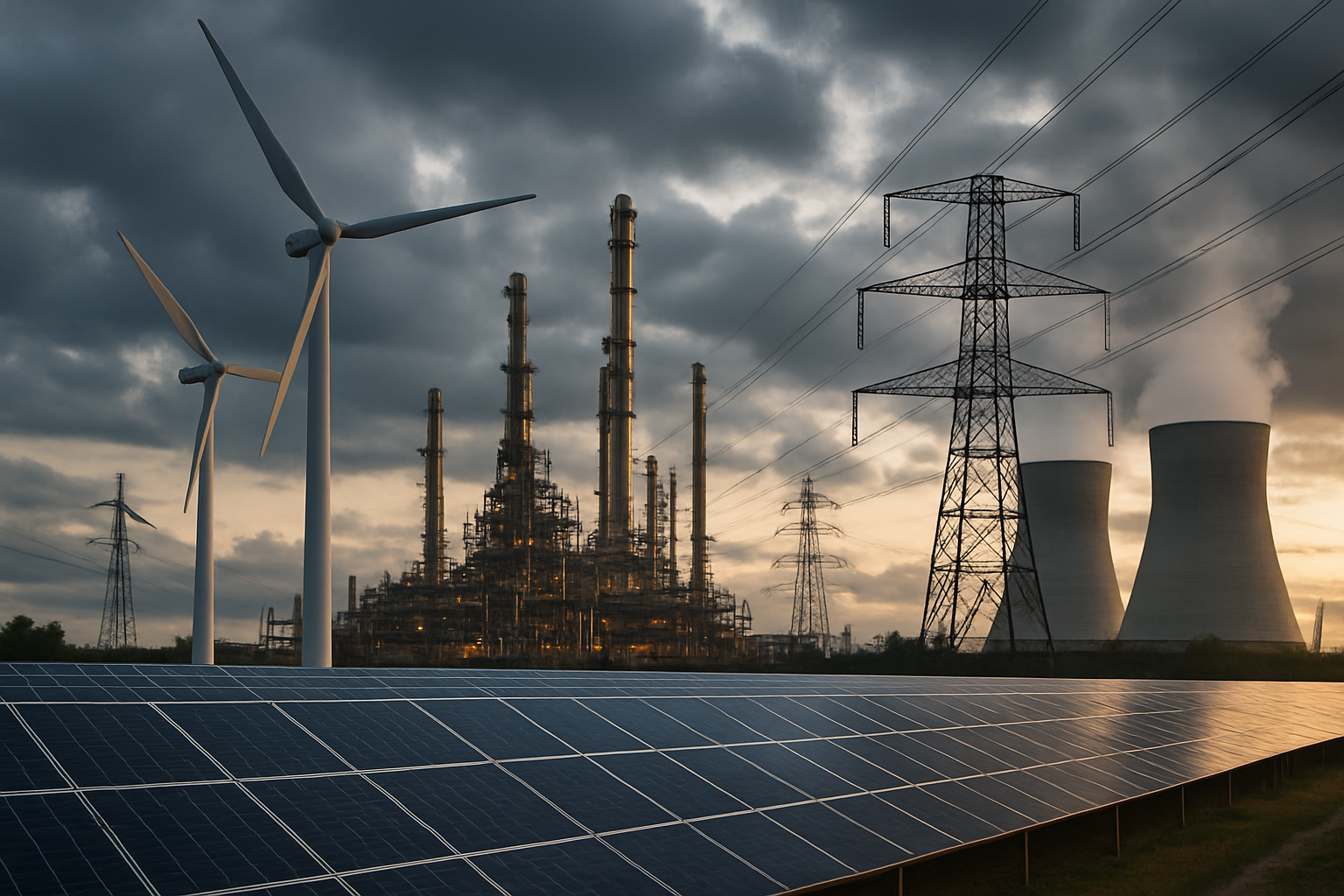
The global energy sector witnessed significant infrastructure developments and market shifts this week, from household energy cost reductions in the Netherlands to Saudi Arabia's landmark gas field expansion, highlighting the complex dynamics reshaping the international energy landscape in February 2026.
Energy markets across three key regions demonstrated the multifaceted nature of the global energy transformation, with traditional fossil fuel expansion occurring alongside renewable energy deployment and consumer market adjustments in response to unprecedented volatility.
Netherlands Household Energy Relief
Dutch households experienced modest energy cost reductions in 2026, with bills falling 2.5 percent to approximately €1,993 annually. This decrease comes after years of elevated energy prices that have pressured European consumers since the 2022 energy crisis.
The reduction reflects improved supply conditions and market stabilization following the initial shock waves of geopolitical disruptions. However, energy costs remain significantly above historical levels, underscoring the persistent structural changes in European energy markets.
European energy analysts note that while the decrease provides some relief, households continue to face substantially higher costs than the pre-2021 period. The Dutch experience mirrors broader European Union trends where energy affordability remains a central concern for policymakers balancing climate objectives with economic pressures on consumers.
Saudi Aramco's Strategic Gas Expansion
Saudi Arabia achieved a major milestone in energy infrastructure with Aramco's announcement of production commencement at the Jafurah gas field, the Middle East's largest unconventional gas development. The company simultaneously launched operations at the Tanajib Gas Plant, described as one of the world's most advanced gas processing facilities.
The expansion represents Aramco's ambitious strategy to increase sales gas production capacity by approximately 80 percent by 2030 compared to 2021 levels, targeting around 6 million barrels of oil equivalent per day of total gas and associated liquids production. This massive scale-up is projected to generate incremental cash flows between $12 billion and $15 billion by 2030.
"The Jafurah field development will strengthen Saudi Arabia's position among the world's top 10 gas producers while supporting the Kingdom's economic diversification goals."
— Saudi Aramco, Company Statement
Covering an expansive area of 17,000 square kilometers, the Jafurah field is estimated to contain 229 trillion cubic feet of raw gas reserves. The project is strategically positioned to support Saudi Arabia's Vision 2030 economic transformation agenda, particularly in sectors including petrochemicals, artificial intelligence infrastructure, and industrial development requiring reliable energy supplies.
The timing proves particularly significant as global gas markets remain volatile, with European prices surging 24 percent and US prices climbing 78 percent amid winter demand pressures and ongoing supply chain constraints. Saudi Arabia's enhanced production capacity positions the Kingdom as a crucial swing supplier in international markets.
Swedish Energy Market Dynamics
Swedish households in Norrbotten region doubled their fixed electricity contract signings during February compared to previous years, despite fixed-rate options trading at premium prices above variable rates. This counter-intuitive market behavior reflects growing consumer anxiety about future electricity price volatility.
Energy analyst Krisztian Horvath suggests this trend indicates households are prioritizing price certainty over short-term savings, anticipating potential future price spikes that could exceed current fixed-rate premiums. The behavior demonstrates how prolonged energy market volatility has fundamentally altered consumer risk tolerance.
Sweden faces particular challenges with electricity pricing due to its integrated Nordic power market, where Finnish consumption patterns significantly influence Swedish prices. The country has experienced some of the highest electricity prices in two years, creating political pressure on Prime Minister Ulf Kristersson's administration.
The Swedish situation illustrates broader European energy market integration challenges, where national policies increasingly intersect with regional supply and demand dynamics through interconnected grids and shared renewable energy systems.
Infrastructure Investment and Security Challenges
These developments occur against a backdrop of intensified global focus on energy infrastructure security and supply chain resilience. Recent analysis reveals critical vulnerabilities in renewable energy supply chains, where China controls 60 percent of global production and 90 percent of refining capacity for lithium, cobalt, and rare earth elements essential for clean energy technologies.
The US-EU-Japan Critical Minerals Partnership, involving 55 countries and seven African alternative suppliers, represents a coordinated response to address these strategic vulnerabilities through supply chain diversification and enhanced recycling capabilities.
European energy infrastructure faces additional pressures from systematic attacks on civilian energy systems, exemplified by recent targeting of Ukrainian electricity generation and distribution networks. These incidents highlight the weaponization of energy infrastructure in modern conflicts and the broader security implications for regional energy systems.
Climate Urgency and Energy Transition
Energy sector developments unfold amid accelerating climate change, with January 2026 marking the 18th consecutive month of global temperatures exceeding 1.5°C above pre-industrial levels. This unprecedented warming trend overrides natural climate variability, including La Niña cooling effects, demonstrating the dominant influence of human-induced climate change on atmospheric systems.
The European Parliament's recent approval of a historic 90 percent greenhouse gas emissions reduction target by 2040 creates additional urgency for energy infrastructure transformation. The legislation incorporates flexibility mechanisms including international carbon credits and forest-based emissions compensation, recognizing diverse national circumstances while maintaining ambitious climate commitments.
Energy transition projects across Europe demonstrate various pathways toward carbon neutrality. Estonia achieved 88 percent renewable electricity generation in 2024 while operating continental Europe's largest battery storage facility with capacity serving 90,000 households. Hungary continues construction of the Paks II nuclear plant, Europe's largest nuclear project, with €39.1 billion investment and IAEA backing.
Regional Energy Cooperation and Geopolitics
The global energy landscape increasingly reflects geopolitical realignments and regional cooperation patterns. Central European countries face particular challenges with energy supply security, as demonstrated by ongoing tensions over pipeline infrastructure and strategic reserve deployments.
Slovakia and Hungary's continued dependence on Russian energy sources through Ukrainian territory highlights persistent vulnerabilities in European energy architecture despite diversification efforts. Recent pipeline disruptions have forced both countries to tap strategic petroleum reserves while negotiating alternative supply routes through Mediterranean connections.
Regional energy cooperation mechanisms prove essential for managing supply disruptions and price volatility. Croatia's role in providing alternative supply routes for Central European countries demonstrates the importance of infrastructure connectivity and diplomatic coordination in energy security.
Azerbaijan's emergence as a key East-West energy coordinator, with US Chamber of Commerce recognition and expanding trade relationships, exemplifies how energy infrastructure development creates new geopolitical partnerships and economic opportunities beyond traditional supplier-consumer relationships.
Technology Integration and Market Innovation
Modern energy infrastructure increasingly incorporates advanced technology for monitoring, management, and efficiency optimization. Digital monitoring systems, smart grid management, automated efficiency controls, and predictive maintenance capabilities enable cost reduction and reliability improvements across diverse energy systems.
The integration of renewable energy sources with traditional infrastructure requires sophisticated grid management capabilities to handle variable generation patterns. Battery storage systems, like Estonia's facility, provide essential grid stability solutions for renewable intermittency while creating new business models for energy storage services.
Energy market innovation extends beyond generation to include consumer services and risk management tools. The Swedish trend toward fixed-rate contracts despite price premiums illustrates how markets develop products responding to consumer risk preferences shaped by prolonged volatility experiences.
Economic Implications and Investment Patterns
Energy infrastructure development creates substantial economic multiplier effects through job creation, technology transfer, and regional economic development opportunities. Saudi Arabia's Jafurah project alone is expected to generate thousands of specialized positions while supporting broader industrial development goals.
International cooperation in energy infrastructure increasingly leverages multilateral financing mechanisms and technology sharing arrangements. These partnerships enable developing countries to accelerate clean energy deployment while providing developed nations with strategic resource access and technological innovation opportunities.
Energy security investments reflect growing recognition that reliable energy systems constitute essential infrastructure for economic competitiveness and social stability. Countries increasingly prioritize energy independence and supply diversification as strategic national security objectives beyond pure economic considerations.
The evolving energy landscape demands adaptive policy frameworks balancing immediate energy security needs with long-term sustainability commitments. Success requires unprecedented coordination across technological innovation, international cooperation, financial commitment, and adaptive management responding to rapidly changing global conditions.
February 2026 energy sector developments demonstrate the complex interplay between traditional energy expansion, renewable deployment, consumer market evolution, and geopolitical security considerations. The convergence of these factors creates both opportunities and challenges requiring innovative approaches to energy system management in an era of accelerating climate change and evolving international relationships.