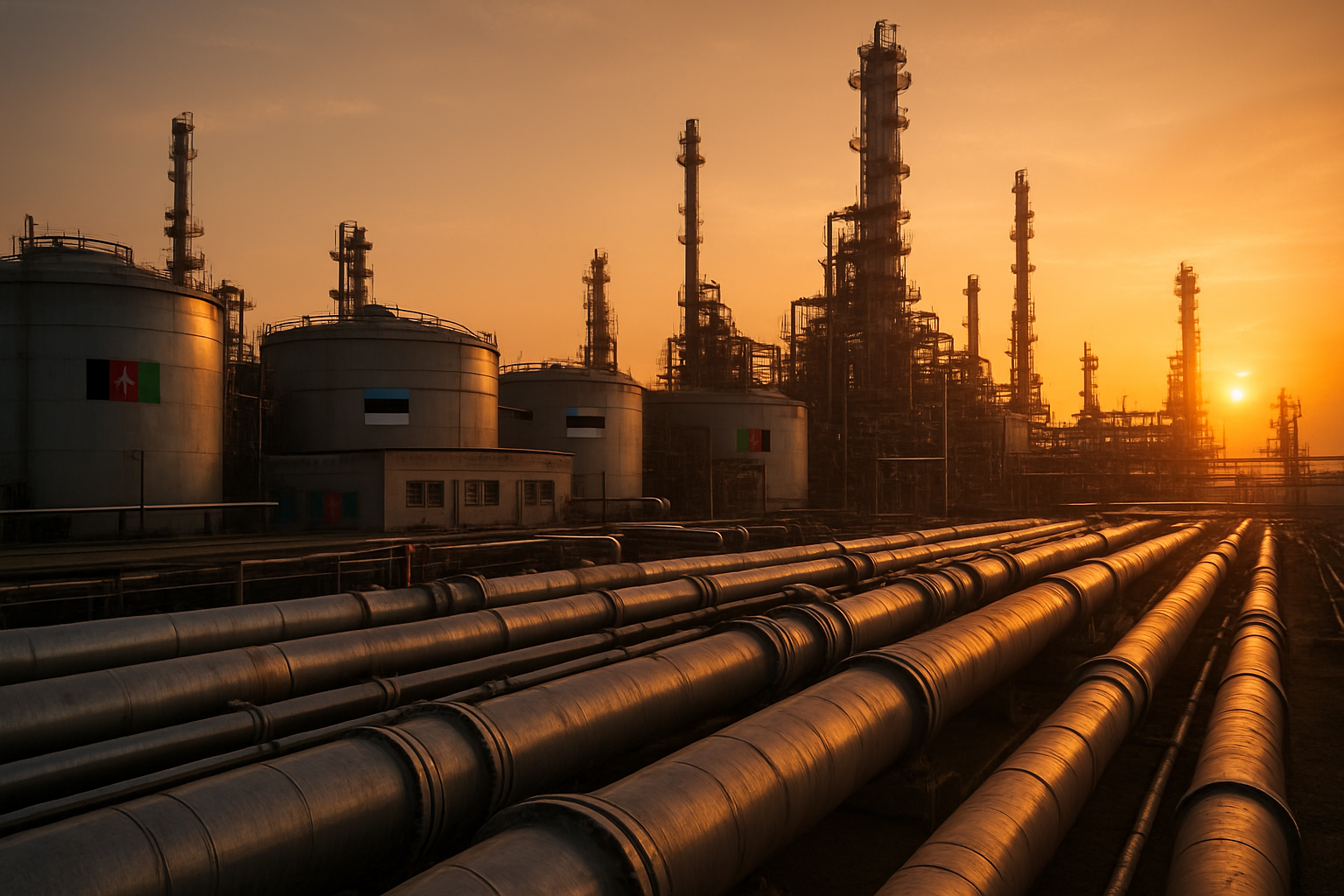
Global energy markets face unprecedented disruption as a convergence of infrastructure attacks, pipeline shutdowns, and supply chain failures creates the most severe worldwide energy crisis since the 1970s oil shocks, with developments spanning from Central Asia to Northern Europe threatening economic stability across multiple continents.
The International Energy Agency chief Fatih Birol has declared this "the largest crisis in history," driven by a perfect storm of geopolitical tensions, targeted infrastructure attacks, and cascading supply disruptions that have sent oil prices surging past critical thresholds and triggered emergency responses from governments worldwide.
Critical Infrastructure Under Attack
The latest developments underscore the vulnerability of global energy networks to coordinated disruption. In what analysts describe as systematic targeting of critical infrastructure, multiple energy facilities across different regions have faced simultaneous challenges that threaten to destabilize international energy markets.
The crisis has been compounded by Iran's Revolutionary Guard maintaining closure of the Strait of Hormuz, which handles 40% of global seaborne oil transit through a vulnerable 21-mile chokepoint. This closure, combined with targeted attacks on regional energy infrastructure, has created supply bottlenecks that are reverberating throughout the global economy.
"This represents the most severe energy security crisis in decades, with single-chokepoint vulnerabilities completely exposed"
— Samuel Ciszuk, Energy Security Expert
Pipeline Operations and Supply Chain Disruption
The crisis extends beyond Middle Eastern tensions to affect energy infrastructure across multiple continents. SOCAR has signaled readiness to supply liquefied natural gas to Pakistan amid growing energy shortages, while Norwegian energy group Equinor has delivered emergency gas shipments to Lithuania's Klaipeda port for the upcoming heating season, highlighting the scramble for alternative supply routes.
European energy security faces particular challenges as Germany convenes emergency security councils to address potential disruptions. Chancellor Merz has created a new task force on energy emergencies, with Berlin expressing concerns about vulnerability to potential blockades in critical shipping lanes, particularly regarding aviation fuel supplies that could severely impact air travel by summer 2026.
The situation has been further complicated by Russia's decision to halt oil transit from Kazakhstan to Germany through the Druzhba pipeline starting May 1, cutting off a crucial alternative supply route and forcing European nations to seek emergency alternatives.
Global Economic Implications
The International Monetary Fund has responded to the crisis by cutting global growth forecasts to 3.1% for 2026, with the organization warning that the Middle East conflict could throw the world economy "off course." The energy price volatility has pushed inflation projections above 6% in worst-case scenarios, creating lasting economic damage across all continents.
Oil prices have surged to their highest levels since 2022, with Brent crude reaching peaks of $119.50 and WTI jumping a record 18.98% to $108.15. Natural gas prices have exploded by 24% in Europe and 78% in the United States, reaching €47.32/MWh - the highest levels since February 2025.
The aviation industry faces particular devastation, with over 18,000 flights cancelled worldwide - the most extensive disruption since COVID-19. Eight countries have simultaneously closed their airspace, creating an "aviation black hole" that has severed Europe-Asia air corridors and stranded hundreds of thousands of passengers.
Emergency Response Measures
Governments worldwide have implemented unprecedented emergency measures not seen since the 1970s energy crisis. The IEA has deployed the largest strategic petroleum reserve release in its 50-year history, releasing 400 million barrels from 32 countries - more than double the 2022 Ukraine crisis response.
Hungary has imposed immediate price caps on gasoline and diesel to prevent "war-driven explosions" in fuel costs, while France has deployed 500 fuel inspectors to prevent price manipulation. Romania has activated five scenarios to prevent diesel from exceeding emergency thresholds, and Slovakia has activated its strategic petroleum reserves for the first time under crisis protocols.
Consumer impacts have been severe globally, with Bangladesh implementing fuel rationing for 170 million people, Pakistan declaring wartime austerity with four-day work weeks, and Ireland seeing heating oil prices approach €2 per liter in what officials call "brazen rip-offs."
Supply Chain Vulnerabilities Exposed
The crisis has exposed dangerous vulnerabilities in global supply chains that extend far beyond energy. The Persian Gulf serves as a critical trade hub affecting consumer goods and industrial materials worldwide, with the 21-mile Strait of Hormuz representing a single-point failure in modern logistics with no realistic alternatives.
Major shipping companies Maersk and MSC have suspended all Persian Gulf operations, leaving over 150 oil and LNG tankers stranded with billions of dollars in cargo. Manufacturing in automotive, electronics, and textiles sectors faces severe disruptions due to dependence on Gulf-dependent logistics networks.
China has suspended refined fuel exports and cancelled committed shipments, while Singapore reports 30% increases in logistics costs. The interconnected nature of global supply chains means disruptions in one region quickly cascade across continents, affecting everything from pharmaceuticals to critical minerals.
Nuclear Diplomacy and Governance Crisis
The energy crisis unfolds against a backdrop of deteriorating nuclear governance, with the New START treaty having expired in February 2026 - the first time in over 50 years without US-Russia nuclear constraints. Iran continues 60% uranium enrichment with over 400kg of weapons-grade material sufficient for multiple nuclear weapons.
UN Secretary-General António Guterres has described the situation as "the greatest test of multilateral cooperation in the modern era," with nuclear risks at their "highest levels in decades." The collapse of diplomatic frameworks has raised concerns about the template being set for 21st-century conflict resolution.
Long-term Energy Architecture Transformation
Energy experts warn that fundamental transformation of global energy architecture is imperative to reduce dangerous over-dependence on strategic chokepoints in volatile geopolitical regions. Strategic petroleum reserves, while providing temporary buffering, are insufficient for sustained disruptions of this magnitude.
The crisis has accelerated discussions about supply diversification and renewable energy transitions, though such transformations require years or decades of sustained investment. Estonia's model, with 88% renewable electricity generation and continental Europe's largest battery storage capacity, demonstrates the viability of energy independence but highlights the vulnerability of nations still dependent on traditional energy sources during transition periods.
"Oil approaching $150 per barrel could bring down the economies of the world. We may be forced to declare force majeure within weeks"
— Saad Al Kaabi, Qatar Energy Minister
Financial Market Turmoil
Financial markets have experienced historic crashes, with Pakistan's KSE-100 suffering its largest single-day decline in history at -8.97%, while South Korea's KOSPI fell 12% triggering circuit breakers and sending the Korean won to 17-year lows. Central banks, including the ECB and Bank of Japan, are coordinating emergency liquidity measures, though traditional monetary policy has proven limited in effectiveness against structural geopolitical disruptions.
The crisis demonstrates how regional conflicts can instantly become global economic disruptions in an interconnected world, requiring new approaches to crisis management and economic resilience planning.
Recovery Timeline and Future Implications
Unlike weather-related disruptions with predictable patterns, recovery from this crisis depends on military operations resolution and diplomatic normalization. Aviation networks cannot maintain scheduling with volatile security situations, and energy markets remain vulnerable to blocked transit routes.
The template being set by this crisis will influence international approaches to territorial and nuclear disputes for decades to come. Success in containing the escalation could provide a framework for diplomatic solutions to future crises, while failure may accelerate military solutions and reshape Middle Eastern geopolitics, potentially encouraging nuclear proliferation globally and undermining diplomatic credibility worldwide.
April 2026 represents a watershed moment in establishing new paradigms for energy security planning that will require fundamental transformation to reduce dependence on strategic chokepoints, affecting international stability mechanisms globally for decades beyond the current crisis. The most consequential energy crisis of the modern era continues to unfold with implications that will determine whether diplomatic or military frameworks dominate future international dispute resolution.