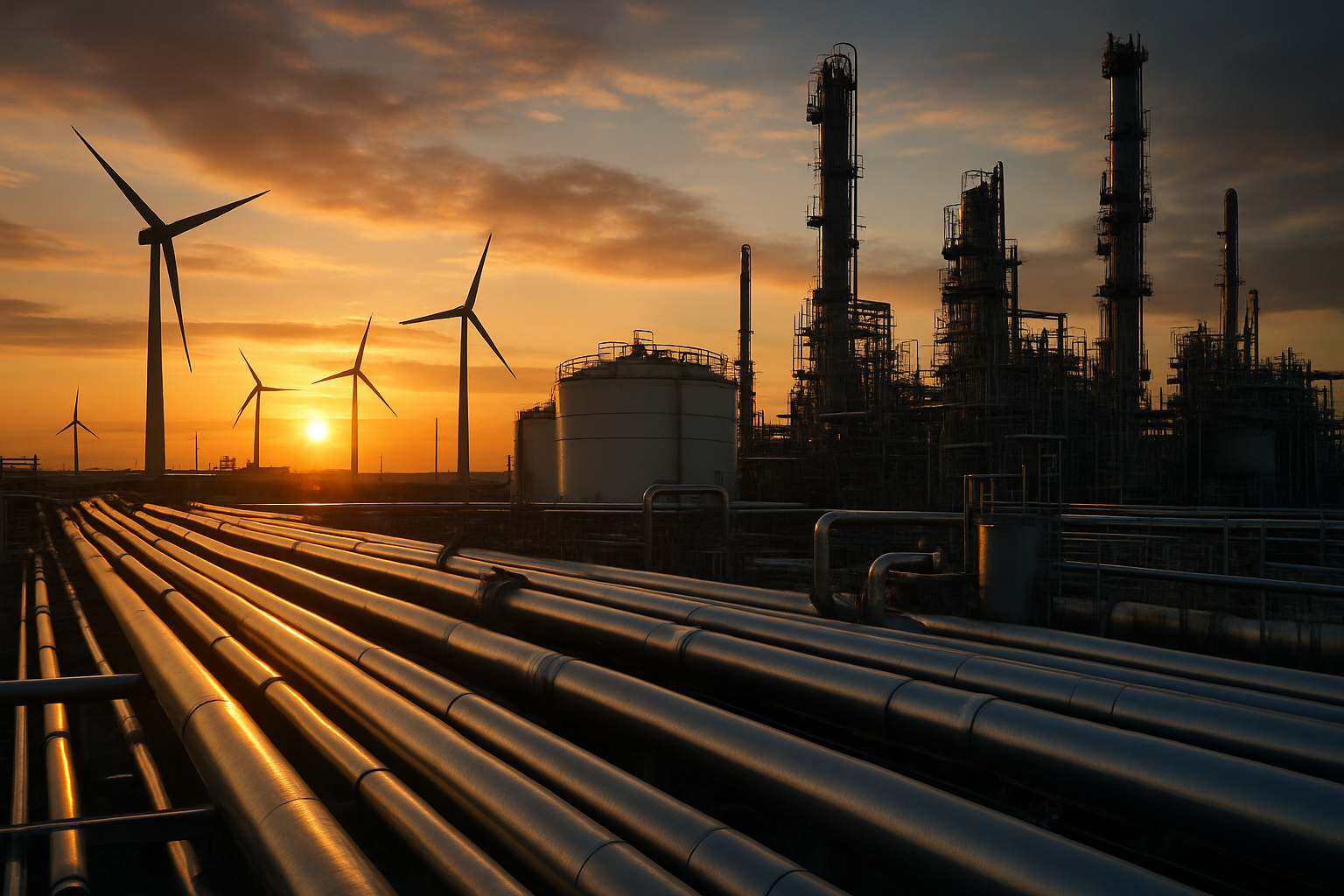
Countries worldwide are ramping up massive energy infrastructure investments as global oil prices surge 3% and renewable energy projects advance across multiple continents, reflecting the complex dynamics of an energy sector navigating between traditional fossil fuels and sustainable alternatives.
From Algeria's rising oil markets to Romania's wind farm financing and India's solar storage initiatives, February 2026 has witnessed unprecedented energy sector activity totaling billions in new investments and infrastructure developments across seven countries.
Oil Markets Post Significant Gains
International crude oil markets experienced substantial growth this week, with Brent crude futures climbing $2 or 3% to reach $69.33 per barrel, while US crude futures gained $1.93, representing a 3.05% increase to settle at $65.14 per barrel. The price surge continues momentum from previous trading sessions, signaling strengthening market confidence.
The oil price increases come amid broader energy sector volatility, with natural gas prices having surged 24% across Europe and 78% in the United States over recent periods, reflecting ongoing supply chain pressures and geopolitical tensions affecting global energy markets.
Renewable Energy Projects Gain Major Financing
Romania secured a significant milestone in its renewable energy transition as Greenvolt Group obtained €58.5 million in financing from Erste Group Bank AG and Banca Comercială Română (BCR) for a 49.8 MW onshore wind farm in Săcele, Dobrogea region. The project represents a crucial step in the company's strategy for accelerated development of utility-scale projects across Central and Eastern Europe.
"This partnership brings the Săcele wind farm closer to operationalization and strengthens our ability to develop multiple projects in parallel."
— Adrian Góralski, Director of M&A and Project Finance at Greenvolt Power
Locally, Greenvolt maintains an impressive portfolio featuring 555 MW of wind capacity, 77 MW of solar projects, and 156 MW of battery storage capacity, demonstrating the scale of renewable energy development across the region.
India Advances Solar Storage Technology
India's energy sector received a substantial boost with Bihar announcing a massive ₹50,000 crore ($6 billion) investment in energy infrastructure. Bihar State Power Generation Company Limited (BSPGCL) signed a Power Purchase Agreement for electricity supply from the Kajra solar project, which features integrated battery storage technology.
The development represents India's commitment to expanding renewable energy capacity while addressing storage challenges that have historically limited solar power reliability. Energy Minister Bijendra Prasad Yadav emphasized the transformative impact of these investments on the state's power infrastructure.
Maldives Sets Ambitious Renewable Targets
The Maldives government announced ambitious plans to achieve 220 MW of renewable energy capacity, marking a significant step toward energy independence for the island nation. The target reflects the country's commitment to reducing dependence on imported fossil fuels while addressing climate change vulnerabilities.
Jordan Unveils Massive Hydroelectric Storage Project
Jordan revealed plans for a major hydroelectric energy storage project near the Wadi Mujib Dam, with an estimated cost of approximately 461 million dinars ($650 million) and a capacity of 450 MW. The project forms part of Jordan's executive program for economic modernization vision covering 2026-2029.
The initiative represents a comprehensive approach to public-private partnerships, opening opportunities for both domestic and international investors while strengthening Jordan's energy infrastructure and reducing dependence on energy imports.
International Energy Cooperation Expands
Algeria hosted significant international energy discussions as Italy's Environment and Energy Security Minister, Gilberto Pichetto Fratin, arrived in Algiers to participate in the international seminar "North Africa – Connecting Continents and Creating Opportunities." The event, organized by the Bank of Algeria in cooperation with the International Monetary Fund, aims to discuss economic connectivity prospects and enhance cooperation and investment opportunities between regional countries.
The high-level participation underscores the growing importance of North African energy resources in European energy security calculations, particularly as European nations seek to diversify supply sources and reduce dependence on traditional suppliers.
Energy Sector Faces Infrastructure Pressures
The accelerated development comes against a backdrop of significant infrastructure pressures. Memory prices have increased sixfold, affecting energy sector technology deployments, while critical materials shortages continue to challenge renewable energy scaling efforts. The European Union has warned that climate goals face serious risks due to China's control of 60% of global critical materials production and 90% of refining capacity.
Indonesia's automotive industry, closely tied to energy transition through electric vehicle production, demonstrated resilience with export performance serving as the main pillar during domestic market weakening, according to Industry Minister Agus Gumiwang Kartasasmita.
Strategic Energy Security Implications
The diverse energy developments reflect countries' strategies to balance energy security, economic development, and climate commitments. From traditional oil production increases to cutting-edge renewable energy storage solutions, nations are pursuing multiple pathways to ensure reliable energy access while transitioning toward sustainable alternatives.
The timing of these investments coincides with ongoing geopolitical tensions affecting global energy markets, making energy independence and diversification increasingly crucial for national security and economic stability.
Market Outlook and Investment Trends
The energy sector's robust activity suggests sustained investor confidence despite global economic uncertainties. Projects spanning wind, solar, hydroelectric, and traditional energy infrastructure indicate a comprehensive approach to meeting growing energy demands while building resilience against supply chain disruptions.
As countries advance these multi-billion dollar energy initiatives, the sector continues evolving toward greater integration of renewable technologies with traditional energy infrastructure, creating opportunities for technological innovation and international cooperation while addressing pressing climate and energy security challenges.