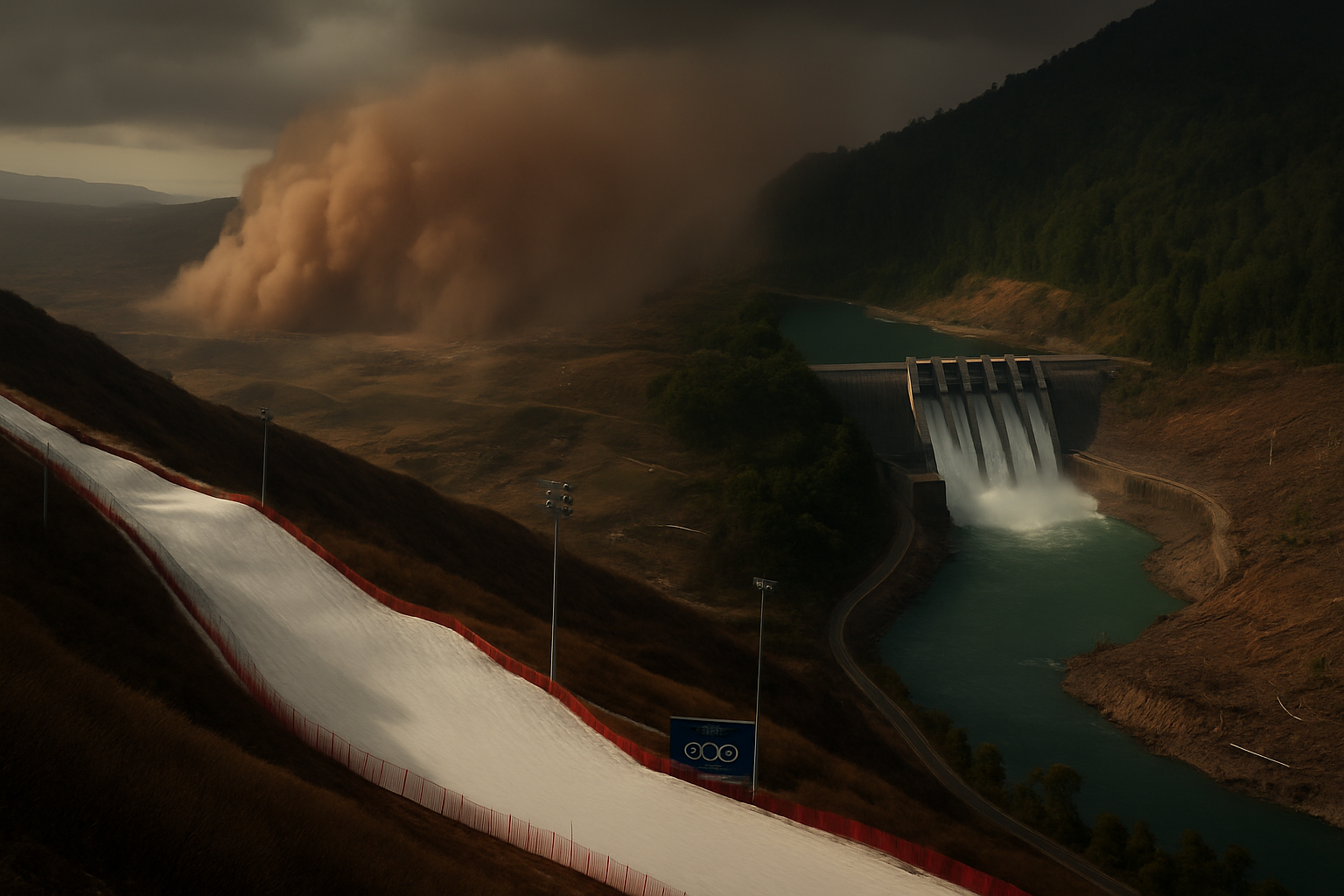
As the 2026 Milano-Cortina Winter Olympics continue amid growing environmental concerns, a convergence of ecological crises across multiple continents reveals the accelerating pace of global environmental degradation during what climatologists confirm as the 18th consecutive month exceeding 1.5°C above pre-industrial levels.
From the Italian Alps to the Middle East and the mountains of Northeast India, February 2026 has become a stark reminder of how climate change and human development pressures are creating unprecedented environmental challenges that transcend borders and traditional conservation approaches.
Olympic Environmental Impact Raises Urgent Questions
The Milano-Cortina 2026 Winter Olympics, celebrated as a model of sustainability, faces mounting criticism as environmental assessments reveal significant ecological impacts on sensitive Alpine ecosystems already weakened by climate change. French environmental analysis has highlighted how Olympic infrastructure development and increased human activity are affecting "particularly sensitive natural environments already fragile from climate change."
The concerns extend beyond temporary disruption. Wildlife corridors essential for species like the stoat (hermine) and various Alpine flora including rare dryad species are experiencing unprecedented pressure from Olympic-related construction, transportation networks, and the massive influx of visitors to previously protected mountain areas.
These developments occur against the backdrop of Europe's harshest winter in decades, with temperatures plummeting to -30°C, creating ideal natural snow conditions but also highlighting the vulnerability of mountain ecosystems to extreme weather fluctuations. The juxtaposition of celebrating winter sports while simultaneously witnessing the environmental costs has sparked intense debate about the future sustainability of mega-sporting events in climate-sensitive regions.
Jordan Battles Severe Air Quality Crisis
Simultaneously, Jordan's Ministry of Environment issued urgent health warnings as a massive dust storm system continued to impact the kingdom for the fourth consecutive day, with air quality reaching dangerous levels across multiple monitoring stations. The ministry specifically cautioned individuals with respiratory sensitivities and elderly populations against outdoor activities due to "poor air quality resulting from weather conditions and dust-laden winds."
The dust storm, which began affecting Jordan on Friday, is expected to persist through Sunday morning, with satellite imagery revealing widespread dust distribution at varying intensities. Northern and central regions, along with eastern territories, are experiencing the highest concentrations, while southern areas face somewhat reduced but still significant air quality impacts.
Jordan's meteorological department confirmed that the atmospheric conditions creating these extended dust events are becoming increasingly frequent, representing a significant public health challenge for the region. The prolonged nature of this particular storm system - lasting four days with continued intensity - demonstrates how climate change is amplifying traditional weather patterns and extending their duration and impact.
India's Hydroelectric Expansion Sparks Environmental Debate
In Northeast India, environmental concerns have reached a critical juncture as Arunachal Pradesh's latest hydroelectric project received expert panel approval despite significant ecological implications. The project is anticipated to impact approximately 2.3 million trees, representing one of the largest single environmental modifications in the region's recent development history.
The approval comes as India intensifies its renewable energy infrastructure development to meet growing electricity demands while attempting to reduce carbon emissions. However, the scale of forest clearing required for this hydroelectric initiative has raised questions about the true environmental costs of transitioning to cleaner energy sources.
Environmental advocates argue that the massive tree loss in one of India's most biodiverse regions could undermine the climate benefits of renewable energy generation. The project highlights the complex trade-offs faced by developing nations attempting to balance environmental protection with energy security and economic development needs.
Global Climate Context Intensifies Environmental Pressures
These regional environmental challenges are unfolding during an unprecedented period of global warming. January 2026 has been confirmed as the hottest month in recorded history, marking the 18th consecutive month that global temperatures have exceeded the critical 1.5°C threshold above pre-industrial levels.
This sustained temperature elevation is overriding natural climate variability patterns, including La Niña cooling effects that would typically moderate global temperatures. Climate scientists describe this as evidence that human-induced climate change has fundamentally altered Earth's atmospheric systems beyond natural recovery mechanisms.
The timing of these environmental crises during Earth's warmest period creates compounding effects. Alpine ecosystems face both direct human pressure from development and indirect stress from unprecedented temperature fluctuations. Desert regions experience more intense and prolonged dust storm systems due to altered atmospheric circulation patterns. Forest ecosystems in tropical and temperate zones struggle with both clearing pressures and climate-induced stress that reduces their resilience to human modification.
Interconnected Environmental Systems Under Stress
What emerges from analyzing these simultaneous environmental challenges is their interconnected nature. The atmospheric conditions contributing to Jordan's extended dust storms are influenced by the same global circulation patterns affecting Alpine weather systems. The pressure to develop hydroelectric infrastructure in India reflects global energy transition demands that also drive renewable energy projects across Europe and other continents.
These connections demonstrate that environmental protection can no longer be approached as a series of isolated local or regional issues. Air quality in the Middle East, ecosystem protection in the European Alps, and forest conservation in South Asia are all components of a global environmental system experiencing unprecedented stress.
The challenge for environmental policy makers and conservation organizations is developing response strategies that can address immediate local environmental threats while simultaneously contributing to broader global environmental stability.
Economic and Social Implications
The economic costs of these environmental challenges are substantial and growing. Jordan's extended dust storm affects tourism revenue, disrupts transportation systems, and increases healthcare costs related to respiratory conditions. The Milano-Cortina Olympics face potential legacy costs if environmental damage undermines the region's long-term appeal for winter sports and mountain tourism.
In India, the environmental trade-offs associated with hydroelectric development reflect broader economic pressures faced by developing nations seeking to provide electricity access to growing populations while meeting international climate commitments. The immediate economic benefits of energy infrastructure must be weighed against long-term environmental costs that could affect agricultural productivity, water resources, and biodiversity-dependent industries.
Technology and Traditional Knowledge Integration
Addressing these complex environmental challenges requires sophisticated integration of cutting-edge technology with traditional environmental knowledge systems. Advanced air quality monitoring enables rapid public health responses to dust storm events. Environmental impact assessment technologies provide detailed analysis of Olympic infrastructure effects on Alpine ecosystems. Satellite monitoring and environmental DNA analysis offer tools for tracking biodiversity impacts from large-scale development projects.
However, technology alone cannot solve these environmental challenges. Success requires combining scientific innovation with community-based environmental knowledge, economic incentives that make environmental protection financially viable, and international cooperation frameworks that can coordinate responses across borders and sectors.
Looking Forward: Urgent Action Required
The convergence of environmental crises in February 2026 represents more than isolated challenges—it provides a preview of the environmental conditions likely to become routine without immediate, coordinated global action. The window for effective environmental protection is narrowing rapidly as climate change accelerates and development pressures intensify.
Success in addressing these challenges will require unprecedented coordination between immediate environmental protection and long-term climate adaptation strategies. This includes rethinking major sporting events to minimize environmental impact, developing dust storm early warning systems that protect public health, and ensuring that renewable energy transitions genuinely reduce rather than simply relocate environmental damage.
The environmental developments of February 2026 may prove to be a critical juncture—demonstrating whether human societies can develop the adaptive capacity needed to protect environmental systems essential for long-term prosperity and survival. The choices made in response to these current environmental challenges will likely influence environmental protection approaches for decades to come.