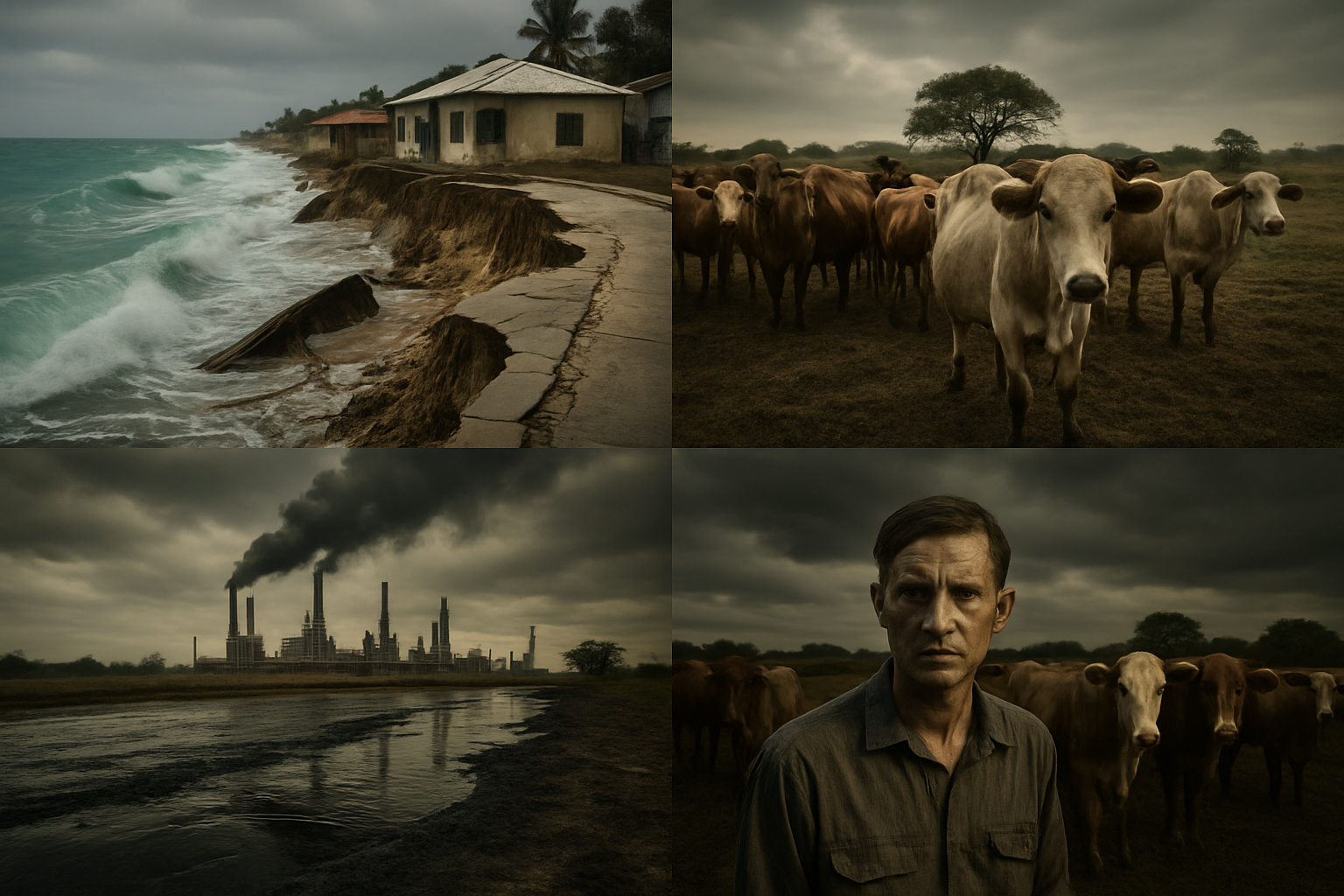
As global temperatures continue their relentless climb, marking the 19th consecutive month above 1.5°C pre-industrial levels, environmental crises are converging across multiple continents with devastating consequences for wildlife, water security, and climate stability.
A Planet News investigation reveals three interconnected environmental catastrophes unfolding simultaneously: Finland's bird populations face near-disappearance due to unprecedented winter severity, Nordic water supplies reach critically low levels, and new research exposes decades of accelerating ice loss in Antarctica that threatens global sea level stability.
Nordic Wildlife Crisis: Birds Vanish in Brutal Winter
The severity of Finland's winter has reached crisis proportions, with bird populations experiencing what experts describe as near-total disappearance from vast regions of the country. The prolonged and severe cold has driven even hardy waterbirds from southern Finland to seek refuge elsewhere, leaving ornithologists alarmed about the survival prospects for numerous species.
"The winter has been so harsh that birds have practically vanished," confirmed wildlife monitoring stations across Finland. Small songbirds, which typically endure Finnish winters through careful energy conservation, have been pushed beyond their survival limits by the sustained extreme cold.
The crisis extends beyond immediate survival concerns. Extended periods of brutal weather disrupt breeding cycles, migration patterns, and food web relationships that have evolved over millennia. Climate scientists warn that while individual extreme weather events have always occurred, the increasing frequency and intensity of such events represents a fundamental shift in environmental conditions.
"These aren't just bad weather years anymore – we're seeing systematic disruption of the environmental patterns that wildlife depends on for survival."
— Dr. Elena Korhonen, Finnish Environmental Institute
Nordic Water Emergency: Historic Shortages Grip Region
Parallel to the wildlife crisis, the Nordic region faces what meteorologists describe as historically weak water conditions, creating unprecedented challenges for both human populations and ecosystems. The situation has become so critical that energy markets are responding, with power companies advising customers to hope for a rainy spring to alleviate pressure on electricity systems dependent on hydroelectric power.
Vattenfall, one of the region's major energy providers, has specifically warned that electricity customers, particularly those on spot market contracts, should anticipate significant impacts if precipitation patterns don't improve dramatically in the coming months.
The water shortage reflects a complex interaction between changing precipitation patterns, altered storm tracks, and warming temperatures that affect snow accumulation and melt cycles. Traditional Nordic water management systems, developed over centuries to handle predictable seasonal variations, are struggling to adapt to increasingly erratic weather patterns.
The crisis has cascading effects throughout Nordic societies. Agriculture faces irrigation challenges, hydroelectric power generation operates at reduced capacity, and ecosystem services that depend on adequate water flow are under severe stress.
Antarctic Ice Loss: Three Decades of Accelerating Destruction
Perhaps most alarming for global climate stability, new research from American scientists reveals that vulnerable sections of Antarctica have been losing ice at unprecedented rates over the past 30 years. The study, conducted by glaciologists from the University of California, Irvine, documents ice loss equivalent to the area of Vienna every single year.
Since 1996, the total ice retreat has reached 12,820 square kilometers, representing a massive reduction in Earth's frozen water reserves. The research focused on particularly sensitive regions where warming ocean waters and changing atmospheric conditions have created conditions for accelerated ice loss.
West Antarctica emerges as especially vulnerable in the study findings. This region contains ice sheets that, if completely melted, would contribute significantly to global sea level rise, potentially affecting coastal communities worldwide.

The Antarctic research builds upon decades of climate monitoring that have documented Earth's changing ice dynamics. Scientists emphasize that ice loss at this scale represents not just regional environmental change, but a fundamental shift in the planet's climate system with global implications.
Convergence of Climate Impacts
These three environmental challenges illustrate how climate change manifests differently across regions while maintaining interconnected global impacts. Finland's brutal winter, Nordic water shortages, and Antarctic ice loss each represent different aspects of a destabilizing climate system.
The wildlife impacts in Finland demonstrate how extreme weather events can push species beyond their adaptive capacity. Traditional survival strategies that enabled birds to endure Nordic winters for thousands of years prove insufficient against the intensity of current weather extremes.
Water security challenges across the Nordic region reveal how changing precipitation patterns affect not just immediate human needs, but entire economic systems built around predictable seasonal water cycles. The crisis in hydroelectric power generation shows how environmental changes can rapidly translate into economic and social pressures.
Antarctic ice loss provides the long-term context for understanding how regional environmental changes contribute to global climate impacts. The research spanning three decades offers crucial insights into the pace and scale of changes affecting Earth's largest ice continent.
Global Climate Context
These developments occur within the context of sustained global warming that has now exceeded 1.5°C above pre-industrial levels for 19 consecutive months. January 2026 marked the hottest month in recorded history, demonstrating that human-induced climate change has fundamentally altered Earth's atmospheric systems beyond natural recovery mechanisms.
The persistence of extreme temperatures, overriding even La Niña cooling effects that typically moderate global temperatures, indicates that climate change is no longer an abstract future threat but a present reality affecting ecosystems worldwide.
"We're witnessing the convergence of climate impacts across multiple systems simultaneously – wildlife, water resources, and ice dynamics all experiencing unprecedented stress."
— Dr. Michael Chen, Global Climate Monitoring Center
International Response and Adaptation
The scale and interconnected nature of these environmental challenges demands unprecedented international cooperation. Climate monitoring systems that track Antarctic ice loss, Nordic water resources, and wildlife population dynamics require sustained investment in both technology and scientific collaboration.
Recent climate policy developments, including the European Union's commitment to 90% emissions reductions by 2040, represent attempts to address the underlying drivers of climate change. However, the timeline of environmental impacts revealed by current research suggests that adaptation measures are equally crucial to mitigation efforts.
Nordic countries are developing emergency response protocols for extreme weather events while investing in climate-resilient infrastructure. Antarctic research programs are expanding monitoring capabilities to better understand ice loss dynamics and improve sea level rise projections.
Technology and Traditional Knowledge Integration
Effective responses to these environmental challenges require sophisticated integration of cutting-edge technology with traditional ecological knowledge. Nordic communities are combining modern meteorological forecasting with indigenous understanding of seasonal weather patterns. Antarctic research utilizes advanced satellite monitoring alongside decades of field research experience.
Wildlife conservation efforts in Finland benefit from both high-tech tracking systems and traditional naturalist observations that provide context for current population changes. The combination of technological capabilities with established scientific understanding offers the most comprehensive approach to understanding and responding to environmental change.
Economic and Social Implications
The economic impacts of converging environmental challenges extend far beyond immediate crisis response costs. Nordic energy markets face volatility from water shortage impacts on hydroelectric generation. Tourism industries dependent on predictable seasonal conditions must adapt to increasingly erratic weather patterns.
Agricultural systems across affected regions require significant investment in adaptation measures, from drought-resistant crops to modified growing seasons. The cumulative cost of environmental adaptation may reach hundreds of billions across affected regions.
However, comprehensive environmental protection increasingly functions as economic development strategy rather than regulatory burden. Countries implementing robust climate adaptation measures demonstrate greater economic resilience and attract sustainable investment in emerging green technologies.
Future Implications and Strategic Response
The convergence of environmental challenges in early 2026 represents a critical juncture for global climate action. The window for effective environmental intervention continues narrowing as ecological systems approach critical thresholds that could trigger irreversible changes.
Success in addressing these challenges depends on sustained international cooperation, enhanced coordination across sectors and scales, and increased financial commitments that recognize environmental protection as essential infrastructure for human prosperity and planetary sustainability.
The diversity of impacts – from Arctic wildlife to Antarctic ice – provides both warnings about the scale of environmental change and opportunities for developing comprehensive response strategies. Tools and knowledge exist for effective environmental protection, but implementation requires unprecedented speed and coordination.
As Earth enters what scientists describe as a critical climate action decade, the experiences documented across Finland, the Nordic region, and Antarctica offer both sobering warnings and essential guidance for the massive global effort required to maintain planetary habitability for future generations.