Three nations on different continents are grappling with escalating environmental challenges as the planet experiences its 18th consecutive month of temperatures exceeding 1.5°C above pre-industrial levels, with January 2026 marking the hottest month in recorded history.
Afghanistan faces a looming agricultural crisis as meteorological experts warn of below-average rainfall across most provinces, threatening food security for millions. The UN has issued stark warnings about drought conditions that could devastate farming communities already struggling with economic instability and climate pressures.
Afghanistan's Water Crisis Intensifies
According to recent meteorological assessments, most Afghan provinces will experience significantly reduced precipitation, with levels remaining below seasonal norms. Only limited areas in the north and northeast may receive adequate rainfall, leaving vast agricultural regions vulnerable to drought conditions.
The timing is particularly concerning as Afghanistan's agricultural sector, which employs nearly 40% of the population, depends heavily on predictable seasonal rains for crop production. The potential drought comes as the country already faces severe economic challenges, making the population especially vulnerable to climate-related food insecurity.
"Limited precipitation poses serious risks to agriculture, water resources, and food security," according to the meteorological assessment. The situation highlights the compound nature of climate challenges facing developing nations, where environmental pressures intersect with existing economic vulnerabilities.
Vienna Launches Climate Innovation Hub
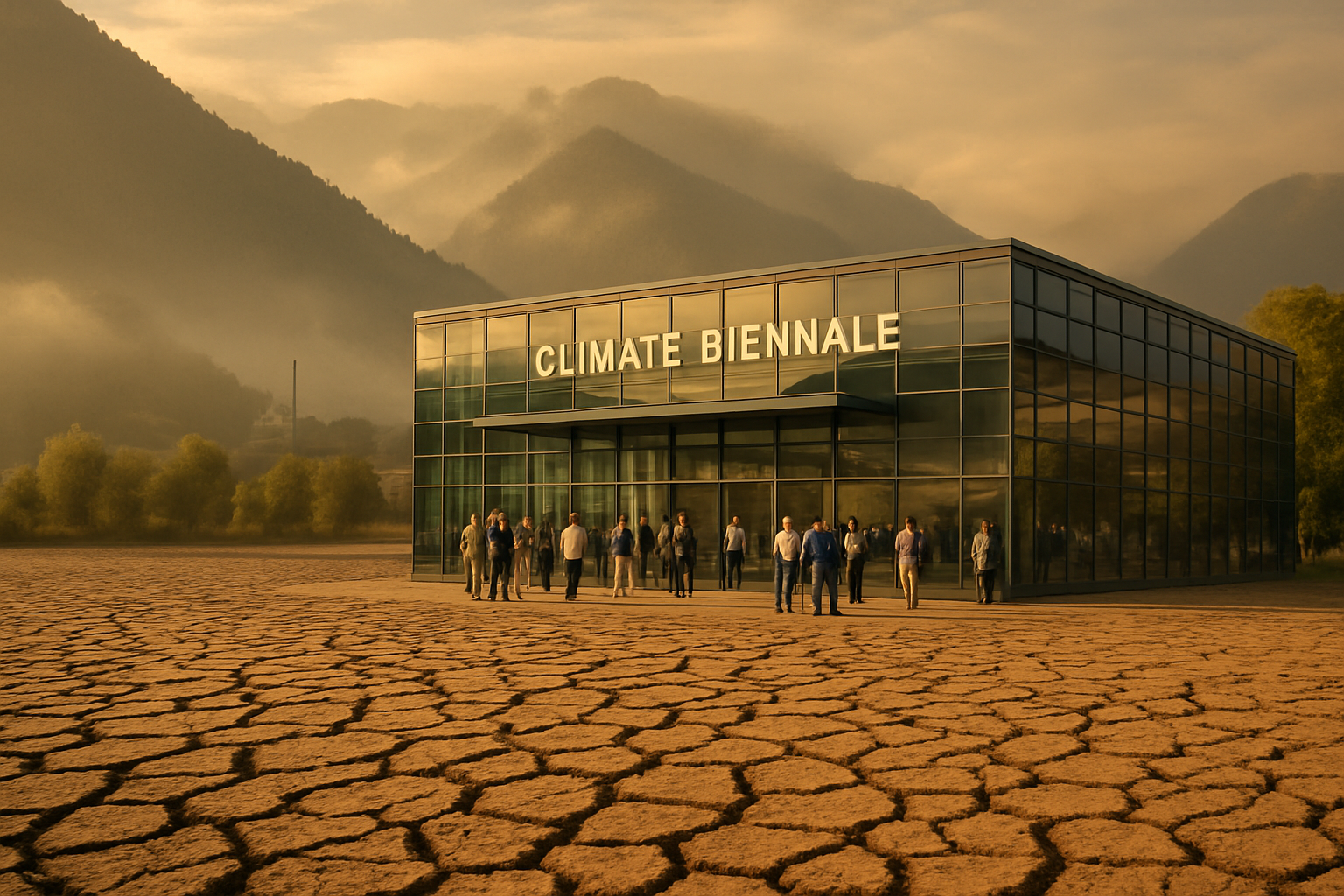
Meanwhile, Austria is taking a markedly different approach to climate challenges through cultural and educational initiatives. Vienna's second Climate Biennale, running from April 9 to May 10, represents a concentrated effort to engage the public with environmental issues through art, science, and community dialogue.
The festival, operating under the theme "Unspeakable Worlds," is significantly shorter than its 2024 predecessor but more focused. While the inaugural event featured 30 exhibitions and 780 events across 87 venues, this year's iteration emphasizes quality over quantity.
"We're not really offering less programming this year, but we're condensing it. Only through this condensation do we truly become a festival."
— Sithara Pathirana, Festival Director
The Climate Biennale positions itself as an "open city laboratory," using Vienna as a testing ground for climate solutions and public engagement strategies. This approach reflects a growing recognition that addressing climate change requires not just technological solutions but also cultural shifts and community involvement.
Bhutan Quantifies Climate's Economic Toll
Perhaps nowhere is the intersection of environmental and economic challenges more clearly documented than in Bhutan, where a landmark national assessment has calculated climate change's annual cost at $169 million. This figure represents a significant burden for a nation with a relatively small economy, despite Bhutan's status as a global leader in forest conservation.
The Himalayan kingdom maintains over 70% forest coverage and serves as one of the world's few carbon-negative countries. However, its mountainous geography makes it extraordinarily vulnerable to climate impacts, with erratic weather patterns increasingly disrupting agricultural systems and the broader economy.
"The fragile mountain environment makes Bhutan one of the most vulnerable countries on earth to climate change," the report notes. This vulnerability is particularly concerning given that climate impacts are affecting not just individual communities but the nation's overall economic prospects.
Bhutan's situation illustrates a cruel irony of the climate crisis: nations that have contributed least to global emissions often bear the heaviest burden of climate impacts. The $169 million annual toll represents approximately 2.5% of Bhutan's GDP, a substantial economic drain from environmental changes largely caused by emissions from wealthier nations.
Global Context of Environmental Acceleration
These regional challenges unfold against the backdrop of unprecedented global environmental conditions. January 2026's record-breaking temperatures extend a streak of extraordinary warming that has fundamentally altered Earth's climate system, overriding even natural cooling phenomena like La Niña effects.
The persistence of extreme temperatures creates cascading effects across environmental systems worldwide. In Afghanistan, changing precipitation patterns threaten traditional agricultural cycles. In Central Europe, extreme weather events are becoming more frequent and intense, necessitating innovative adaptation strategies like Vienna's public engagement approach. In Bhutan, temperature and precipitation changes are disrupting ecosystems that have remained stable for millennia.
Technology Meets Traditional Knowledge
The diverse responses to climate challenges across these three nations highlight different strategies for environmental adaptation. Afghanistan's situation demonstrates the urgent need for climate-resilient agricultural systems and water management technologies. Vienna's cultural approach emphasizes the importance of public engagement and community-based solutions. Bhutan's comprehensive economic assessment shows the value of quantifying climate impacts to guide policy decisions.
Drawing from historical memory of environmental initiatives, successful climate adaptation increasingly requires sophisticated integration of cutting-edge technology with traditional ecological knowledge and community-based management. This synthesis represents a fundamental evolution in environmental protection strategies, moving beyond purely technological or purely traditional approaches.
Economic Dimensions of Environmental Protection
The experiences of these three nations also illustrate how environmental challenges create both costs and opportunities. Afghanistan's drought conditions will impose massive economic burdens through reduced agricultural productivity and increased food insecurity. However, investment in climate-resilient infrastructure and water management could provide long-term economic benefits.
Vienna's Climate Biennale demonstrates how environmental engagement can become an economic driver, supporting tourism, research collaboration, and innovation industries. Bhutan's detailed economic assessment of climate impacts provides essential data for making informed decisions about adaptation investments.
Countries implementing comprehensive environmental protection often demonstrate greater economic resilience and attract sustainable investment, suggesting that environmental protection functions as an economic development strategy rather than merely a regulatory burden.
International Cooperation Imperative
The transnational nature of climate challenges demands unprecedented international cooperation. Atmospheric systems and climate patterns cross political boundaries, making unilateral efforts insufficient. Afghanistan's drought conditions are influenced by regional weather patterns that affect multiple countries. Vienna's innovations could provide models for other European cities. Bhutan's vulnerability assessment methodology could guide similar evaluations worldwide.
Success in addressing these challenges depends on sustained international cooperation, enhanced coordination across sectors and scales, and increased financial commitments that recognize environmental protection as essential infrastructure for both human prosperity and planetary sustainability.
A Critical Juncture for Environmental Action
The convergence of these environmental challenges in early 2026 represents a critical juncture for global environmental protection. The choice between reactive crisis management and proactive ecosystem service management may determine whether conservation efforts can keep pace with accelerating environmental change during this critical climate action decade.
Tools and knowledge exist for effective environmental protection, but success depends on rapid implementation through coordinated international responses. The window for effective action continues to narrow as ecological systems approach critical thresholds, making the environmental decisions of 2026 potentially decisive for the trajectory of global environmental protection in the decades ahead.
As Afghanistan faces potential drought, Vienna experiments with public engagement, and Bhutan quantifies economic impacts, their diverse experiences provide essential lessons for scaling environmental protection efforts worldwide during one of the most challenging periods in human environmental history.