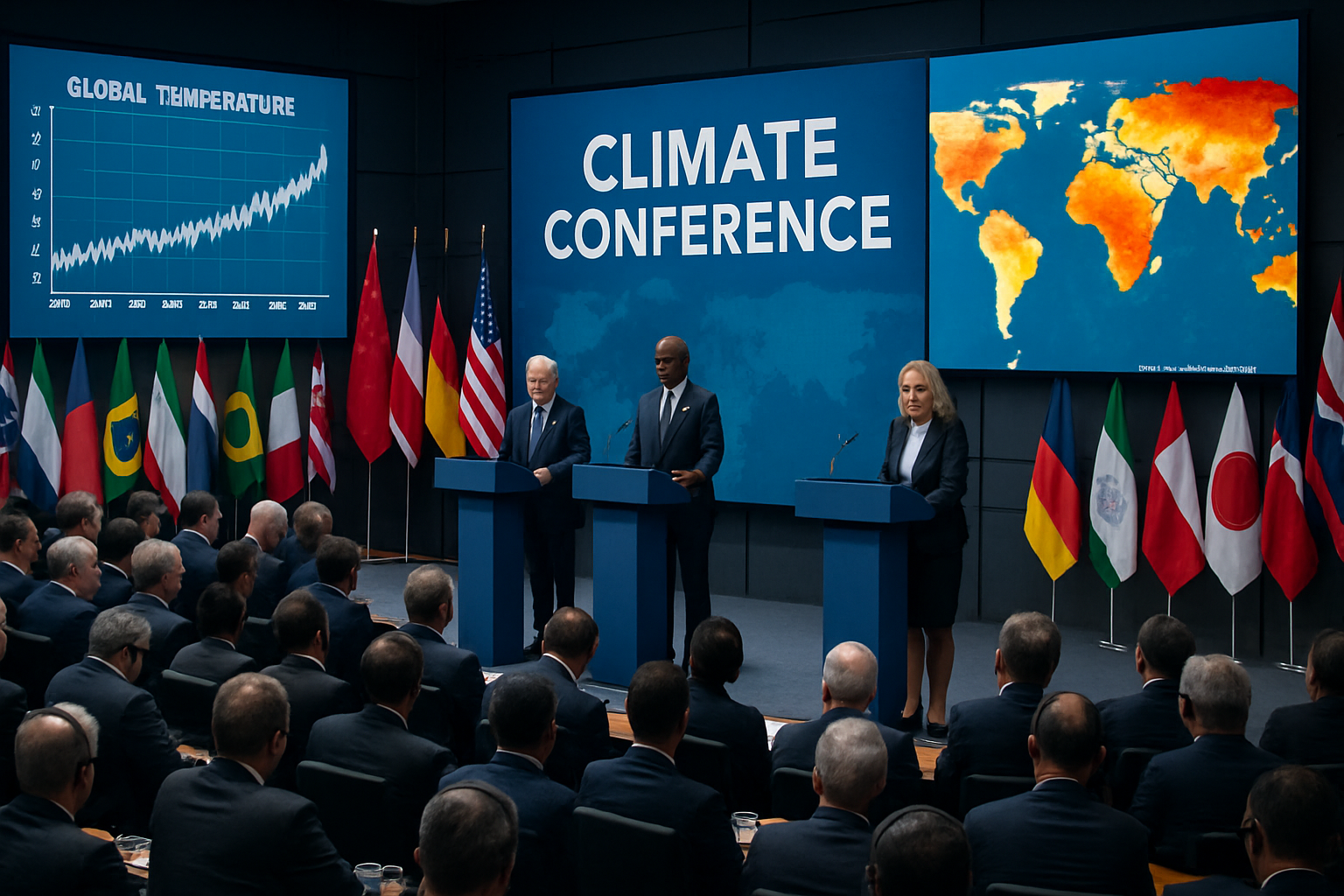
Climate advocates across Southeast Asia and the Caribbean are sounding urgent warnings about military emissions undermining global energy transition efforts, as Earth enters its 21st consecutive month of temperatures exceeding 1.5°C above pre-industrial levels—marking the longest sustained warming streak in recorded history.
The convergence of military-driven fossil fuel dependence and climate financing gaps has emerged as a critical blind spot in global environmental policy, according to activists from Climate Action Network Southeast Asia, Oxfam, and the Fossil Fuel Treaty who convened in Kuala Lumpur this week.
Military Carbon Footprint Threatens Climate Goals
Massive carbon emissions from military activities and war-driven fossil fuel dependence are systematically undermining the global energy transition, climate advocates warned during the Southeast Asia-South Asia Preparatory Meeting for COP31. The ongoing Iran conflict has exacerbated this long-standing oversight in international climate accounting.
Military operations represent one of the largest unregulated sources of global emissions, with defense spending and warfare creating what experts describe as a "gigantic ecological sacrifice zone" through both direct emissions and infrastructure destruction. Recent analysis shows the first 14 days of intensified bombardments generated 5 million tonnes of greenhouse gas emissions—equivalent to the combined carbon output of 84 countries.
Caribbean Leadership in Climate Pragmatism
Against this backdrop of environmental crisis, Caribbean leaders are pioneering a shift from climate rhetoric to practical action. Guyana's Vice President Dr. Bharrat Jagdeo delivered a pointed message to regional policymakers at the 124th Special Meeting of the Council for Trade and Economic Development (COTED), calling for climate strategy to move from "rhetoric to realism."
"Caricom leaders need to change their approach to tackling climate change. We must move beyond symbolic gestures to implement concrete, measurable actions that address our immediate vulnerabilities while building long-term resilience."
— Dr. Bharrat Jagdeo, Vice President of Guyana
Jagdeo's administration has positioned Guyana as a model for innovative climate finance, using revenue from high-quality forest carbon sales to fund comprehensive climate resilience initiatives along the country's vulnerable coastline, which sits below sea level.
Revolutionary Funding Models Emerge
Guyana's approach represents a fundamental departure from traditional climate finance models. The government is leveraging earnings from forest carbon credits—generated by the country's vast intact rainforests—to implement large-scale coastal protection infrastructure and climate adaptation measures.
This innovative financing mechanism addresses a critical gap identified by climate advocates: the need for sustainable, domestically-generated revenue streams that don't depend on volatile international aid flows or carbon markets dominated by developed nations.

Climate Finance Crisis Deepens
The urgency of new funding models becomes apparent when considering the broader climate finance crisis affecting small island developing states and vulnerable coastal nations. Analysis reveals these economies need $12 billion annually for climate adaptation but receive only $2 billion in international public finance.
Traditional donor-recipient relationships are proving inadequate to address the speed and scale of climate impacts. The Maldives has pioneered a "green tax" leveraging pristine marine ecosystems to fund conservation efforts, demonstrating how tourism can transform from an environmental threat to a conservation financing mechanism.
Military-Climate Nexus Requires Urgent Attention
Climate advocates argue the exclusion of military emissions from international climate commitments represents a fundamental flaw in global environmental governance. While civilian sectors face increasingly stringent emission reduction requirements, defense spending and military operations remain largely exempt from carbon accounting frameworks.
This exemption becomes particularly problematic as geopolitical tensions drive increased military expenditure and fossil fuel consumption. The Iran conflict's impact on global oil markets and emission spikes illustrates how warfare can rapidly undermine years of civilian emission reductions.
Regional Models for Global Action
Caribbean nations are developing practical frameworks that other regions can adapt to local conditions. The emphasis on "climate pragmatism" reflects recognition that abstract global targets must translate into specific, achievable actions tailored to regional vulnerabilities and capabilities.
Key elements of the Caribbean approach include:
- Revenue generation from natural capital assets
- Community-based adaptation strategies
- Regional cooperation on climate resilience
- Integration of traditional knowledge with modern climate science
This model contrasts sharply with top-down international climate frameworks that often fail to account for local economic realities and cultural contexts.
Technology-Tradition Integration Critical
Successful environmental initiatives across both Southeast Asia and the Caribbean demonstrate the importance of sophisticated integration between cutting-edge technology and traditional ecological knowledge. Satellite monitoring and environmental DNA analysis work alongside generations of community-based stewardship practices.
The synthesis represents a fundamental evolution in environmental protection methodology, moving beyond purely technological solutions toward comprehensive frameworks that respect cultural autonomy while leveraging global technological capabilities.
Economic Development as Environmental Strategy
The most effective environmental protection programs increasingly function as economic development strategies rather than regulatory burdens. Countries implementing comprehensive protection demonstrate greater economic resilience and attract sustainable investment across multiple sectors.
Environmental degradation costs—including healthcare expenses from pollution, infrastructure damage from extreme weather, and tourism losses from ecosystem destruction—often exceed proactive environmental protection investments. This economic reality is driving policy shifts toward preventive environmental action.
Critical Action Window Narrowing
The environmental initiatives emerge during Earth's most challenging period in recorded history. January 2026 marked the 21st consecutive month of global temperatures exceeding the critical 1.5°C threshold, with sustained warming completely overriding natural climate variability including La Niña cooling effects.
This unprecedented climate context creates additional stress on environmental systems already under pressure from development, pollution, and ecosystem degradation. Traditional conservation approaches designed for stable environmental conditions require fundamental adaptation to address rapidly changing baseline conditions.
"We are no longer managing environmental challenges within historical parameters. Every month of delay in implementing comprehensive climate action makes future adaptation exponentially more difficult and expensive."
— Climate Action Network Southeast Asia spokesperson
International Cooperation at Breaking Point
The convergence of environmental crises is exposing limitations in current international cooperation frameworks designed for sequential rather than simultaneous disasters. Traditional mutual aid mechanisms prove inadequate when multiple regions face environmental emergencies concurrently.
Success depends on unprecedented coordination across atmospheric systems, ocean currents, and species migrations that transcend political boundaries. Knowledge sharing between Southeast Asian military emissions monitoring and Caribbean climate finance innovation creates global networks strengthening local capacity while contributing to planetary sustainability.
Strategic Significance of March 2026
March 2026 represents a critical juncture between reactive crisis management and proactive ecosystem service management. The environmental action window is narrowing rapidly as ecological systems approach critical thresholds potentially triggering irreversible changes affecting global food security, climate stability, and human settlements.
Tools, knowledge, and cooperation frameworks exist for comprehensive environmental protection, as demonstrated by diverse initiatives from military emissions monitoring to innovative climate finance. However, success depends on sustained international cooperation, enhanced multi-sector coordination, and increased financial commitments recognizing environmental protection as essential infrastructure for human prosperity and planetary sustainability.
Path Forward: From Rhetoric to Reality
The convergence of Southeast Asian military emissions concerns and Caribbean climate pragmatism offers a template for moving beyond symbolic environmental commitments toward measurable action. The integration of immediate crisis response with long-term resilience building provides practical guidance for the coordinated effort required during this decisive climate action decade.
Success will determine whether humanity can organize and implement solutions rapidly enough to match the pace of environmental change while protecting the natural systems upon which human prosperity depends. The initiatives documented in March 2026 potentially provide decisive foundations for environmental approaches in the decades ahead, influencing global biodiversity protection, climate adaptation, and sustainable development strategies for generations.