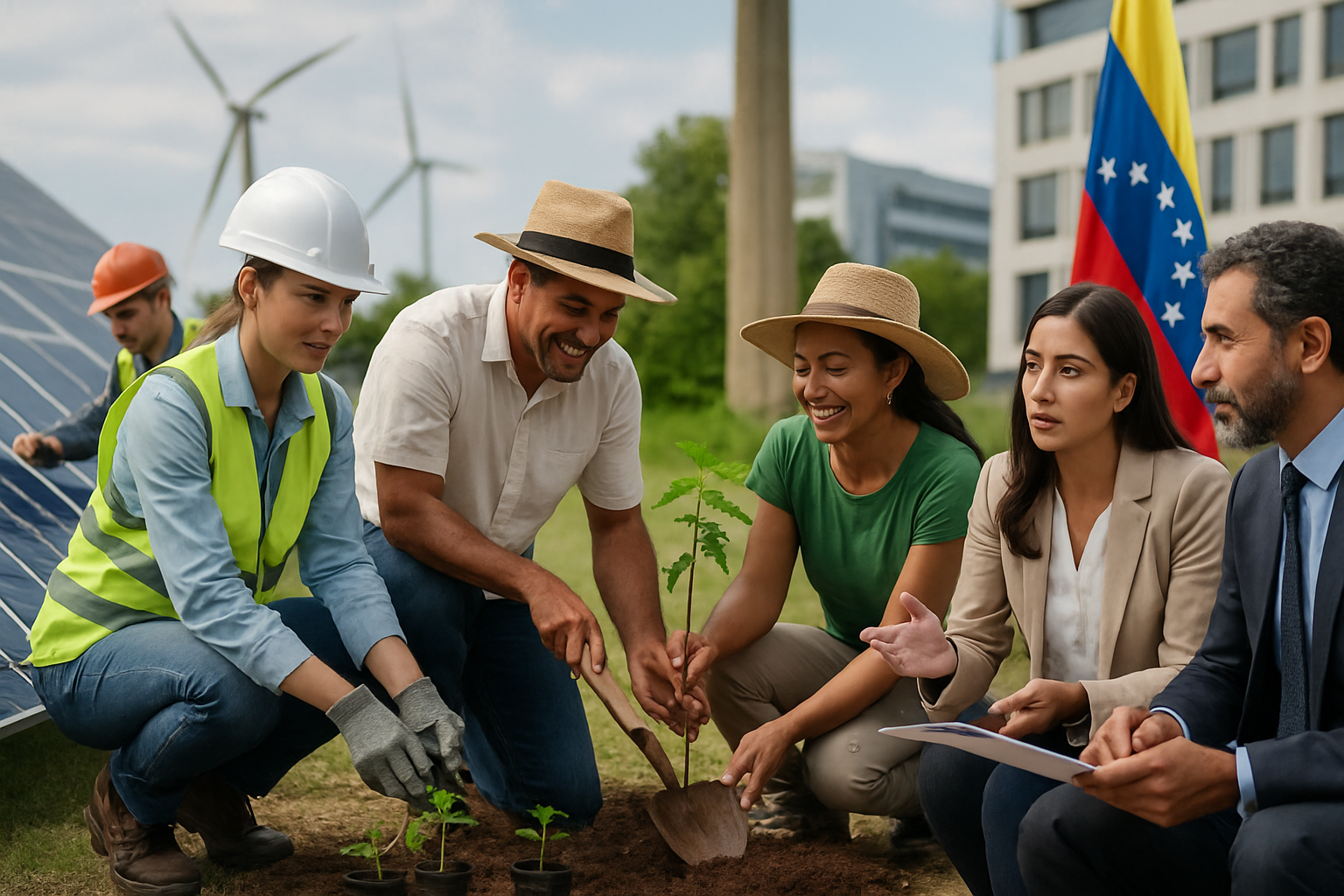
As March 2026 marks the 21st consecutive month of global temperatures exceeding critical 1.5°C pre-industrial levels, three nations demonstrate contrasting approaches to environmental action: Nicaragua celebrates ecological progress, the United Kingdom advances renewable accessibility, while Venezuela faces mounting opposition to resource extraction policies.
Nicaragua's Ecological Renaissance
Nicaragua has launched a comprehensive ecological initiative to commemorate the 46th anniversary of the National Literacy Crusade, combining tree adoption and planting campaigns across multiple localities. The program promotes environmental awareness and community participation, representing a significant evolution from traditional commemorative events to substantive environmental action.
The initiative demonstrates Nicaragua's commitment to integrating environmental protection with social development programs. By linking literacy education anniversaries with ecological restoration, the government creates meaningful connections between human development and environmental stewardship. Community participation in tree planting and adoption programs establishes long-term environmental engagement beyond symbolic gestures.
United Kingdom's Renewable Energy Revolution
The United Kingdom is advancing a revolutionary approach to residential renewable energy, with plug-in solar panels expected to become available in supermarkets within months. This accessibility breakthrough represents a paradigm shift from complex installation requirements to user-friendly renewable energy adoption for households.
The UK's strategy includes mandating heat pumps for all new homes alongside the plug-in solar initiative, creating a comprehensive green technology drive. This dual approach addresses both heating efficiency and renewable electricity generation, positioning individual households as active participants in the national energy transition rather than passive consumers.
The supermarket availability of plug-in solar panels eliminates traditional barriers including complex installation processes, high upfront costs, and specialized technical knowledge. Households can now implement renewable energy solutions with the same convenience as purchasing conventional appliances, potentially accelerating residential adoption rates significantly.
Venezuela's Environmental Protection Controversy
Venezuelan environmental organizations are raising urgent concerns about a proposed mining law, arguing it omits mandatory environmental and sociocultural impact studies while excluding indigenous rights to territorial demarcation and free, prior, and informed consent. The opposition highlights fundamental tensions between resource extraction and environmental protection.
The controversy centers on whether the proposed legislation adequately addresses environmental safeguards and indigenous rights. Environmental groups contend that the law prioritizes resource extraction over ecosystem protection and community rights, potentially creating irreversible environmental damage while marginalizing traditional land stewardship practices.
"The proposed mining law represents a dangerous precedent for environmental governance, potentially undermining decades of conservation progress and indigenous sovereignty."
— Venezuelan Environmental Coalition
Global Climate Context
These national initiatives unfold against unprecedented global climate conditions. January 2026 confirmed the hottest recorded month in Earth's history, extending a 21-month streak of temperatures exceeding the critical 1.5°C threshold above pre-industrial levels. This sustained warming demonstrates human-induced climate change has fundamentally altered atmospheric systems beyond natural recovery mechanisms.
The temperature elevation creates cascading environmental effects requiring immediate coordinated responses. Ocean currents, atmospheric circulation patterns, and ecosystem dynamics have shifted beyond historical norms, making traditional environmental management approaches inadequate for current conditions.
Technology-Tradition Integration
Successful environmental initiatives increasingly demonstrate sophisticated integration of cutting-edge technology with traditional ecological knowledge and community-based management. Nicaragua's community tree planting combines modern environmental science with traditional stewardship practices. The UK's plug-in solar technology makes advanced renewable systems accessible to mainstream consumers. Venezuela's environmental debate reflects tensions between modern extractive industries and traditional ecological management systems.
This integration represents fundamental evolution in environmental protection methodology, moving beyond purely technological or traditional approaches toward comprehensive frameworks that combine scientific rigor with cultural sensitivity and community ownership.
Economic Development Through Environmental Action
Contemporary environmental protection functions as an economic development strategy rather than a regulatory burden. Nicaragua's ecological initiatives support sustainable tourism and international environmental partnerships. The UK's renewable technology accessibility creates domestic clean energy markets while positioning the nation as a leader in residential renewable innovation. Venezuela's environmental protection advocacy aims to preserve ecosystem services essential for long-term economic stability.
Countries implementing comprehensive environmental protection demonstrate greater economic resilience and attract sustainable investment across multiple sectors, including green technology manufacturing, eco-tourism, and environmental services. Economic benefits extend beyond direct environmental sectors through improved public health, enhanced agricultural productivity, and reduced infrastructure costs from natural disaster prevention.
International Cooperation Imperatives
Environmental challenges transcend political boundaries through ocean currents, atmospheric systems, and species migrations, making unilateral efforts insufficient. Success requires coordinated policy frameworks, shared monitoring systems, collaborative enforcement, and innovative financing mechanisms that recognize ecosystem services' economic value.
The diversity of approaches across Nicaragua, the UK, and Venezuela provides resilience against single-solution dependencies, offering multiple adaptation pathways for complex environmental challenges spanning biological, physical, and human systems. Knowledge sharing enables learning from both successes and failures in policy implementation.
Implementation Challenges and Opportunities
Funding sustainability remains critical for developing nations where immediate economic pressures often override long-term environmental considerations. Technical capacity building requires sustained investment in education, training, and institutional development. Climate change continues disrupting project timelines, requiring adaptive management responding to rapidly changing conditions.
However, opportunities include enhanced international partnerships accelerating technology transfer, South-South cooperation for knowledge sharing while maintaining local autonomy, and innovative financing mechanisms recognizing ecosystem services value for economic stability.
Strategic Significance for Global Climate Action
March 2026 represents a critical juncture in global environmental protection, presenting a choice between reactive crisis management and proactive ecosystem service management. The environmental action window is rapidly narrowing as ecological systems approach critical thresholds that could trigger potentially irreversible changes affecting global food security, climate stability, and human settlements.
The tools, knowledge, and cooperation frameworks exist for comprehensive environmental protection, as demonstrated by diverse initiatives across continents. Success depends on sustained international cooperation, enhanced multi-sector coordination, and increased financial commitments recognizing environmental protection as essential infrastructure for human prosperity and planetary sustainability.
Future Implications
Environmental choices made in 2026 may prove decisive for conservation approaches in decades ahead. The contrast between nations advancing comprehensive environmental policies and those retreating from climate commitments will likely determine the global environmental trajectory. As climate impacts intensify, the coordination demonstrated by progressive environmental initiatives provides crucial lessons for scaling protection efforts globally.
The convergence of environmental urgency, technological innovation, and international cooperation offers hope for maintaining planetary habitability during this unprecedented environmental challenge period. Success requires maximum urgency in coordinated response, recognizing that environmental protection forms essential infrastructure for human societies to adapt and thrive during accelerating climate change.