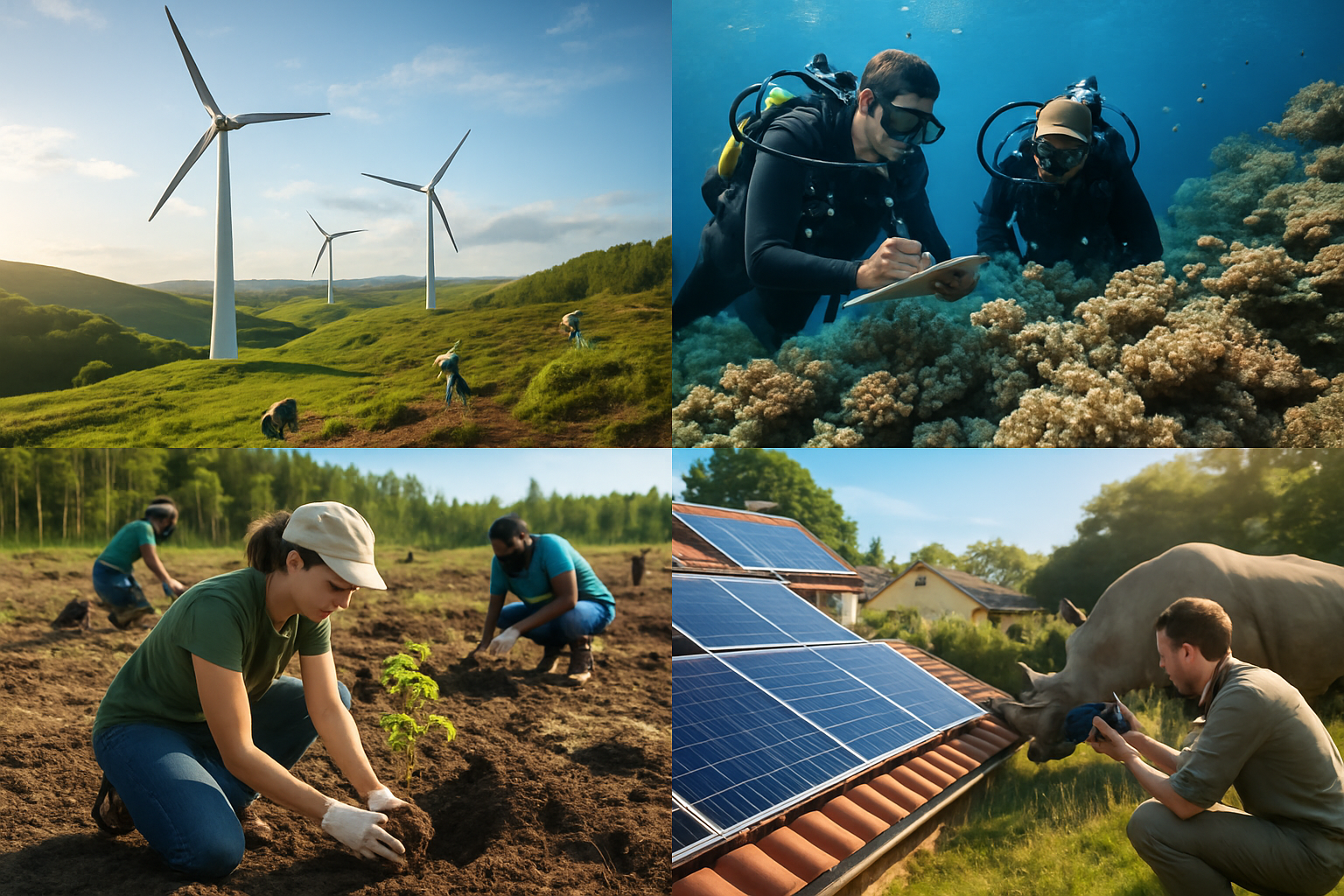
Environmental activists across the Democratic Republic of Congo, Denmark, and nine other nations are leading an unprecedented global conservation renaissance, demanding immediate action against fossil fuel exploitation while pioneering innovative recycling technologies that saved millions in costs and dramatically reduced carbon emissions.
In a powerful demonstration of youth environmental leadership, approximately sixty young activists took to the streets of Beni in North Kivu on Wednesday, April 7, demanding the suspension of contracts between the Congolese state and petroleum company Perenco. The protesters argued that oil exploitation in Muanda, located in Kongo-Central province, fails to benefit local populations while causing significant environmental degradation.
Denmark's Circular Economy Breakthrough
Meanwhile, Denmark's regional governments achieved a remarkable environmental and economic milestone through innovative building material recycling programs. The initiative generated substantial cost savings while delivering massive CO2 emission reductions, demonstrating how circular economy principles can simultaneously address climate change and economic pressures.
The success builds on broader Scandinavian environmental leadership, with multiple regional authorities implementing comprehensive waste reduction strategies that transform construction industry practices. These programs represent a fundamental shift from traditional linear consumption models toward sustainable resource management systems.
Maritime Environmental Preparedness
In Greece, the Port of Piraeus conducted a critical emergency preparedness drill for sea pollution response, activating the PPA Spillage Contingency Plan at the Cruise Terminal. The exercise simulated a marine pollution incident, testing response protocols essential for protecting Mediterranean marine ecosystems from industrial accidents and shipping-related contamination.

This maritime safety initiative reflects growing recognition that environmental protection requires comprehensive emergency preparedness, particularly as shipping traffic increases and climate change intensifies extreme weather events that can trigger pollution incidents.
Wildlife Conservation Innovations
New Zealand researchers achieved a remarkable scientific breakthrough by developing tiny transmitter backpacks weighing just 0.5 grams to track the country's smallest amphibians. The innovative tracking technology enables detailed monitoring of endangered native frogs without interfering with their natural behaviors or survival capabilities.
"These are tiny backpacks because they are tiny frogs," explained lead researcher Dr. Sarah Thompson. "This technology opens unprecedented opportunities for understanding and protecting our most vulnerable native species."
— Dr. Sarah Thompson, Conservation Biologist
The research represents a significant advancement in conservation technology, providing non-invasive methods for studying species that are difficult to observe through traditional monitoring approaches. The data collected will inform critical habitat protection decisions as climate change increasingly threatens New Zealand's unique biodiversity.
Industrial Environmental Accountability
Conservation efforts face ongoing challenges from extractive industries, as highlighted by the New Zealand Department of Conservation's decision regarding McCallum Brothers sand mining operations at Pākiri. Following complaints about dredging activities carried out in the temporary sand extraction area north of Auckland in 2025, DOC determined no enforcement action was necessary, raising questions about environmental oversight effectiveness.
Urban Climate Adaptation
Switzerland's urban environmental challenges came into focus with ongoing disputes over bicycle infrastructure at Neumühlequai, where traffic signal systems remain non-functional despite technical feasibility. The situation reflects broader tensions between sustainable transportation development and bureaucratic implementation challenges facing cities attempting rapid climate adaptation.
Historic Building Conservation
The United Kingdom demonstrated innovative approaches to heritage conservation through environmental integration. A unique RAF watch office that has deteriorated for decades will be transformed into a holiday retreat under a £700,000 plan approved by local councils. The Landmark Trust project will convert the ruined property in Hampshire's New Forest into accommodation shared by holidaymakers and the six species of bats already inhabiting the structure.
This creative conservation approach shows how environmental protection can be integrated with cultural preservation, creating sustainable funding mechanisms for heritage site maintenance while respecting existing wildlife populations.
Marine Ecosystem Crisis
The United Kingdom faces a significant marine conservation crisis as the Marine Conservation Society warns that consumers should "completely avoid" UK-caught cod due to population collapse. Despite zero-catch recommendations, cod numbers have reached dangerous decline levels, threatening both marine ecosystem health and traditional fishing community livelihoods.
The crisis reflects broader marine ecosystem pressures from climate change, overfishing, and habitat degradation that require immediate international cooperation and innovative conservation approaches. Marine biologists emphasize that current trajectories could lead to irreversible ecosystem collapse within years rather than decades.
Energy Security and Environmental Protection
Environmental advocates in the UK are proposing revolutionary energy policy changes, suggesting all households should receive minimum energy amounts at government-subsidized rates funded through North Sea taxes. The proposal would provide enough energy to heat two rooms, supply hot water, and run essential appliances at rates frozen at current levels, requiring approximately £4.5 billion in subsidies.
The New Economics Foundation argues this approach would prevent households from incurring energy debt while supporting climate transition goals. The proposal represents growing recognition that environmental protection and social equity must be addressed simultaneously for effective climate action.
Global Temperature Records and Climate Urgency
These environmental initiatives emerge during an unprecedented period of global warming, with recent months consistently exceeding critical temperature thresholds. Climate scientists report that human-induced climate change has fundamentally altered atmospheric systems beyond natural recovery mechanisms, creating compound environmental effects that traditional conservation approaches struggle to address.
The sustained warming pattern demonstrates the urgent need for coordinated international environmental action that integrates immediate crisis response with long-term ecosystem protection strategies. Environmental advocates emphasize that the current decade represents a critical window for preventing irreversible climate system changes.
Technology Integration Success
Successful environmental initiatives consistently demonstrate sophisticated integration of cutting-edge technology with traditional ecological knowledge and community-based management systems. From Congolese youth activism to Danish recycling innovations, effective conservation requires comprehensive frameworks that combine scientific rigor with cultural sensitivity and community ownership.
This technological synthesis includes satellite monitoring, environmental DNA sampling, and AI-powered analysis working alongside generations of traditional conservation knowledge. The approach represents a fundamental evolution in environmental protection methodology toward more inclusive and sustainable strategies.
Economic Development Through Environmental Protection
Modern environmental protection increasingly functions as an economic development strategy rather than a regulatory burden. Countries and regions implementing comprehensive environmental protection consistently demonstrate greater economic resilience and attract sustainable investment across multiple sectors including eco-tourism, green technology manufacturing, and environmental services.
- Denmark's circular economy initiatives create specialized employment while reducing waste management costs
- New Zealand's conservation technology attracts international research partnerships and funding
- UK heritage conservation generates sustainable tourism revenue while protecting cultural and natural assets
- Marine protection efforts support sustainable fishing industries and coastal community resilience
International Cooperation Imperative
Environmental challenges increasingly demand unprecedented international cooperation as pollution, climate systems, and species migrations transcend political boundaries. Success requires coordinated policy frameworks, shared monitoring systems, collaborative enforcement mechanisms, and innovative financing that recognizes the economic value of ecosystem services.
The diversity of approaches across different nations and regions provides resilience against single-solution dependencies while offering multiple adaptation pathways for complex environmental challenges. Knowledge sharing creates global networks that strengthen local capacity while contributing to planetary sustainability.
Looking Forward: Critical Action Window
April 2026 represents a critical juncture for global environmental protection, with experts emphasizing the choice between reactive crisis management and proactive ecosystem service management. The environmental action window is rapidly narrowing as ecological systems approach critical thresholds that could trigger irreversible changes affecting global food security, climate stability, and human settlements.
However, the tools, knowledge, and cooperation frameworks exist for comprehensive environmental protection. Success depends on sustained international cooperation, enhanced coordination across sectors and scales, and increased financial commitments that recognize environmental protection as essential infrastructure for human prosperity and planetary sustainability.
The convergence of youth activism in Congo, technological innovation in Denmark, maritime preparedness in Greece, wildlife conservation in New Zealand, and policy debates across the UK demonstrates both the urgency of environmental challenges and the remarkable human capacity for innovative response. These initiatives provide practical templates for scaling environmental protection globally through coordinated approaches that address multiple challenges while building local capacity and fostering international cooperation.