Three nations across continents are implementing groundbreaking environmental conservation measures, representing diverse yet coordinated approaches to protecting biodiversity and sustainable development as the world faces unprecedented climate pressures during the 18th consecutive month exceeding 1.5°C above pre-industrial levels.
From the pristine mountain watersheds of Bhutan to the contested waters of Manila Bay in the Philippines and the agricultural landscapes of Estonia, countries are deploying innovative conservation strategies that blend cutting-edge technology with traditional knowledge systems while addressing mounting environmental and economic challenges.
Bhutan Pioneers Next-Generation Biodiversity Mapping
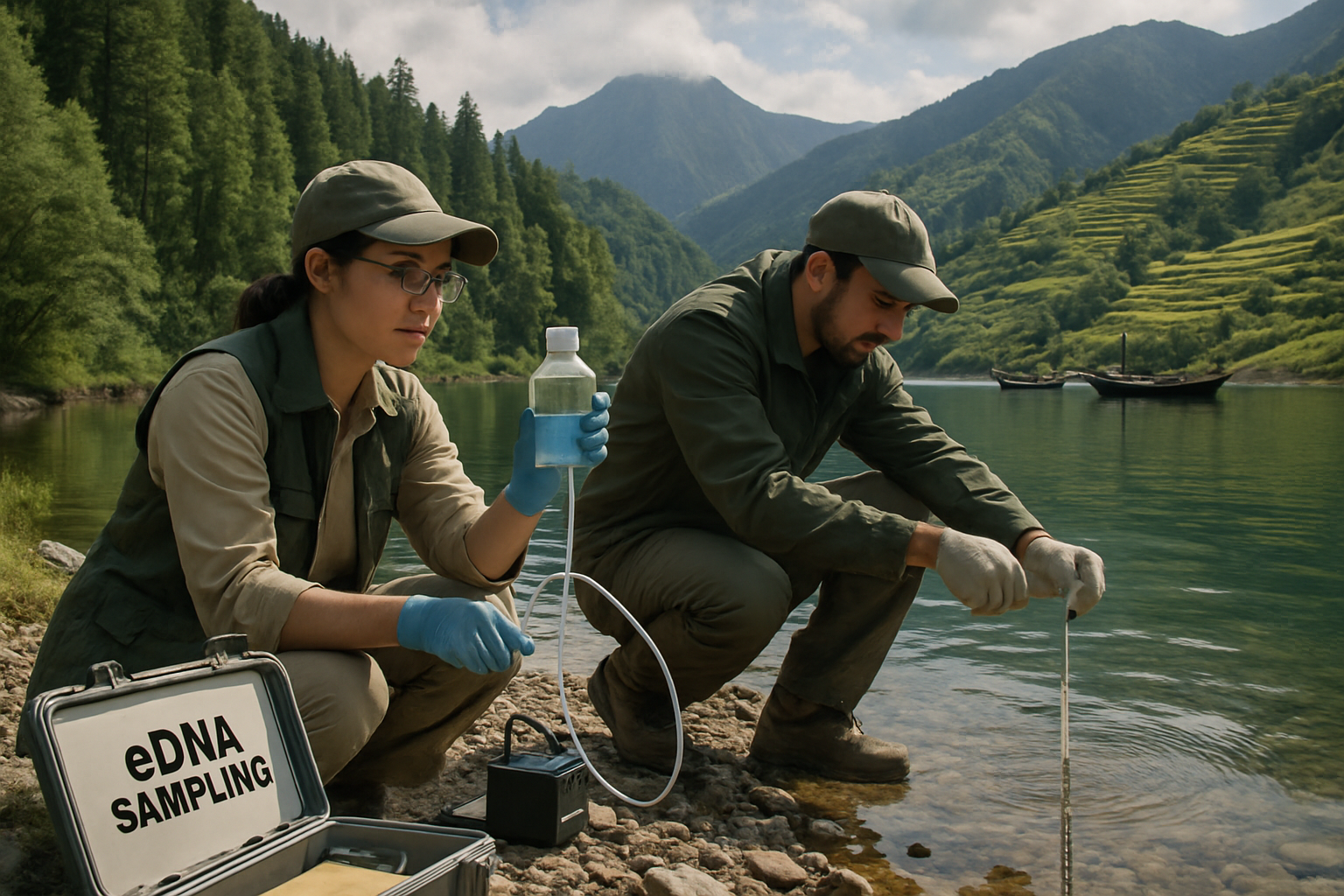
The Kingdom of Bhutan is preparing to launch the world's most advanced national biodiversity database using revolutionary environmental DNA (eDNA) technology, marking a significant breakthrough in conservation science and ecosystem monitoring.
The innovative eDNA methodology identifies different animal species by analyzing DNA traces found in water samples, providing unprecedented accuracy in biodiversity mapping without requiring direct wildlife observation. This non-invasive technique can detect species presence even when animals are not visible, offering crucial insights into habitat distribution and ecosystem health across Bhutan's diverse landscapes.
To prepare for this historic initiative, 24 forest officials from across the country have undergone specialized training in eDNA collection and analysis techniques. The program represents Bhutan's commitment to combining scientific innovation with its constitutional mandate to maintain at least 60% forest coverage, currently exceeding 70%.
"This eDNA technology will revolutionize our understanding of Bhutan's biodiversity, providing precise data on species distribution and ecosystem health that will inform conservation decisions for generations to come."
— Bhutanese Forest Department Official
The national biodiversity database will serve multiple critical functions: tracking endangered species populations, monitoring ecosystem changes in response to climate variability, identifying biodiversity hotspots requiring enhanced protection, and supporting Bhutan's role as a global leader in environmental conservation while maintaining its Gross National Happiness development philosophy.
Philippines Faces Manila Bay Environmental Crisis
Environmental organizations in the Philippines are escalating pressure on President Ferdinand Marcos Jr. to halt potentially devastating Manila Bay reclamation projects amid worsening flood conditions across Metro Manila, highlighting the complex intersection of urban development and environmental protection.
Nearly two decades after the landmark Supreme Court mandamus ordered comprehensive Manila Bay rehabilitation, advocacy groups, environmental organizations, and religious leaders are demanding transparency in the approval processes of the Philippine Reclamation Authority. The petition represents growing concern over the environmental and economic consequences of large-scale coastal development projects.
Environmental activists argue that continued reclamation activities are exacerbating flooding problems across the metropolitan region while threatening marine ecosystems that have been under restoration efforts since the early 2000s. The controversy demonstrates the evolution of Manila Bay environmental issues from pollution and waste management to fundamental questions about sustainable coastal development.
The environmental movement emphasizes that worsening flood conditions across Metro Manila are directly linked to reduced natural water retention capacity caused by reclamation activities. These projects eliminate crucial wetland areas that traditionally served as natural flood buffers while increasing impermeable surface area, creating cascading environmental and safety risks.
"The Manila Bay question has evolved from focusing on trash to addressing the reclamations lining the bay since the Supreme Court mandamus, and we must prioritize environmental protection over commercial development."
— Philippines Environmental Advocacy Group Representative
The petition calls for comprehensive review of approval processes, enhanced transparency in environmental impact assessments, and stronger community participation in development decisions affecting one of Southeast Asia's most important marine ecosystems.
Estonia Advances Sustainable Agricultural Innovation
Estonian agricultural producers are implementing innovative approaches to enhance local food production competitiveness while reducing environmental impact, demonstrating how small nations can lead in sustainable agriculture development.
Apple growers across Estonia report that local fruit production faces significant challenges competing with cheaper imports, prompting calls for state-backed mechanization and modernization initiatives. The proposed improvements would enhance production efficiency while maintaining environmental sustainability standards crucial for Estonia's agricultural sector.
Estonian farmers argue that strategic investment in mechanization and production technology could dramatically reduce production costs, making local produce more competitive while creating employment opportunities in rural communities. The initiative reflects broader European Union trends toward agricultural modernization that balances economic viability with environmental protection.
The mechanization proposal includes advanced precision agriculture techniques, sustainable water management systems, and energy-efficient processing equipment that would reduce the carbon footprint of local food production while improving quality and shelf life of Estonian agricultural products.
Estonia's approach demonstrates how smaller European nations can leverage technology and strategic investment to maintain agricultural sovereignty while meeting stringent environmental standards. The country's agricultural sector serves as a model for climate-adaptive farming practices that preserve biodiversity while supporting rural economic development.
Global Context and Climate Urgency
These conservation initiatives occur during a critical period for global environmental action. January 2026 marked the hottest month in recorded history, representing the 18th of the past 19 months exceeding 1.5°C above pre-industrial levels, demonstrating that global warming is overriding natural climate variability patterns.
The coordinated nature of these diverse conservation approaches reflects a sophisticated understanding that effective environmental protection requires multiple complementary strategies adapted to local conditions while contributing to global climate goals. Each initiative demonstrates the integration of technological innovation with traditional conservation knowledge and community-based management.
Historical context reveals this conservation surge builds upon recent global environmental initiatives including marine conservation partnerships across the Caribbean, renewable energy expansion in Romania and Finland, wetland restoration in Zimbabwe, and innovative agricultural programs across Africa and Latin America.
Technology Integration and Innovation
The three conservation initiatives showcase different aspects of how modern technology enhances traditional environmental protection approaches. Bhutan's eDNA program represents cutting-edge biological monitoring, the Philippines controversy highlights the need for sophisticated environmental impact assessment, and Estonia's mechanization proposal demonstrates sustainable agricultural technology integration.
These technological approaches enable more precise monitoring, evidence-based decision-making, and adaptive management strategies essential for addressing rapidly changing environmental conditions. The integration of digital monitoring systems, satellite tracking, and artificial intelligence tools provides real-time data supporting immediate threat response and long-term strategic planning.
Economic Implications and Sustainable Development
Each conservation initiative demonstrates how environmental protection can serve as an engine for economic development rather than a constraint on growth. Bhutan's biodiversity database supports eco-tourism development and international research collaboration, Philippines environmental advocacy promotes sustainable coastal development alternatives, and Estonia's agricultural modernization creates rural employment while reducing import dependencies.
The economic dimensions extend beyond immediate project benefits to include ecosystem service valuation, climate adaptation cost avoidance, and long-term sustainability dividends. Countries implementing comprehensive environmental protection typically demonstrate stronger economic resilience and attract larger international investment in sustainable development sectors.
Implementation Challenges and Success Factors
Despite their promise, these conservation initiatives face significant implementation challenges. Funding sustainability concerns affect developing nations undertaking ambitious environmental programs, technical capacity building requires sustained investment in education and institutional development, and climate change disrupts project timelines and operational conditions requiring adaptive management approaches.
Success factors across all three initiatives include community ownership and engagement, international cooperation and knowledge sharing, economic viability creating opportunities rather than imposing costs, and integration of traditional ecological knowledge with modern scientific understanding.
The diversity of approaches provides resilience against single-solution dependencies while offering multiple pathways for other countries to implement similar conservation strategies adapted to their specific environmental, economic, and cultural contexts.
Future Implications and Strategic Significance
These February 2026 conservation initiatives represent a fundamental evolution in global environmental protection strategy, moving from reactive crisis management to proactive ecosystem service management that emphasizes community participation, technological integration, and economic viability.
The coordination across different conservation approaches—biodiversity monitoring in Bhutan, environmental governance in the Philippines, and sustainable agriculture in Estonia—provides templates for comprehensive environmental protection that addresses multiple challenges simultaneously while building local capacity and international cooperation.
As the window for effective climate action continues to narrow, these initiatives demonstrate that rapid scaling of environmental protection is achievable through coordinated international response, innovative technology deployment, and sustained political commitment recognizing environmental protection as essential infrastructure for human prosperity and planetary sustainability.
The success of these diverse conservation approaches will likely influence international environmental policy discussions and provide practical models for other nations seeking to balance economic development with environmental protection in an era of accelerating climate change and increasing resource constraints.