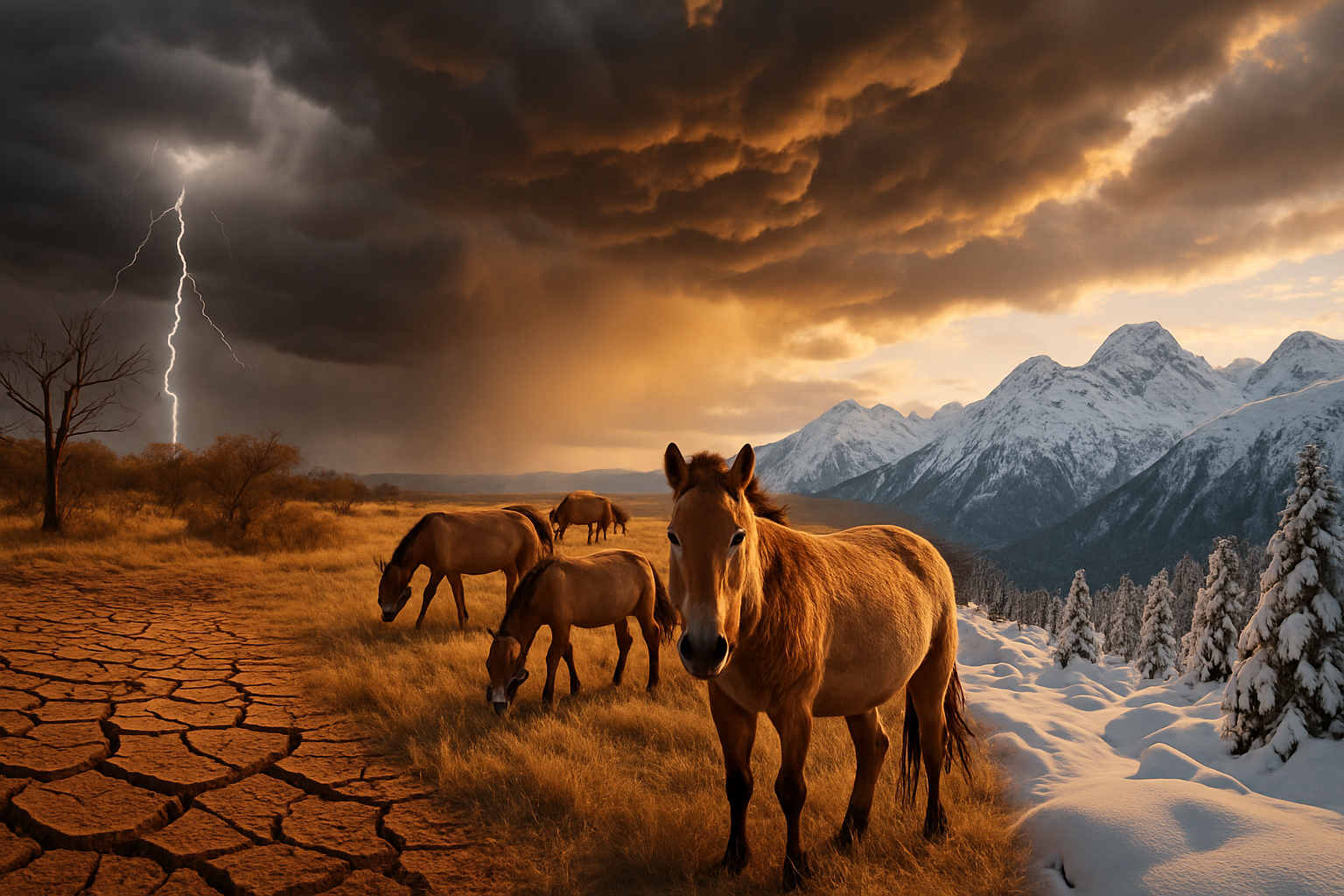
A dramatic convergence of environmental extremes across three continents reveals both the escalating climate crisis and remarkable conservation successes, as Australia battles unprecedented weather patterns, Spain confronts climate-altered snow conditions in the Pyrenees, and Kazakhstan celebrates a historic milestone in wildlife restoration.
The extraordinary environmental developments unfold during what scientists confirm as the 19th consecutive month of global temperatures exceeding 1.5°C above pre-industrial levels, demonstrating how human-induced climate change now overrides natural weather patterns and creates cascading effects across ecosystems worldwide.
Australia Confronts Extreme Weather Paradox
Victoria faces a dangerous weather paradox as unprecedented rainfall records collide with continued wildfire threats. The state has broken multiple precipitation records, yet AFAC (Australasian Fire and Emergency Services Council) warns of "increased significant bushfires" due to bone-dry vegetation accumulated over the past two years.
Emergency services report that thunderstorms and heavy rain continue across Victoria, creating a complex disaster management scenario where flooding and fire risks exist simultaneously. This pattern represents a significant departure from traditional seasonal fire behavior, as parched vegetation creates tinderbox conditions even during periods of heavy rainfall.
The situation exemplifies what climate scientists call "compound extreme events" – where multiple environmental stressors occur simultaneously, overwhelming traditional emergency response capabilities and forcing communities to prepare for previously unimaginable scenarios.
Spanish Pyrenees Experience Climate Disruption
In stark contrast, northern Spain celebrates exceptional snow conditions in the Pyrenees, with accumulations reaching over two meters in some areas. While this creates ideal skiing conditions and draws tourists to the slopes, meteorologists view these extreme snowfall patterns with concern as indicators of broader climate system disruption.
The heavy snow comes as the region experiences what German media coverage describes as unusually intense winter weather, representing another example of how climate change manifests through more extreme seasonal variations rather than simply warmer temperatures.
Scientists emphasize that these dramatic snow accumulations, while temporarily beneficial for winter sports and water resources, reflect the same atmospheric instability driving Australia's extreme weather patterns – a global climate system increasingly prone to record-breaking conditions.
Kazakhstan Achieves Conservation Milestone
Amid these climate challenges, Kazakhstan delivers remarkable conservation success with the ongoing adaptation of reintroduced Przewalski's horses to the Kazakh steppe. Despite early setbacks including the loss of a stallion, specialists report that the herds are adapting steadily, raising expectations for new foals and the arrival of a third group this summer.
The initiative, which began in June, represents one of the world's most ambitious rewilding projects. Known locally as kerkulan, these horses once roamed freely across Central Asian steppes before becoming extinct in the wild. Their reintroduction required extensive international cooperation and cutting-edge conservation science.
"The effort to reintroduce Przewalski's horses to the Kazakh steppe has survived an early setback with the loss of a stallion, yet specialists say the herds are adapting steadily, raising expectations of new foals and the arrival of a third group this summer."
— The Astana Times
Conservation experts emphasize that this project demonstrates how coordinated international effort can reverse biodiversity loss even during periods of accelerating environmental change. The horses serve as ecosystem engineers, helping restore natural grassland dynamics that support numerous other species.
Technology Meets Traditional Knowledge
These developments across three nations highlight the evolution of environmental protection toward sophisticated integration of cutting-edge technology with traditional ecological knowledge. Kazakhstan's horse reintroduction employs genetic analysis, satellite monitoring, and environmental DNA sampling while building on centuries of traditional steppe management practices.
Similarly, Australia's extreme weather response combines advanced meteorological forecasting with Indigenous fire management knowledge, while Spain's Alpine regions integrate modern climate science with traditional mountain weather wisdom developed over generations.
This synthesis represents what environmental scientists term "proactive ecosystem service management" – moving beyond reactive crisis response toward anticipatory strategies that build resilience into natural and human systems.
Economic Implications of Environmental Convergence
The economic dimensions of these environmental developments extend far beyond immediate disaster response costs. Australia's compound weather extremes strain emergency services, disrupt agricultural systems, and challenge tourism operators who must navigate between flood and fire risks.
Spain's intense snow conditions, while supporting winter tourism in the short term, reflect longer-term climate volatility that threatens traditional seasonal economic patterns. Kazakhstan's conservation success, however, demonstrates how environmental protection can drive economic development through eco-tourism, international research collaboration, and enhanced global environmental leadership.
Environmental economists increasingly recognize that comprehensive environmental protection functions as economic infrastructure rather than regulatory burden, providing resilience against climate volatility while attracting sustainable investment.
International Cooperation Imperative
These transnational environmental challenges underscore the critical importance of unprecedented international cooperation. Ocean currents, atmospheric systems, and species migrations cross political boundaries, making isolated national responses insufficient for addressing global environmental shifts.
Kazakhstan's conservation success relied heavily on international partnerships, knowledge exchange, and collaborative funding. Australia's extreme weather management benefits from global meteorological networks and shared disaster response expertise. Spain's mountain weather monitoring contributes to European-wide climate research initiatives.
The convergence of environmental challenges across three continents demonstrates that effective climate action requires coordinated policy frameworks, shared monitoring systems, and innovative financing that recognizes environmental protection as essential infrastructure for human prosperity and planetary sustainability.
Critical Juncture for Global Action
February and March 2026 represent what scientists describe as a critical juncture in global environmental protection. The choice between reactive crisis management and proactive ecosystem service management may determine whether conservation efforts can keep pace with accelerating environmental change during this decisive climate action decade.
The window for effective environmental action continues narrowing as ecological systems approach critical thresholds. However, the diverse experiences across Australia, Spain, and Kazakhstan provide both urgent warnings and grounds for hope, offering templates for scaling environmental protection efforts worldwide.
Success depends on sustained international cooperation, enhanced coordination across sectors and scales, and increased financial commitments that recognize environmental protection as essential infrastructure for human prosperity and planetary sustainability. The convergence of environmental challenges and conservation innovations in early 2026 may prove decisive for the trajectory of global environmental protection in the decades ahead.