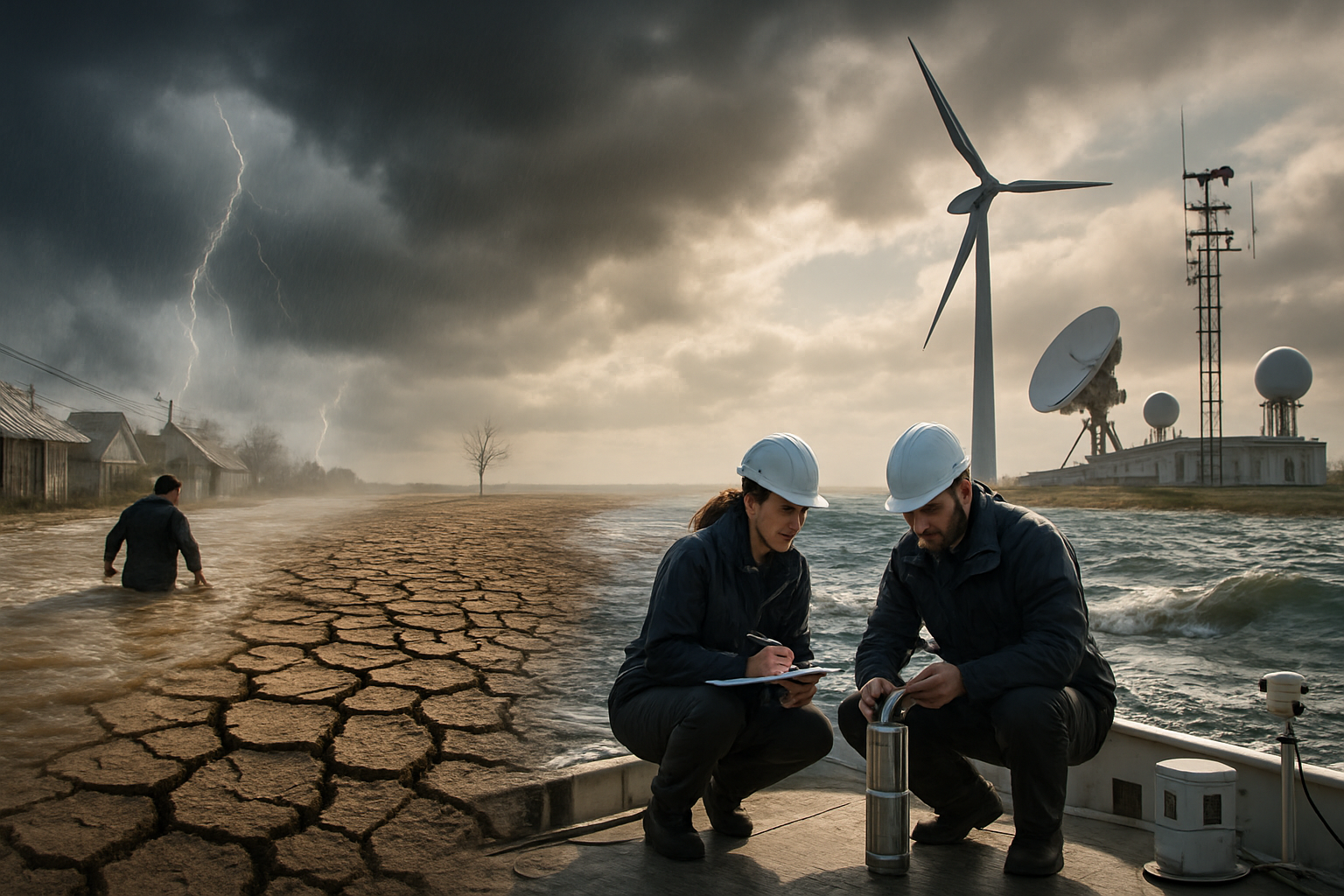
A convergence of environmental disasters across four continents in February 2026 has exposed the accelerating pace of climate-related crises, from deadly floods claiming lives in South America to record-breaking Arctic warming and nuclear contamination concerns in Europe.
The latest wave of environmental emergencies spans from Bolivia's flood-ravaged Cochabamba region, where six people have died from weather-related incidents, to Greenland's alarming temperature anomalies that saw positive temperatures in January for the first time on record. Meanwhile, France grapples with the complex challenge of decontaminating its oldest nuclear facility, while global health organizations warn of mounting environmental health threats.
Deadly Floods Devastate Bolivia's Cochabamba Region
In Bolivia's Cochabamba department, persistent rainfall has resulted in six fatalities in 2026, with four male and two female victims losing their lives to various climate-related emergencies. The most recent tragedy involves the disappearance of young Erick Melgares, who was swept away by the current of the Ichoa River in Entre Ríos while crossing in a canoe with four other people.
Search and rescue operations have been ongoing for three days along a seven-kilometer stretch of the river, highlighting the challenges faced by emergency responders in the region's difficult terrain. The incidents underscore the increasing vulnerability of rural communities to extreme weather events, particularly in areas with limited infrastructure and emergency response capabilities.
Greenland Experiences Unprecedented Arctic Warming
Finland's national broadcaster Yle reported that Greenland's average temperature in January 2026 was above freezing, marking an extraordinary climate anomaly for the Arctic region. This unprecedented warming occurs as Greenland's climate is heating at a rate far exceeding the global average, raising serious concerns about accelerated ice sheet melting and global sea level rise.
The temperature readings align with broader climate data showing that January 2026 was the hottest January ever recorded globally, continuing a pattern where 18 of the past 19 months have exceeded 1.5°C above pre-industrial levels. This Arctic warming trend represents a critical tipping point in global climate systems, with potential cascading effects on ocean currents and weather patterns worldwide.
"Greenland's climate is warming much faster than the global average, and these positive January temperatures represent an alarming acceleration of Arctic climate change."
— Climate Scientists, Finnish Meteorological Institute
France Faces Nuclear Decontamination Dilemma
French investigative outlet Mediapart revealed that the government is considering minimal decontamination of the Fessenheim nuclear power plant site, despite its location above a critical groundwater aquifer that supplies water to the entire Alsace region. The facility, France's oldest nuclear plant, presents significant environmental and public health challenges as authorities weigh the costs and scope of cleanup operations.
The decision carries profound implications for regional water security, as the aquifer beneath Fessenheim serves as a primary water source for millions of residents. Environmental advocates argue that insufficient decontamination could lead to long-term groundwater contamination, while government officials face pressure to balance environmental protection with economic considerations.
Global Health Threats from Environmental Toxins
The environmental crisis extends beyond immediate weather-related disasters to include long-term health threats from industrial contamination. Reports from Burkina Faso highlight growing awareness of cancer-causing environmental factors, with the World Health Organization noting that nearly 40% of cancer cases globally are preventable through environmental and lifestyle modifications.
The correlation between environmental degradation and public health outcomes has become increasingly evident, with tobacco exposure and air pollution identified as primary contributors to rising cancer rates in developing nations. This connection underscores the urgent need for comprehensive environmental protection policies that address both immediate crisis response and long-term public health implications.
Regional and Global Response Coordination
The simultaneous environmental crises across multiple continents have strained international response mechanisms and highlighted the interconnected nature of global climate challenges. Emergency services from Spain have provided water purification equipment to flood-affected regions in Africa, while European Union climate adaptation frameworks face their most severe test to date.
The convergence of Arctic warming, extreme precipitation events, and industrial contamination concerns demonstrates the complex web of environmental challenges facing the international community. Climate scientists note that these simultaneous events, while occurring in different regions, are linked through disrupted global weather patterns and represent the new reality of accelerated climate change.
Infrastructure Vulnerabilities Exposed
Across affected regions, the current environmental crisis has exposed critical vulnerabilities in infrastructure systems designed for historical climate patterns. In Bolivia, river crossing infrastructure proves inadequate for increased flood volumes, while in Greenland, warming temperatures threaten traditional transportation methods and community access.
France's nuclear decontamination challenges highlight the long-term environmental legacy of industrial infrastructure, particularly as climate change intensifies extreme weather events that could mobilize contaminants. The intersection of aging infrastructure and accelerating climate change presents unprecedented challenges for environmental management and public safety.
Economic and Social Implications
The environmental disasters carry significant economic and social costs, from immediate emergency response expenditures to long-term health care burdens and infrastructure replacement needs. Bolivia's ongoing search and rescue operations require substantial resource allocation, while France's nuclear decontamination decision will impact regional economic development and public confidence.
The global nature of these environmental challenges necessitates coordinated international responses, yet funding constraints and competing national priorities often limit the scope and effectiveness of intervention efforts. The World Health Organization's recent funding cuts, amid growing environmental health threats, exemplify the mismatch between response needs and available resources.
Climate Adaptation Urgency
February 2026's environmental crises occur against the backdrop of record-breaking global temperatures and increasingly frequent extreme weather events. The simultaneous occurrence of Arctic warming, tropical flooding, and nuclear contamination concerns illustrates the urgent need for comprehensive climate adaptation strategies that address both immediate emergency response and long-term environmental resilience.
As communities worldwide face the reality of accelerated climate change, the events of February 2026 serve as a stark reminder that environmental challenges require immediate, coordinated action across all levels of governance. The intersection of natural disasters, industrial legacy issues, and public health concerns demands innovative approaches to environmental protection and community resilience.
The global environmental crisis continues to evolve, with meteorologists warning of additional extreme weather systems developing across multiple regions. As rescue operations continue in Bolivia, monitoring systems track Greenland's temperature anomalies, and French authorities deliberate nuclear site remediation, the urgent need for comprehensive environmental action becomes increasingly clear.