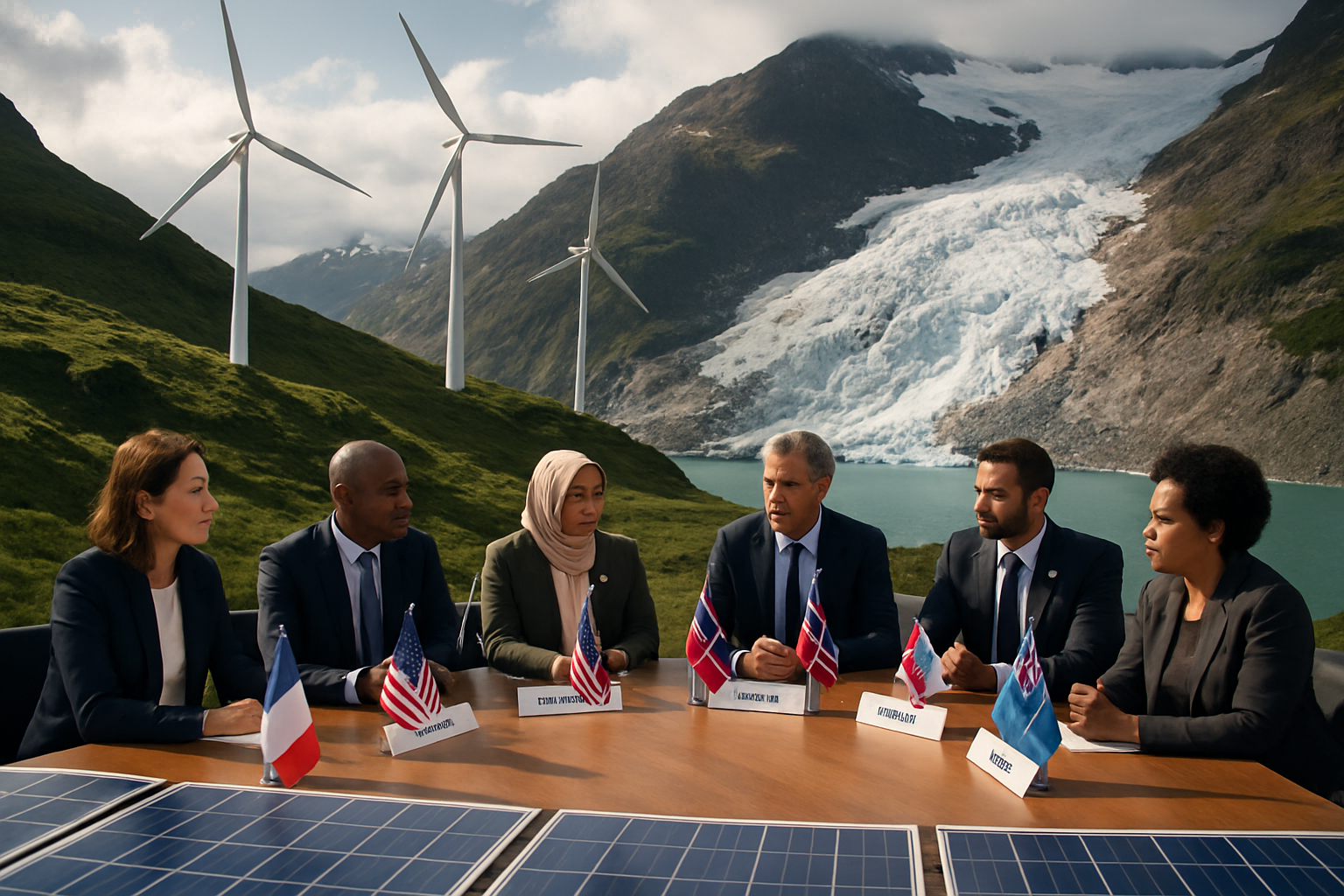
As environmental ministers from across the globe grapple with unprecedented climate challenges, February 2026 has exposed critical divisions in international environmental protection strategies, ranging from aggressive EU climate action to regulatory rollbacks in the United States and innovative waste management policies in Southeast Asia.
The month began with France calling on the European Union to establish climate "red lines" during a two-day summit in Cyprus, while simultaneously, the Trump administration's Environmental Protection Agency recorded its lowest number of environmental law enforcement actions in history. These contrasting approaches highlight the growing polarization in global environmental governance at a time when climate scientists report 18 of the past 19 months have exceeded 1.5°C above pre-industrial levels.
EU Pushes for Stronger Climate Commitment
At the Cyprus summit, France urged European environment ministers to take a more aggressive stance in defending global climate goals. The French initiative comes as EU auditors have repeatedly warned that the bloc's climate targets face serious risks due to critical materials shortages, with China controlling 60% of global production and 90% of refining capacity for essential renewable energy components.
"The time for incremental steps has passed," said sources close to the French delegation. "We need to establish clear red lines that cannot be crossed in our commitment to climate action." The summit's focus on unified European action reflects growing concerns about the bloc's ability to maintain leadership in global environmental protection amid geopolitical pressures and supply chain vulnerabilities.
Trump Administration Scales Back Environmental Enforcement
In stark contrast to European efforts, a watchdog group report revealed that the EPA under Administrator Lee Zeldin issued a record low number of legal actions against polluters during President Trump's first year back in office. The enforcement data represents a significant departure from previous administrations and signals a fundamental shift in American environmental policy priorities.
"The data shows a concerning trend toward reduced environmental oversight at a critical moment for climate action,"
— Environmental Watchdog Representative
This regulatory rollback occurs as extreme weather events continue to impact American communities, with British Columbia experiencing unprecedented February temperatures of 19°C, forcing the cancellation of winter sports and raising questions about winter's future in Canada.
Malaysia Takes Bold Stand Against Waste Dumping
Demonstrating that environmental leadership can emerge from unexpected quarters, Malaysia announced an immediate and comprehensive ban on electronic waste imports, declaring the country would no longer serve as a "dumping ground" for the world's waste. The Malaysian Anti-Corruption Commission reclassified all e-waste under "absolute prohibition," removing discretionary power from the Department of Environment.
The decisive action reflects growing awareness among developing nations about the environmental and health costs of accepting developed world waste. Malaysia's ban could force other countries to confront their own waste management challenges and develop domestic recycling capabilities.
Nordic Marine Conservation Faces Crisis
Norway's marine research reveals a troubling picture of oceanic health, with fish stocks reaching historic lows according to the Norwegian Institute of Marine Research. The finding that fish populations have been halved presents both challenges and opportunities for conservation efforts.
However, research director notes cautious optimism: "Fish stocks have reached a new low point. But if we take care of the oceans, things can only get better for cod." This perspective represents a shift toward integrated marine conservation approaches that balance economic needs with ecosystem protection.
Pacific Nations Address Local Environmental Challenges
In Fiji, the launch of a new climate fund highlighted persistent waste management challenges that plague small island developing states. Permanent Secretary for Climate Change Dr. Sivendra Michael emphasized that improper waste disposal remains among the country's greatest environmental concerns, despite ongoing government efforts.
The Fijian experience illustrates the complex intersection of global climate finance and local environmental management, where international funding mechanisms must address grassroots challenges like littering and waste disposal that directly impact community resilience.
Climate Reality Check
These diverse national approaches unfold against the backdrop of January 2026 being recorded as the hottest month in history, continuing a streak where 18 of the past 19 months have exceeded the critical 1.5°C threshold above pre-industrial levels. The persistent temperature anomalies occur despite La Niña conditions that should provide cooling effects, indicating that underlying warming trends now override natural climate variability.
Environment Canada attributes British Columbia's record-breaking February warmth to repeated ridges of high pressure driving warm weather northward, preventing winter from establishing across much of the province. These conditions have forced the cancellation of outdoor ice activities and raised serious questions about the future of winter recreation in northern regions.
Economic Implications of Environmental Policies
The divergent approaches to environmental protection carry significant economic implications. While the EU pursues strategic autonomy in critical materials through international partnerships, potentially requiring billions in investment for new mining and processing facilities, the U.S. regulatory rollback may reduce short-term compliance costs but risks long-term environmental and health liabilities.
Malaysia's e-waste ban, meanwhile, could catalyze global shifts in recycling technology and waste management infrastructure, creating new market opportunities while forcing developed nations to address their consumption patterns more directly.
Looking Ahead: Integration vs. Fragmentation
The February 2026 developments reveal a critical choice facing the global community: whether to pursue integrated, coordinated environmental protection strategies or allow further fragmentation of international climate efforts. The EU's push for climate red lines represents an attempt to maintain global standards, while the U.S. deregulatory approach and Malaysia's unilateral waste ban suggest a move toward more nationalistic environmental policies.
As the month progresses, environmental experts warn that such divergent approaches may undermine the international cooperation essential for addressing climate change effectively. The success or failure of these varied strategies will likely influence global environmental governance for years to come, making February 2026 a potential turning point in the fight against climate change.
The coming months will test whether nations can bridge these policy divides or whether environmental protection will become increasingly fragmented along geopolitical lines, potentially jeopardizing global efforts to limit temperature rise and protect biodiversity for future generations.