A wave of environmental initiatives spanning three continents demonstrates renewed global commitment to climate action as nations implement innovative approaches to renewable energy, wildlife conservation, and community engagement in the fight against climate change.
Recent developments across Bangladesh, Canada, and Gabon illustrate the diverse strategies countries are employing to address environmental challenges, each tailored to their unique circumstances while contributing to the broader global climate response.
Bangladesh Champions Gender-Just Energy Transition
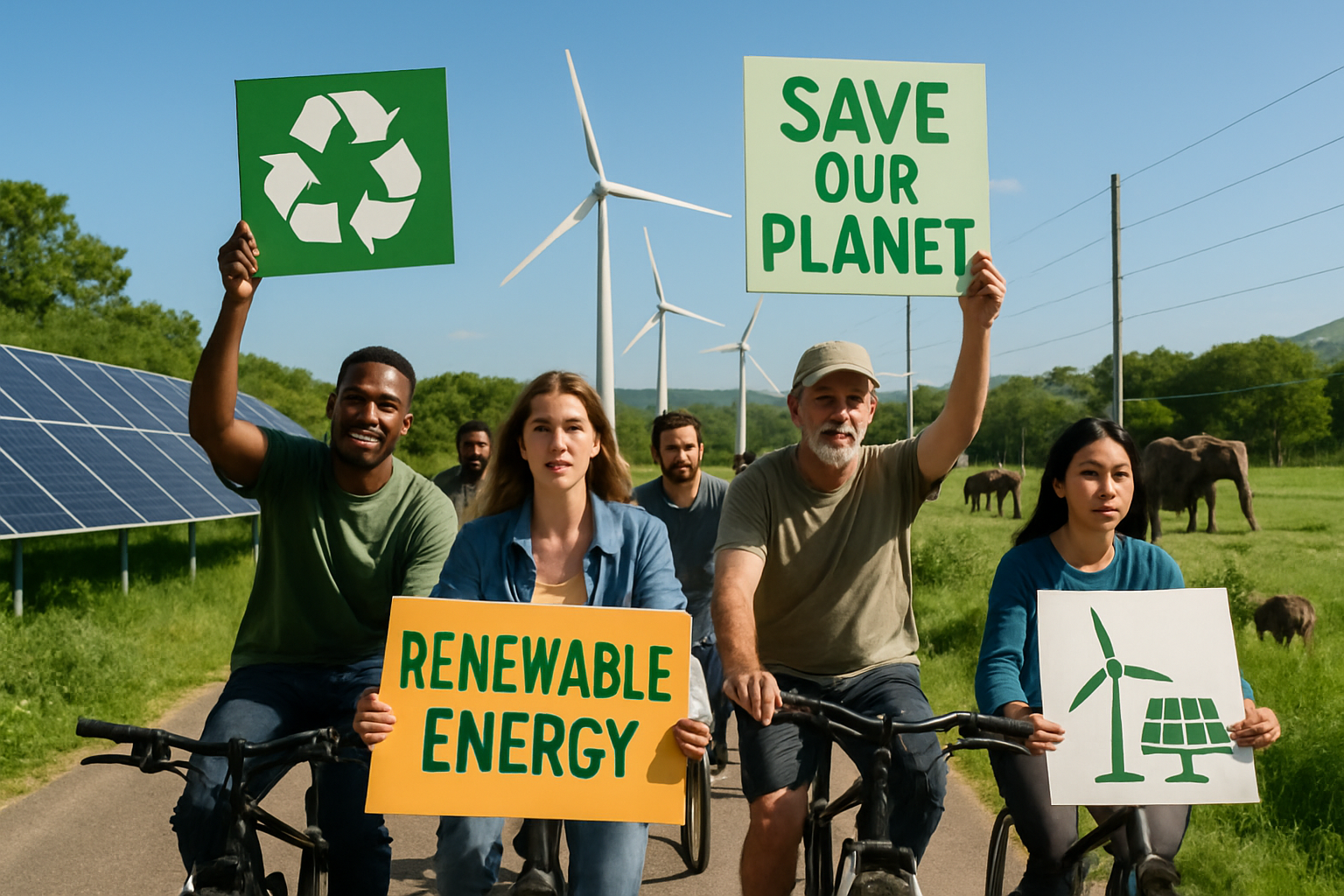
In Manikganj, Bangladesh, environmental activists organized a bicycle rally calling for inclusive energy policies that prioritize gender equity in renewable energy development. The demonstration urged the next government to adopt clear policies ensuring gender-just renewable energy as part of a fair energy transition.
The rally highlighted Bangladesh's commitment to integrating social justice principles into climate action, recognizing that environmental policies must address existing inequalities while promoting sustainable development. Participants emphasized the need for renewable energy initiatives that provide equal opportunities for women in the growing clean energy sector.
This grassroots mobilization reflects Bangladesh's broader strategy of community-driven environmental action, building on the country's experience with climate adaptation in vulnerable coastal regions. The gender-focused approach aligns with international frameworks recognizing that climate solutions must be socially inclusive to be truly sustainable.
Canada Addresses Youth Climate Anxiety Through Education
Canadian environmental initiatives are taking a different approach, focusing on addressing climate-related anxiety among young people through targeted educational programs. Recent reports from CBC's environmental newsletter revealed concerning levels of hopelessness about climate change among Canadian youth, prompting new strategies to balance environmental education with psychological support.
The Canadian response includes innovative approaches such as green technology education for lithium extraction in the Prairies and highlighting success stories like Alberta's 'Gas City' investing in large-scale solar projects. These initiatives demonstrate how fossil fuel-dependent regions can transition to renewable energy while maintaining economic prosperity.
"Many kids feel hopeless about climate change. Here's what helps: showing them concrete examples of climate solutions in action and giving them agency to participate in environmental stewardship."
— CBC Environmental Newsletter, February 2026
The educational approach emphasizes practical climate solutions and empowers young people to see themselves as part of the solution rather than passive victims of environmental degradation. This strategy has shown promising results in reducing climate anxiety while increasing environmental engagement among Canadian youth.
Gabon Pioneers Wildlife-Human Coexistence Technology
Gabon is taking environmental action in a different direction, focusing on the deployment of electric fences to address human-elephant conflicts. The initiative represents a significant escalation in the country's efforts to protect both wildlife and rural communities while maintaining ecological balance.
The electric fence deployment addresses the growing challenge of human-wildlife conflict as climate change alters migration patterns and habitat availability. The technology-based solution allows communities to continue their agricultural activities while providing safe corridors for elephant movements, demonstrating how innovation can facilitate coexistence between human development and wildlife conservation.
Gabon's approach builds on its established reputation as an environmental leader in Central Africa, where 85% of the country remains forested and 13 national parks cover 11% of the territory. The electric fence project represents the country's commitment to integrated ecosystem management that benefits both human communities and biodiversity conservation.
Global Context: Climate Urgency Drives Innovation
These diverse environmental initiatives emerge against the backdrop of unprecedented climate challenges. January 2026 was recorded as the hottest month in global history, with 18 of the past 19 months exceeding 1.5°C above pre-industrial levels, demonstrating that climate warming is now overriding natural variability.
The urgency of the climate crisis is driving innovative approaches across different sectors and regions. While Bangladesh focuses on social justice in energy transition, Canada prioritizes youth engagement and mental health, and Gabon emphasizes technology-enabled conservation. Each approach addresses specific local needs while contributing to global climate goals.
European Union auditors have warned that climate goals are threatened by critical materials shortages, with China controlling 60% of global production and 90% of refining capacity for essential materials like lithium and cobalt. This challenge makes diverse, locally-adapted environmental strategies even more crucial for global climate success.
Emerging Models of Environmental Action
The success of these initiatives demonstrates several key principles for effective environmental action in 2026. Community engagement remains central to all successful projects, whether through Bangladesh's bicycle rallies, Canada's youth education programs, or Gabon's community-based conservation efforts.
Technology integration plays a crucial role, from Gabon's electric fencing systems to Canada's green technology education and Bangladesh's focus on renewable energy infrastructure. However, technology alone is insufficient without strong community support and appropriate policy frameworks.
Economic viability emerges as another critical factor. All three initiatives demonstrate pathways for environmental action that create economic opportunities rather than impose costs, whether through job creation in renewable energy, eco-tourism development, or sustainable agriculture practices.
Challenges and Opportunities Ahead
Despite these encouraging developments, significant challenges remain for global environmental action. Infrastructure limitations, funding constraints, and political instability continue to hinder environmental progress in many regions. Climate change itself creates moving targets as environmental conditions continue to evolve rapidly.
Supply chain vulnerabilities, particularly for renewable energy materials, pose additional challenges for scaling environmental solutions globally. The concentration of critical materials processing in limited geographic regions creates dependencies that could undermine climate transitions.
However, the diversity of approaches being implemented across different countries provides resilience against these challenges. By developing multiple pathways to environmental sustainability, the global community reduces dependence on any single solution or supply chain.
International Coordination and Future Prospects
The environmental initiatives in Bangladesh, Canada, and Gabon represent broader trends in international environmental cooperation. South-South cooperation is increasing, with developing nations sharing innovative approaches to climate adaptation and mitigation.
Technology transfer between developed and developing countries is accelerating, enabling rapid deployment of environmental solutions across different economic contexts. Digital platforms and international networks facilitate knowledge sharing and coordination between environmental initiatives worldwide.
Financial mechanisms are evolving to support diverse environmental approaches, from traditional development assistance to innovative climate funds and private sector partnerships. This diversification of funding sources enables more experimental and locally-adapted environmental solutions.
As the climate crisis intensifies, the diversity and innovation demonstrated by current environmental initiatives provide hope for effective global climate action. Success will depend on continued international cooperation, sustained political commitment, and the ability to adapt environmental strategies to rapidly changing conditions while maintaining focus on both local needs and global climate goals.