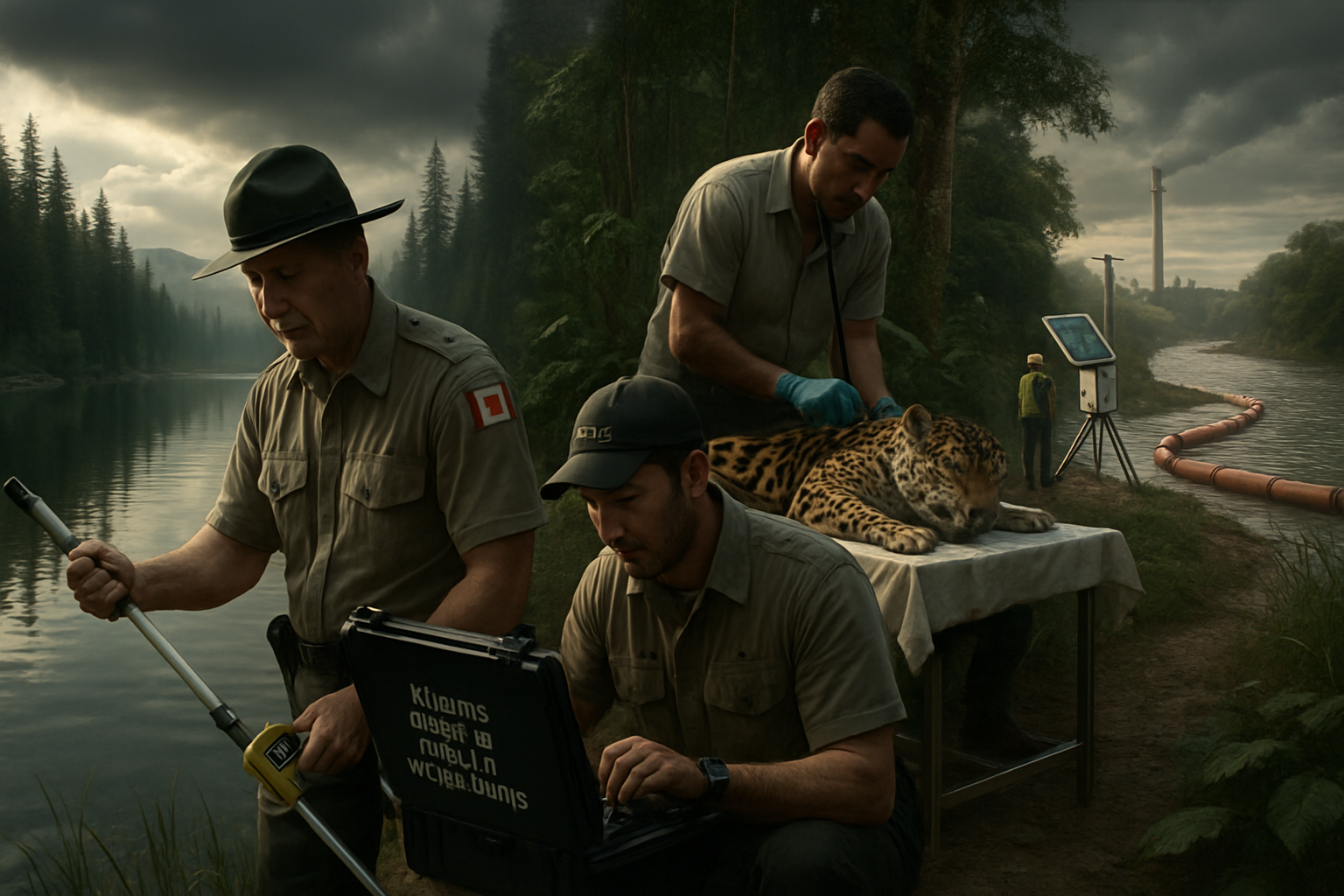
Environmental protection efforts worldwide are facing unprecedented challenges as conservation initiatives battle invasive species, wildlife crimes, and pollution disasters across multiple continents during the 19th consecutive month of global temperatures exceeding 1.5°C above pre-industrial levels.
A Planet News investigation spanning Canada, Bolivia, and Romania reveals the convergence of environmental threats that are testing the limits of traditional conservation approaches. From aquatic invasive species threatening pristine national park lakes to criminal wildlife killings and transboundary river pollution, the March 2026 environmental landscape demonstrates both the urgency of conservation action and the complexity of modern environmental challenges.
Canada's Aquatic Invasive Species Prevention
Parks Canada has implemented comprehensive watercraft restrictions on popular lakes in Banff National Park to prevent the spread of aquatic invasive species. The restrictions, effective this spring, represent a proactive approach to protecting some of Canada's most pristine aquatic ecosystems from biological contamination that has devastated other water bodies across North America.
Lake Minnewanka, a glacial lake located approximately five kilometers north of the Banff townsite, is among the protected waters now subject to enhanced monitoring and access controls. The restrictions demonstrate how climate change is forcing park management to adopt increasingly stringent protective measures as warming temperatures create more favorable conditions for invasive species establishment and spread.
"Prevention is far more cost-effective than attempting to manage established invasive populations," explained a Parks Canada spokesperson. "Once aquatic invasives establish in these pristine ecosystems, removal becomes nearly impossible."
— Parks Canada Official
The Canadian initiative aligns with broader conservation efforts documented across North America, where environmental agencies are increasingly focusing on prevention rather than reactive management. This represents a fundamental shift in conservation methodology from crisis response to ecosystem service management.
Bolivia's Wildlife Crime Crisis
In stark contrast to Canada's proactive measures, Bolivia is grappling with a tragic wildlife crime that highlights the persistent threats facing endangered species. A jaguar in the Yungas region of La Asunta was killed following an alleged human fatality, but evidence suggests the incident may have been staged to justify the big cat's killing.
According to reports from the Agencia de Noticias Ambientales (ANA), the human victim showed signs of machete wounds rather than typical jaguar attack patterns, raising serious questions about the circumstances surrounding both deaths. The jaguar was subsequently skinned, indicating possible commercial exploitation of the incident.
This case represents what conservationists term "biocide" - the deliberate killing of wildlife under questionable circumstances. Jaguars are already under severe pressure from habitat loss, and illegal killings further threaten populations of this apex predator that plays a crucial role in maintaining ecosystem balance across Latin American forests.
Romania's Transboundary Pollution Response
Meanwhile, Romania has provided emergency assistance to Moldova following river contamination in the Nistru River system. According to the Romanian National Water Administration (ANAR), pollutants continue to discharge into the river following recent conflicts, threatening water supplies for northern Moldovan communities.
The contamination crisis demonstrates how environmental disasters can cascade across international boundaries, requiring coordinated responses from multiple nations. Romania's swift assistance exemplifies the type of international environmental cooperation that experts say is becoming increasingly essential as climate change amplifies the frequency and severity of environmental emergencies.
Europa Liberă Moldova reported that water supply disruptions may be necessary in affected communities, highlighting how pollution incidents can create immediate public health emergencies while causing long-term ecosystem damage.
Climate Context Intensifies Challenges
These environmental challenges are occurring against the backdrop of unprecedented global warming. January 2026 marked the hottest month in recorded history, extending a streak of 19 consecutive months where global temperatures exceeded the critical 1.5°C threshold above pre-industrial levels.
This sustained warming is overriding natural climate variability, including La Niña cooling effects that typically moderate global temperatures. The result is additional stress on ecosystems already pressured by human activities, creating compound environmental effects that traditional conservation approaches struggle to address effectively.
Technology-Tradition Integration
Successful environmental protection increasingly requires sophisticated integration of cutting-edge technology with traditional ecological knowledge and community-based management. Canada's invasive species monitoring employs advanced detection systems while respecting indigenous stewardship practices that have maintained ecosystem health for millennia.
In Bolivia, conservation efforts combine modern wildlife tracking technology with traditional knowledge of jaguar behavior and habitat needs. Romania's transboundary assistance utilizes satellite monitoring and real-time water quality sensors while drawing on decades of regional cooperation experience.
Economic Dimensions of Environmental Protection
Environmental protection increasingly functions as economic development strategy rather than regulatory burden. Canada's proactive lake protection maintains the ecological integrity that supports billions in annual eco-tourism revenue while attracting international research partnerships and sustainable investment.
The costs of environmental degradation - as seen in Romania's pollution response and Bolivia's wildlife crime investigation - often exceed the investments required for proactive protection. Healthcare expenses, agricultural losses, tourism impacts, and infrastructure damage typically dwarf the costs of preventing environmental disasters.
International Cooperation Imperative
The transnational nature of environmental challenges demands unprecedented international cooperation. Invasive species, wildlife crimes, and pollution cross political boundaries through natural systems - ocean currents, atmospheric patterns, and species migrations connect ecosystems globally, making unilateral efforts insufficient.
Romania's assistance to Moldova exemplifies the type of coordinated response necessary for addressing environmental emergencies. However, experts note that current cooperation mechanisms often lag behind the speed and scale of environmental challenges.
Critical Action Window
March 2026 represents a critical juncture for global environmental protection. The choice between reactive crisis management and proactive ecosystem service management may determine whether conservation efforts can keep pace with accelerating environmental change during this decisive climate action decade.
Environmental action windows are narrowing rapidly as ecological systems approach critical thresholds that could trigger irreversible changes affecting global food security, climate stability, and human settlements. While tools, knowledge, and cooperation frameworks exist for comprehensive environmental protection, success depends on rapid scaling through enhanced international cooperation and sustained financial commitments.
Implementation Challenges and Solutions
Implementation challenges include funding sustainability for developing nations where immediate economic pressures often override long-term environmental considerations. Technical capacity building requires sustained investment in education, training, and institutional development. Climate change disrupts project timelines, demanding adaptive management approaches that can respond to rapidly changing conditions.
Success factors consistently include community ownership and engagement, transparent governance frameworks, economic incentives that make protection financially viable, and integration of traditional ecological knowledge with modern conservation science.
Strategic Significance
The environmental developments across Canada, Bolivia, and Romania provide templates for addressing multiple simultaneous environmental threats through coordinated international response. The diversity of approaches - from proactive prevention to emergency response to international assistance - offers multiple pathways for addressing complex environmental challenges.
However, the window for effective environmental action continues to narrow. The convergence of invasive species threats, wildlife crimes, pollution disasters, and climate acceleration demands immediate, coordinated action recognizing environmental protection as essential infrastructure for human prosperity and planetary sustainability.
As the world enters an era of compound environmental crises, the experiences of March 2026 may prove decisive in determining whether humanity can develop the adaptive capacity necessary to protect the essential environmental systems upon which all life depends.