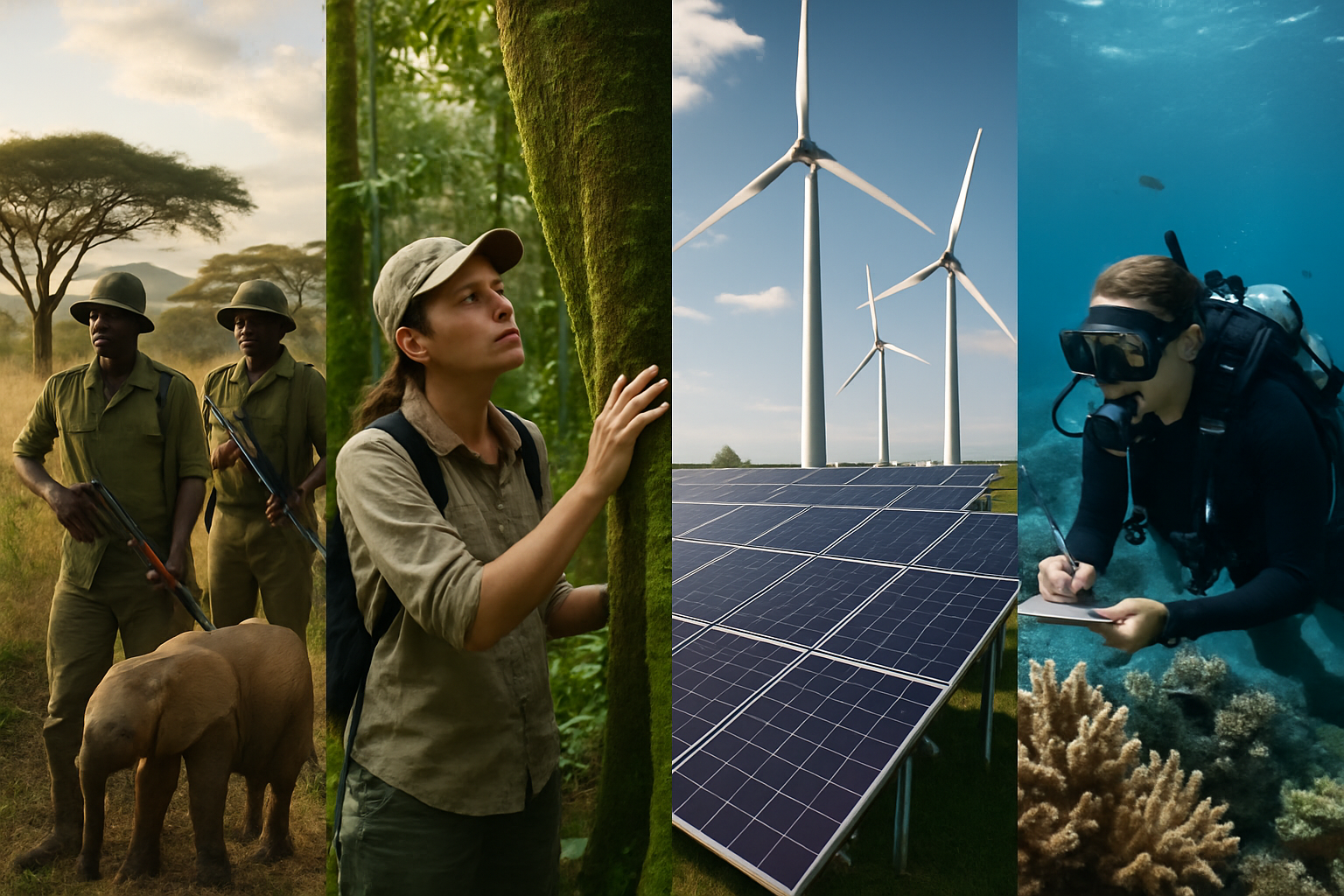
Countries across three continents are launching major environmental protection initiatives, including wetland restoration programs and renewable energy expansion projects, as nations accelerate their response to mounting climate challenges during what was recorded as the hottest January in human history.
The coordinated environmental protection efforts span from Africa's ecosystem restoration initiatives to Europe's renewable energy infrastructure investments, demonstrating a global commitment to sustainable development as climate change pressures intensify worldwide.
Zimbabwe Leads African Wetland Restoration
In rural Zimbabwe, a groundbreaking wetland restoration initiative is breathing new life into critical ecosystems that serve as "thin green lines" keeping entire communities alive. These fragile wetlands, which store water, regulate floods, recharge rivers, and provide fertile soils for food production, have faced decades of degradation from cultivation, grazing, and settlement pressures.
The restoration project, led by Safire, represents a significant shift in approach as climate change tightens its grip through prolonged droughts and unpredictable rainfall patterns. The initiative comes at a crucial time when wetland degradation has become not just an environmental crisis but a threat to community survival.
"These wetlands are the lifeline for rural communities," according to the conservation organization leading the restoration efforts. The project focuses on rehabilitating these ecosystems through community-based management approaches that balance conservation needs with local livelihoods.
Romania Expands Solar Energy Infrastructure
Romania is making significant strides in renewable energy development with the "George Enescu" International Airport in Bacău securing €5 million in EU funding for a major photovoltaic installation. The project, operated by Bacău County Council, will create a 1.6 MW solar park as part of the European Union's Modernisation Fund initiative.
The comprehensive project includes construction of a 1.25 MW photovoltaic power plant and a 2.064 MWh storage system, designed to generate annually 1,605,648 MWh of green energy. Located on 2.19 hectares of airport-administered land, the installation will secure over 70% of the airport's energy needs from renewable sources.
The 24-month implementation timeline, with completion required by December 31, 2029, represents Romania's commitment to the EU's broader energy transition goals. This investment aligns with the bloc's strategy to reduce dependence on traditional energy sources while building resilient infrastructure for climate adaptation.
Caribbean Marine Conservation Milestone
Saint Vincent and the Grenadines marked a significant conservation achievement with the first anniversary of its Orca Protection Agreement, a landmark partnership that represents innovative collaboration between conservationists and local whaling communities. The agreement, celebrated on January 16, demonstrates how traditional practices can be aligned with modern conservation goals.
The St. Vincent and the Grenadines Environment Fund (SVGEF) has been instrumental in developing this partnership approach, which builds bridges between conservation objectives and community livelihoods. This model of inclusive conservation is gaining recognition across the Caribbean region as an effective strategy for marine protection.
"This historic agreement shows how conservation and community needs can work together for long-term environmental protection."
— SVGEF Representative
Global Context and Climate Urgency
These environmental protection initiatives unfold against the backdrop of accelerating climate change, with January 2026 recorded as the hottest month in global history. This marked the 18th month out of the past 19 to exceed 1.5°C above pre-industrial levels, indicating that warming trends now override natural climate variability.
The urgency is reflected in coordinated global responses that extend beyond these specific projects. Recent months have witnessed environmental conservation initiatives across multiple continents, from Bhutan's Model Forest plans to Ghana's Mole National Park protection efforts, and New Zealand's marine ecosystem safeguarding measures.
Integration of Technology and Traditional Knowledge
A common thread among these diverse initiatives is the integration of technological innovation with traditional knowledge systems and community-based management approaches. Zimbabwe's wetland restoration combines scientific understanding with local ecological knowledge, while Romania's solar project incorporates advanced storage technology for grid stability.
The Caribbean's marine conservation model demonstrates how traditional maritime communities can become partners in protection efforts rather than obstacles to conservation goals. This approach addresses social equity concerns while ensuring sustainable environmental outcomes.
Economic Dimensions and Sustainable Development
These environmental protection projects are designed with economic sustainability in mind. Romania's solar installation will generate long-term energy cost savings while creating jobs in the renewable energy sector. Zimbabwe's wetland restoration supports agricultural productivity and water security, essential for rural economic stability.
The initiatives also tap into growing eco-tourism opportunities, with restored ecosystems attracting visitors and generating revenue for local communities. This economic diversification helps ensure long-term project sustainability while providing incentives for continued environmental protection.
Challenges and Implementation
Despite the positive momentum, these projects face significant implementation challenges. Funding sustainability remains a critical concern, particularly for developing nations undertaking large-scale restoration projects. Technical capacity building is essential for maintaining renewable energy installations and managing complex ecosystem restoration efforts.
Climate change itself presents ongoing challenges, with extreme weather events potentially disrupting project timelines and increasing costs. The success of these initiatives will depend on adaptive management approaches that can respond to changing environmental conditions.
International Cooperation and Support
The projects demonstrate the importance of international cooperation in environmental protection. Romania's EU funding exemplifies how regional partnerships can accelerate renewable energy transitions. Technical assistance and knowledge sharing between countries experiencing similar challenges are proving crucial for project success.
International frameworks and agreements provide the policy foundation for these initiatives, while global climate finance mechanisms offer essential funding streams. However, experts note that scaling up these efforts will require enhanced international coordination and increased financial commitments.
Future Implications
These environmental protection initiatives represent a strategic evolution in global conservation approaches, moving from reactive crisis management to proactive ecosystem service management. The emphasis on community participation, technological integration, and economic viability provides a template for sustainable environmental protection in the climate change era.
Success in these pilot projects could catalyze broader adoption of similar approaches, potentially accelerating global environmental protection efforts. However, the window for effective climate action continues to narrow, making rapid scaling and implementation increasingly critical for achieving meaningful environmental outcomes.
As countries continue to develop and implement these environmental protection strategies, the integration of local knowledge, technological innovation, and international cooperation will remain essential for addressing the complex challenges of climate change while ensuring sustainable development for affected communities.