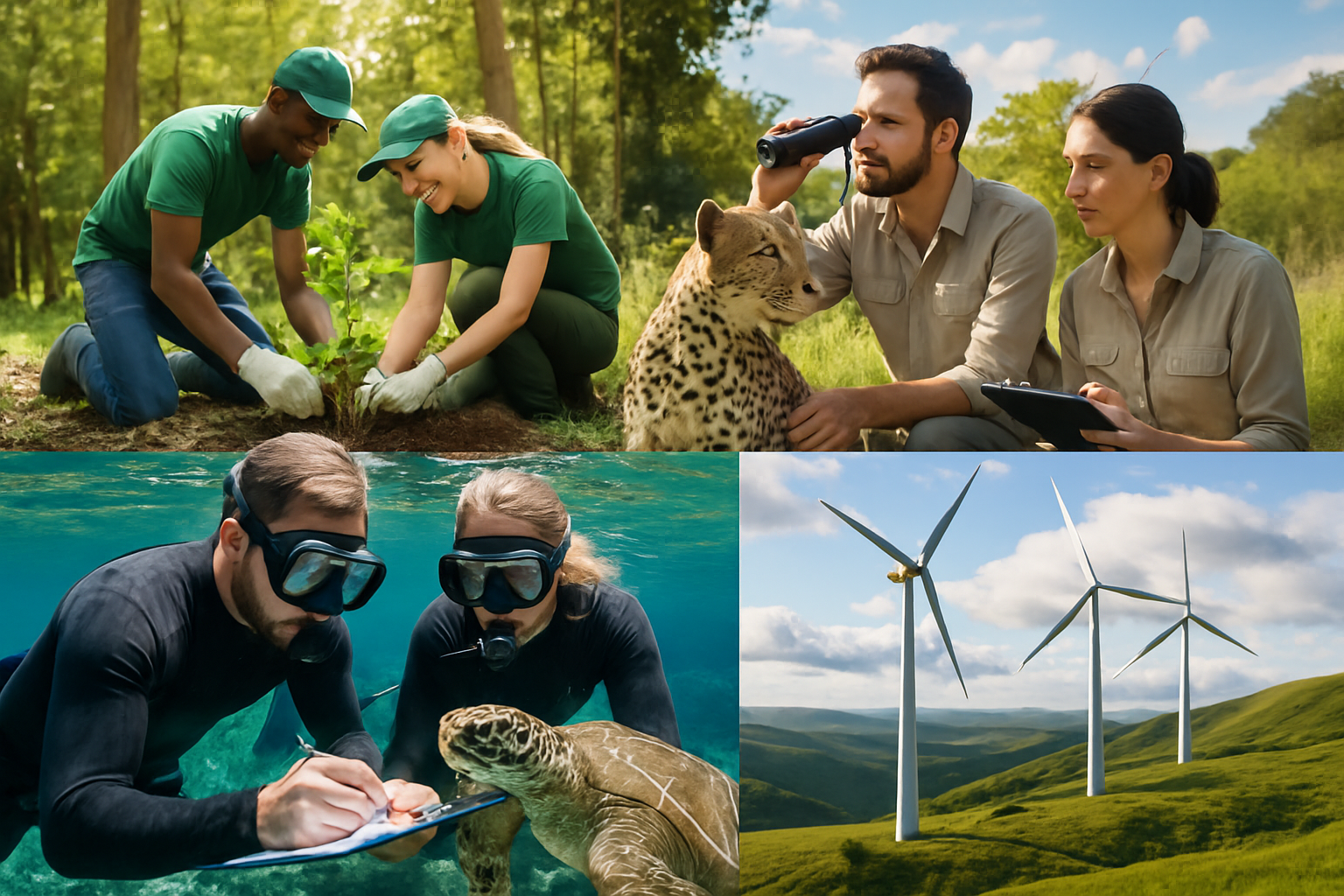
An unprecedented surge in environmental protection initiatives spanning four continents demonstrates humanity's growing capacity to coordinate conservation efforts amid accelerating climate change, with groundbreaking projects ranging from marine protection in Belgium to heritage conservation in Saudi Arabia marking what experts call a "global conservation renaissance."
The convergence of innovative environmental programs emerges during a critical period as January 2026 marked the hottest recorded month in human history, extending an unprecedented 22-month streak of global temperatures exceeding 1.5°C above pre-industrial levels. This sustained warming has fundamentally altered Earth's atmospheric systems beyond natural recovery mechanisms, creating compound environmental effects that challenge traditional conservation approaches.
Marine Conservation Breakthrough in Belgium
Belgium's Sea Life rescue centre in Blankenberge has reported a significant increase in seal rescues following dog attacks, highlighting both conservation successes and ongoing challenges. The facility's proactive approach emphasizes keeping dogs on leads and maintaining safe distances from marine wildlife, demonstrating how successful conservation requires community engagement and behavioral changes.
This initiative exemplifies the sophisticated integration of cutting-edge technology with traditional ecological knowledge that characterizes the most effective contemporary conservation programs. Modern monitoring systems combined with community-based stewardship have proven essential for protecting marine ecosystems under mounting climate pressures.
Saudi Arabia's Eco-Cultural Heritage Innovation
Saudi Arabia has launched an ambitious program to transform 27 heritage sites across national parks into sustainable eco-cultural destinations. The initiative, coordinated between the National Center for Vegetation Cover Development and Combating Desertification and the Heritage Commission, represents a fundamental shift toward integrated environmental planning.
The first phase covers sites across multiple regions, including the historic rock inscriptions of Naqra Valley in Madinah, Muawiyah Dam in Taif Governorate, and the ancient Jawatha Mosque in Al-Ahsa. This approach demonstrates how environmental protection can function as an economic development strategy rather than a regulatory burden, positioning countries for sustainable investment while preserving cultural heritage.
"The memorandum aims to integrate environmental planning with heritage preservation, creating sustainable tourism models that protect both cultural and natural assets."
— Acting CEO Ahmed Al-Ayada, National Center for Vegetation Cover Development
Heroic Animal Conservation in Portugal
Portugal's environmental sector has gained international attention through the remarkable story of Magawa, a heroic rat who detected over 100 landmines and has now been honored with a giant statue. This extraordinary example of human-animal cooperation in environmental restoration demonstrates the innovative approaches emerging globally to address complex ecological challenges.
Magawa's ability to examine terrain equivalent to a tennis court in 20 minutes – a task that would take humans several days – illustrates how conservation success requires embracing diverse methodologies and recognizing the valuable contributions of all species to environmental protection efforts.
Technology-Tradition Integration Revolution
The most successful environmental protection programs consistently demonstrate sophisticated synthesis of cutting-edge technology with traditional ecological knowledge and community-based management systems. Satellite monitoring, environmental DNA sampling, and AI-powered threat detection work alongside generations of indigenous stewardship practices to create comprehensive, culturally sensitive frameworks.
This evolution represents a fundamental departure from either purely technological or purely traditional approaches toward integrated strategies that combine scientific rigor with cultural sensitivity and community ownership. The approach has proven essential for addressing rapidly changing environmental conditions while maintaining long-term sustainability goals.
Economic Development Through Environmental Protection
Contemporary conservation increasingly functions as an economic development engine rather than a regulatory constraint. Countries implementing comprehensive environmental protection demonstrate greater economic resilience and attract sustainable investment across multiple sectors including eco-tourism, green technology manufacturing, and environmental services.
Economic analyses consistently show that the costs of environmental degradation – including healthcare expenses from pollution, infrastructure damage from extreme weather, and tourism losses from ecosystem destruction – often exceed the investments required for proactive environmental protection. This economic reality is driving increased governmental and private sector engagement in conservation initiatives.
International Cooperation Imperative
Environmental challenges increasingly transcend political boundaries through ocean currents, atmospheric systems, and species migrations that connect ecosystems globally. This reality makes unilateral conservation efforts insufficient and demands unprecedented international cooperation. Success requires coordinated policy frameworks, shared monitoring systems, collaborative enforcement, and innovative financing that recognizes the economic value of ecosystem services.
The diversity of approaches demonstrated across different regions provides resilience against single-solution dependencies, offering multiple adaptation pathways for complex environmental challenges. Knowledge sharing between nations creates global networks that strengthen local capacity while contributing to planetary sustainability.
Critical Action Window Narrowing
Environmental scientists warn that the window for effective conservation action is narrowing rapidly as ecological systems approach critical thresholds that could trigger irreversible changes affecting global food security, climate stability, and human settlement patterns. The choice between reactive crisis management and proactive ecosystem service management may determine whether conservation efforts can keep pace with accelerating environmental change during this decisive climate action decade.
Despite these challenges, the tools, knowledge, and cooperation frameworks exist for comprehensive environmental protection, as demonstrated by diverse international initiatives achieving remarkable results under challenging conditions. Success depends on sustained international cooperation, enhanced multi-sector coordination, and increased financial commitments recognizing environmental protection as essential infrastructure for both human prosperity and planetary sustainability.
Conservation Renaissance Templates
The coordinated environmental initiatives emerging across continents provide practical templates for scaling environmental protection globally through comprehensive approaches that address multiple challenges while building local capacity and fostering international cooperation. Effective conservation requires sophisticated synthesis of scientific knowledge, community engagement, technological innovation, and international cooperation through locally-appropriate combinations.
This global conservation renaissance, characterized by scientific innovation, community engagement, economic viability, and international cooperation integration, represents a fundamental evolution toward proactive ecosystem service management emphasizing community participation and technological integration. The success of these initiatives may prove decisive for conservation approaches in the decades ahead, offering hope and practical guidance for the massive coordinated effort required to maintain planetary habitability during Earth's most environmentally challenging period in recorded history.