A remarkable convergence of environmental initiatives across five continents demonstrates unprecedented global commitment to climate action and conservation during March 2026, marking the 21st consecutive month temperatures have exceeded the critical 1.5°C pre-industrial threshold—the longest sustained warming streak in recorded human history.
From Jeff Bezos' historic $50 million investment in Gabon's pristine rainforests to Earth Hour preparations mobilizing millions across Bolivia, the month has witnessed an extraordinary surge in coordinated environmental action that environmental scientists are calling a potential "conservation renaissance."
Bezos Earth Fund Makes Historic Gabon Investment
In a groundbreaking move that positions private philanthropy at the forefront of global conservation, Amazon founder Jeff Bezos has committed $50 million through his Bezos Earth Fund to support nature conservation programs in Gabon. The investment represents one of the largest single private contributions to African conservation efforts in recent years.
The funding will target Gabon's extraordinary biodiversity, including its pristine rainforests that serve as critical carbon sinks and habitat for endangered species. Gabon's forests cover approximately 85% of the country's territory, making it one of the most forest-dense nations on Earth and a crucial component in global climate regulation.
"This investment recognizes Gabon as a global environmental leader and demonstrates how private capital can accelerate conservation efforts at the scale required by the climate crisis,"
— Environmental policy analysts following the announcement
The initiative exemplifies the evolution of environmental protection from traditional government-led efforts to sophisticated public-private partnerships that leverage both financial resources and technological innovation.
Bolivia Prepares for Global Earth Hour Mobilization
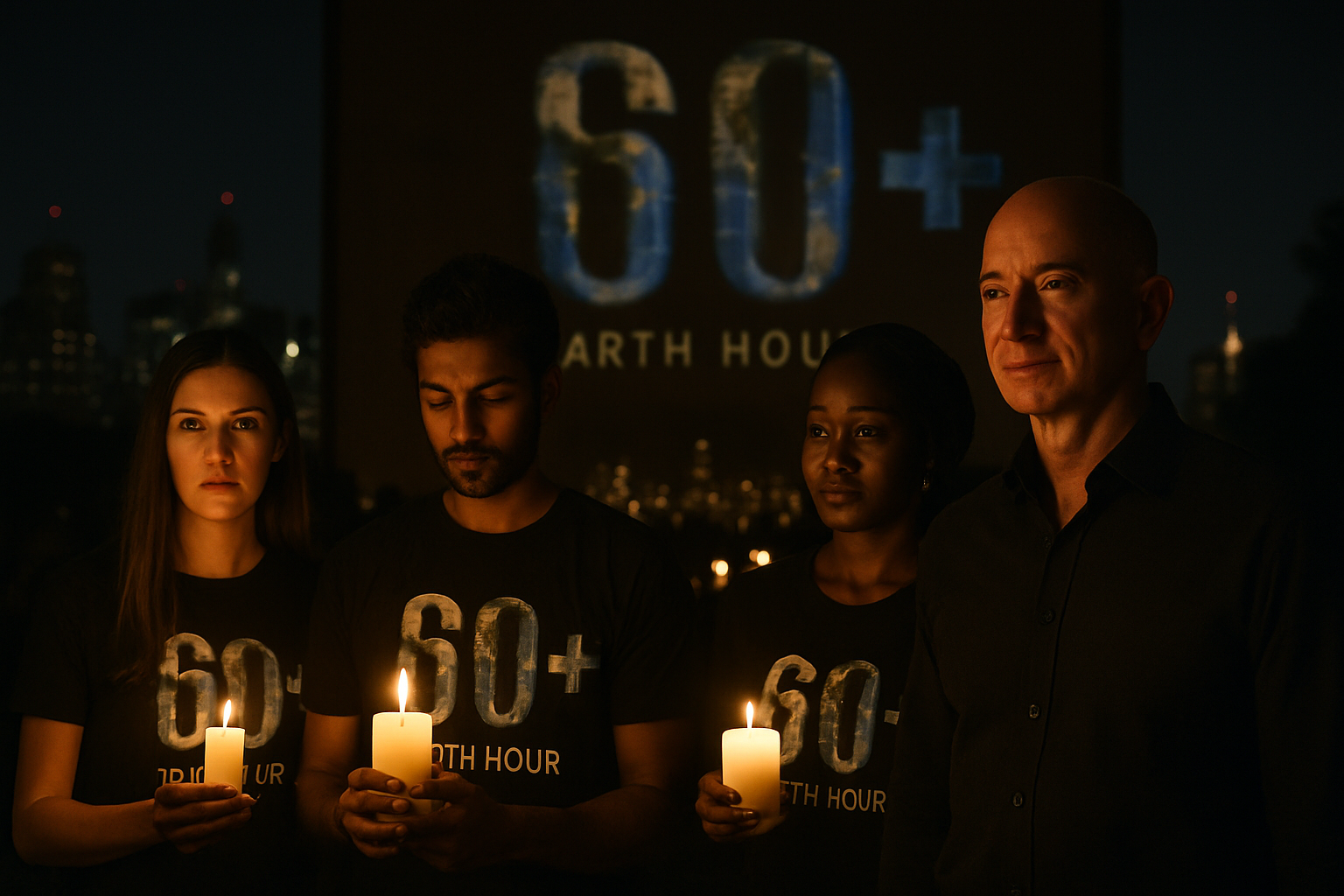
As Bolivia prepares to join millions worldwide for Earth Hour on Saturday, March 28, the initiative has taken on special significance with this year's theme dedicated to "defending and valuing protected areas." The World Wildlife Fund-led movement returns in 2026 with urgent calls for action to protect natural reserves facing mounting climate pressures.
At 8:30 PM local time, Bolivians across all nine departments will participate in the global lights-out demonstration, part of a coordinated action spanning more than 180 countries. The symbolic act serves as both environmental awareness and a stark reminder of the need for resource conservation amid accelerating climate change.
WWF Bolivia emphasizes the profound connection between indigenous communities and protected areas: "In Bolivia, many communities live near or within protected areas, maintaining deep relationships with nature. Caring for these territories also means caring for cultures, knowledge, and ways of life that have protected nature for generations."
Philippines Reinforces Conservation Message
The Philippines has emerged as a vocal advocate for the Earth Hour movement, with organizers emphasizing that the annual event serves as more than symbolic action—it represents a critical reminder for year-round resource conservation. Philippine environmental advocates stress that the hour given to the planet must translate into sustained behavioral changes and policy commitments.
The archipelago nation's participation is particularly significant given its vulnerability to climate change impacts, including rising sea levels, intensified typhoons, and coral reef bleaching that threatens both marine ecosystems and tourism-dependent communities.
Slovenia Confronts Climate Reality in Winter Sports
A sobering climate reality check emerges from Slovenia, where experts warn that the country's winter sports industry faces mounting pressure from climate change despite this winter's generous snowfall. Climatologist Gregor Vertačnik of the Environment Agency delivered stark warnings at a March 26 conference organized during the ski jumping World Cup final in Planica.
The data reveals alarming trends: meteorological winters in the Julian Alps have warmed by an average of 2.5 degrees Celsius over the past 50 years. At lower elevations like Kranjska Gora ski resort, new snowfall has declined by roughly one-third over four decades.
"Under moderate climate scenarios, much of the Slovenian Alps could see the average duration of snow cover shrink by one month to two months by the end of the century," Vertačnik warned, highlighting the accelerating pace of alpine climate change.
Uganda's Youth Climate Leadership Emerges
In Kampala, Uganda, a new generation of climate activists is taking personal responsibility for environmental action while demanding stronger institutional responses. The renewed commitment emerged during a youth climate governance dialogue that brought together international students, media professionals, local leaders, and environmental advocates.
The initiative represents a fundamental shift in climate activism, moving beyond traditional protest models toward practical, community-based solutions. Young Ugandans are increasingly viewing climate action as both individual responsibility and collective necessity, recognizing that environmental degradation disproportionately affects vulnerable communities.
Uganda's youth climate movement is particularly significant given the country's position as one of the world's youngest populations, with over 75% of citizens under age 30. This demographic reality positions young environmental advocates as crucial drivers of long-term sustainability policies.
Technology-Tradition Integration Drives Success
Across all five nations, the most successful environmental initiatives demonstrate sophisticated integration of cutting-edge technology with traditional ecological knowledge and community-based management. This synthesis represents a fundamental evolution in conservation methodology, moving beyond purely technological or traditional approaches toward comprehensive, culturally sensitive frameworks.
Bezos' Gabon investment combines satellite monitoring and environmental DNA sampling with traditional forest stewardship practices developed over generations. Bolivia's Earth Hour preparations leverage digital coordination platforms while honoring indigenous relationships with protected areas. Slovenia's climate research employs advanced meteorological modeling while respecting alpine community knowledge of seasonal patterns.
Economic Development Through Environmental Protection
These initiatives collectively demonstrate that environmental protection increasingly functions as an economic development strategy rather than a regulatory burden. Countries implementing comprehensive environmental protection consistently show greater economic resilience and attract sustainable investment across multiple sectors.
Gabon's conservation programs support eco-tourism and international research partnerships while positioning the nation as a regional environmental leader. Bolivia's protected areas generate substantial revenue through sustainable tourism while preserving cultural heritage. Slovenia's mountain tourism industry, worth hundreds of millions annually, depends entirely on predictable snow conditions that climate change increasingly threatens.
Critical Climate Context
These environmental initiatives emerge during Earth's most challenging period in recorded history. January 2026 marked the 21st consecutive month that global temperatures exceeded the critical 1.5°C pre-industrial threshold, with sustained warming now completely overriding natural climate variability, including La Niña cooling effects that typically moderate global temperatures.
This unprecedented warming creates compound environmental effects that traditional conservation approaches struggle to address: rising sea levels threaten coastal ecosystems, changing precipitation patterns affect forest regeneration, and increased extreme weather events disrupt marine food chains and terrestrial habitats.
International Cooperation Renaissance
The coordinated timing and complementary nature of these initiatives reflects an evolution in international environmental cooperation. Success increasingly depends on knowledge sharing that creates global networks, strengthening local capacity while contributing to planetary sustainability.
The diversity of approaches—from private philanthropic investment to grassroots community action to youth-led activism—provides resilience against single-solution dependencies, offering multiple adaptation pathways for complex environmental challenges that span biological, physical, and human systems.
Looking Forward: A Critical Juncture
March 2026 represents a critical juncture in global environmental protection, presenting a choice between reactive crisis management and proactive ecosystem service management. The environmental action window is narrowing rapidly as ecological systems approach critical thresholds that could trigger potentially irreversible changes affecting global food security, climate stability, and human settlements.
However, the coordination evident across Gabon, Bolivia, Philippines, Slovenia, and Uganda demonstrates that tools, knowledge, and cooperation frameworks exist for comprehensive environmental protection. Success depends on sustained international cooperation, enhanced multi-sector coordination, and increased financial commitments that recognize environmental protection as essential infrastructure for human prosperity and planetary sustainability.
The convergence of private investment, community action, scientific research, and youth leadership during March 2026 potentially represents a decisive turning point in humanity's relationship with the natural world—offering both hope and urgent templates for the massive coordinated effort required to maintain planetary habitability during the most environmentally challenging period in recorded history.