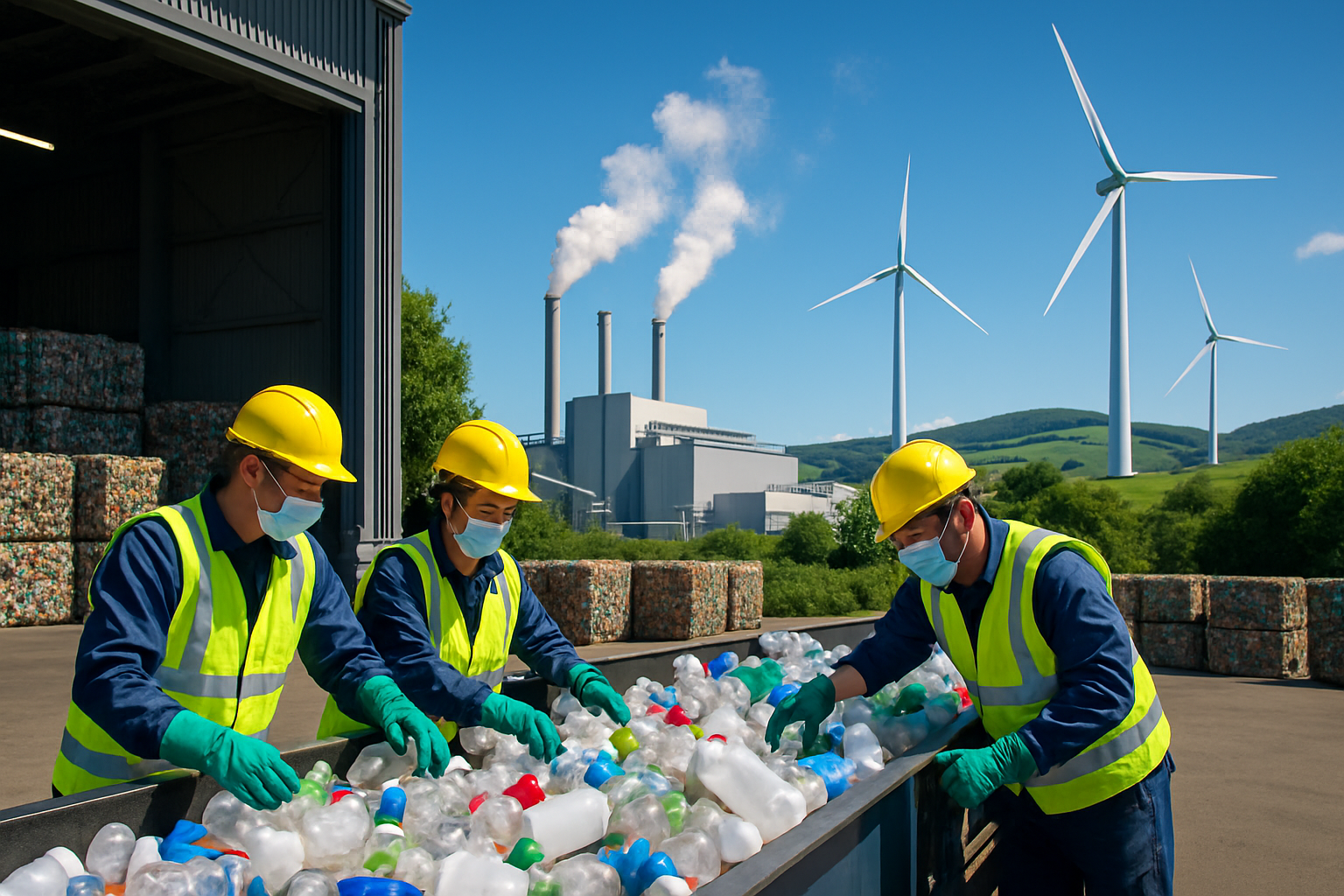
A wave of environmental sustainability initiatives is sweeping across nations globally, with Turkey implementing comprehensive plastic bans, Indonesia deploying Chinese-operated waste-to-energy plants, and new research from Norway raising concerns about the health impacts of recycled polyester clothing.
Turkey's Ambitious Zero Waste Initiative
Turkey is positioning itself as a leader in environmental protection with plans to implement a comprehensive ban on non-biodegradable single-use plastic products as part of its ambitious "Zero Waste" program. The initiative, championed by First Lady Emine Erdoğan, represents a significant step in the country's ongoing environmental protection efforts.
The ban targets a wide range of plastic products that have become ubiquitous in daily life but pose severe environmental challenges. This move aligns Turkey with a growing number of countries recognizing that plastic pollution requires systematic policy interventions rather than voluntary measures.
Indonesia's Controversial Waste-to-Energy Partnership
In a move that has sparked significant debate, Indonesia has appointed two Chinese companies to operate waste-to-energy (WtE) projects in major cities as part of President Prabowo Subianto's initiative to reduce mounting landfill waste while generating energy. The state wealth fund Danantara announced that Wangneng Environment will operate a WtE plant in Bekasi, while Zhejiang Weiming has been selected for another location.
The decision has generated controversy over costs, efficiency, and whether Indonesia's waste-reduction efforts are truly on track. Critics question the long-term environmental and economic implications of relying on foreign technology and expertise for critical waste management infrastructure.
"This partnership represents both an opportunity and a challenge for Indonesia's environmental goals. While waste-to-energy technology can address immediate landfill pressures, the reliance on foreign operators raises questions about technology transfer and local capacity building."
— Environmental Policy Expert
Norway Sounds Alarm on Recycled Materials
Challenging conventional wisdom about recycling benefits, new research from Norway suggests that recycled polyester may be more harmful to both health and the environment than newly produced materials. The findings have significant implications for the global fashion industry, which has increasingly promoted recycled polyester as a sustainable alternative.
Norwegian researchers discovered that the recycling process for polyester can introduce additional chemical contaminants and microplastics that weren't present in virgin materials. This research complicates the narrative around recycling as an unqualified environmental good, suggesting that some recycled materials may pose unexpected health risks.
The study noted that many consumers are finding it increasingly difficult to locate natural fiber alternatives when shopping for new clothing, as synthetic materials—including recycled polyester—dominate retail offerings.
Global Context of Environmental Action
These initiatives emerge against the backdrop of unprecedented environmental urgency. January 2026 marked the 18th consecutive month of global temperatures exceeding 1.5°C above pre-industrial levels, demonstrating that human-induced climate change is fundamentally altering atmospheric systems beyond natural recovery mechanisms.
The environmental actions span multiple continents and represent a diverse array of approaches to sustainability challenges. From Turkey's regulatory approach to Indonesia's technological solutions and Norway's research insights, countries are grappling with complex trade-offs between immediate environmental needs and long-term health considerations.
Economic Implications of Environmental Policies
Modern environmental protection increasingly functions as an economic development strategy rather than merely a regulatory burden. Turkey's plastic ban is expected to stimulate innovation in alternative packaging industries, while Indonesia's waste-to-energy projects could generate significant employment in environmental services sectors.
However, the economic viability of these initiatives depends on sustained political commitment, technological innovation, and international cooperation. Countries implementing comprehensive environmental protection measures demonstrate greater economic resilience and attract sustainable investment across multiple sectors.
Technology Integration Challenges
Successful environmental protection requires sophisticated integration of cutting-edge technology with traditional ecological knowledge and community-based management. Indonesia's collaboration with Chinese technology providers illustrates both the potential benefits and risks of international technology transfer in environmental sectors.
The challenge lies in ensuring that technological solutions enhance rather than replace local environmental stewardship capabilities, creating culturally sensitive and technically robust frameworks for long-term sustainability.
Health and Environmental Trade-offs
Norway's research on recycled polyester highlights a critical challenge in environmental policy: the potential for unintended health consequences from well-intentioned sustainability measures. This underscores the need for comprehensive lifecycle assessments of environmental interventions.
The findings suggest that environmental policies must consider not only immediate pollution reduction but also potential health impacts throughout the entire production and consumption cycle. This complexity requires more nuanced approaches to environmental protection that balance multiple health and environmental objectives.
International Cooperation Framework
Environmental challenges transcend national boundaries, making international cooperation essential. Ocean currents carry pollution across continents, atmospheric systems transport effects globally, and climate impacts affect weather patterns regardless of political borders.
The diversity of approaches demonstrated by Turkey, Indonesia, and Norway provides resilience against single-solution dependencies while offering multiple adaptation pathways for complex environmental challenges. Knowledge sharing and technology transfer enable countries to learn from both successes and failures in environmental policy implementation.
Looking Forward: Critical Decisions Ahead
The convergence of environmental initiatives in early 2026 represents a critical juncture in global environmental protection. The choice between reactive crisis management and proactive ecosystem service management may determine whether environmental protection efforts can keep pace with accelerating environmental change during this decisive climate action decade.
Environmental action windows are narrowing as ecological systems approach critical thresholds that could trigger irreversible changes affecting global food security, climate stability, and human settlements. Tools and knowledge exist for comprehensive environmental protection, but success depends on rapid scaling through enhanced international cooperation and sustained financial commitments.
The experiences of Turkey, Indonesia, and Norway demonstrate both the promise and complexity of environmental action in 2026. Their successes and challenges provide valuable lessons for scaling environmental protection globally while maintaining effectiveness, community engagement, and health safety standards essential for long-term planetary sustainability.