A convergence of environmental crises across six nations has triggered an unprecedented wave of sustainability initiatives, as governments and organizations race to address air pollution, urban flooding risks, and ecosystem degradation while advancing renewable energy targets.
From Albania's ambitious reforestation program to Malta's accelerated renewable energy transition, February 2026 has witnessed a coordinated global response to mounting environmental pressures. These initiatives emerge against a backdrop of deteriorating air quality, extreme weather events, and urgent calls for sustainable urban development.
Albania Leads Massive Reforestation Initiative
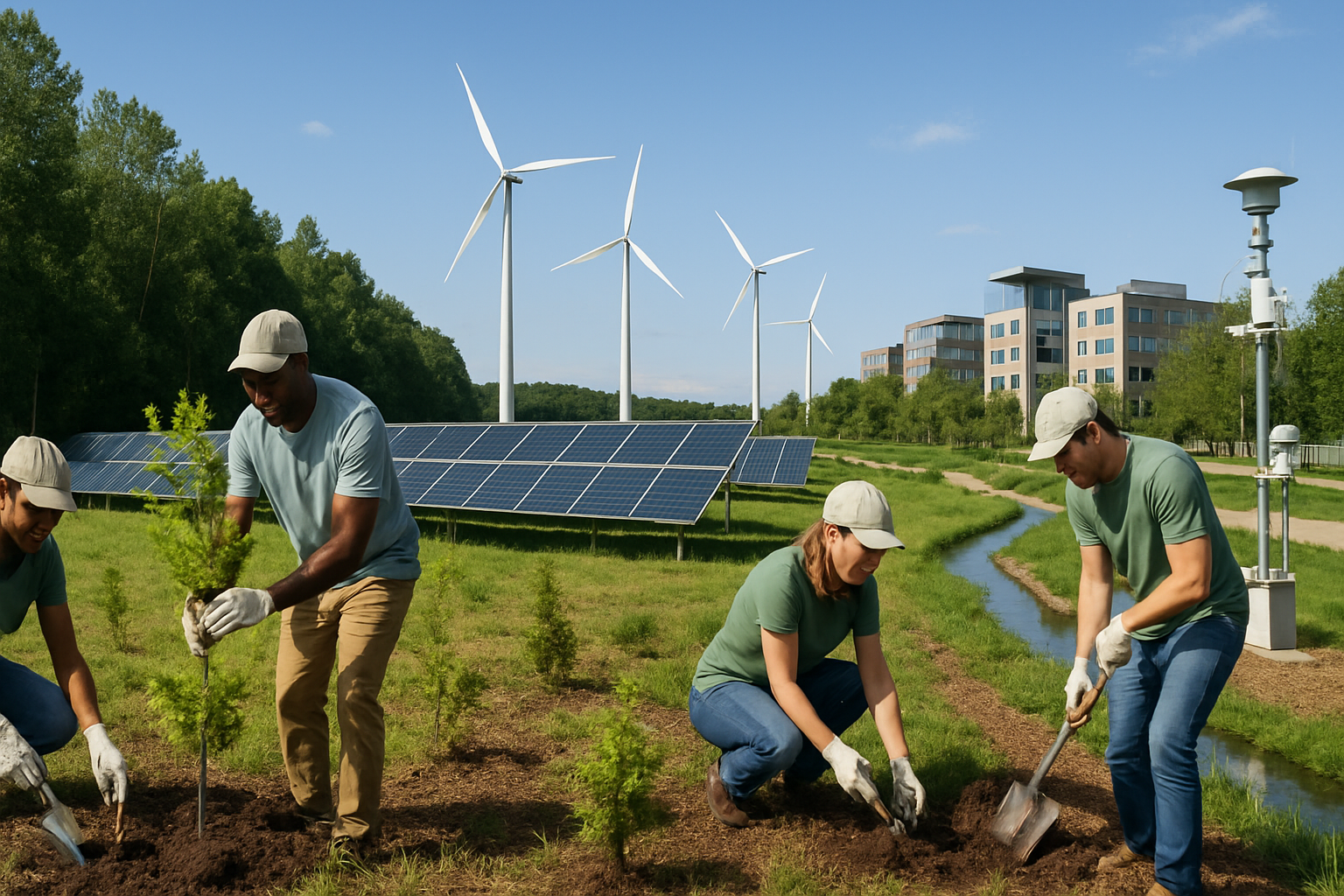
Albanian Prime Minister Edi Rama announced a significant milestone in the country's environmental restoration efforts, revealing that 360,000 new saplings have been added to national forests. The initiative represents a concrete outcome of Albania's "Year of Forests" declaration and ongoing commitment to sustainable reforestation, ecosystem recovery, and long-term enhancement of the nation's forest wealth.
"360,000 new saplings have been added to our forests, a concrete result of the declaration of the Year of Forests and the commitment that has continued for sustainable reforestation, ecosystem recovery and long-term strengthening of our forest wealth," Rama stated in his announcement.
The Albanian reforestation drive aligns with broader European Union environmental objectives and demonstrates how smaller nations can contribute significantly to continental climate goals through focused forest management strategies.
Finland Pioneers Circular Economy in Fashion
Finland is revolutionizing textile recycling through innovative programs designed to make clothing recycling as accessible as plastic bottle returns. The initiative aims to make recycling attractive for consumers while ensuring profitability for businesses, addressing the fashion industry's substantial environmental footprint.
Under the new system, consumers will receive financial incentives for returning used clothing, similar to existing bottle deposit systems. This approach transforms textile waste management from a cost burden into an economic opportunity, encouraging widespread participation in circular economy practices.
Portugal Tackles Urban Flooding Through Green Infrastructure
Environmental organizations Quercus and Greenpeace are urging Greater Lisbon municipalities to invest heavily in permeable soil infrastructure to combat increasing flood risks. The organizations emphasize the critical need to remove or reduce impermeable surfaces in urban areas, such as paved areas, while creating more parks that function as natural retention basins.
The Portuguese initiative addresses a growing challenge facing urban centers worldwide: the need to adapt existing infrastructure to handle increasing precipitation intensity and frequency associated with climate change. By replacing traditional hard surfaces with permeable alternatives, cities can dramatically improve their flood resilience while enhancing urban biodiversity.
Thailand Confronts Air Pollution Crisis
Northeastern Thailand faces a persistent air quality crisis as PM2.5 pollution continues to worsen for the fifth consecutive day. Authorities report daily illegal agricultural burning across four provinces—Nakhon Ratchasima, Chaiyaphum, Buri Ram, and Surin—despite official warnings and environmental regulations.
Mr. Montri Kiatphaophan, Director of the regional office, confirmed that authorities have detected repeated illegal burning of rice stubble and agricultural waste. The burning is carried out to clear land for new planting cycles, creating widespread smoke that worsens air pollution across the region.
Satellite data shows multiple fire hotspots despite air quality remaining within official limits in some areas, highlighting the complex challenge of balancing agricultural practices with environmental protection in developing economies.
Malta Exceeds Renewable Energy Targets
Malta has achieved a remarkable breakthrough in renewable energy adoption, reaching 17% renewable energy in its national energy mix—significantly surpassing the original 2030 target of 11.5%. The International Monetary Fund (IMF) commended this progress in a recent report, noting that Malta has now revised its renewable energy goal upward to 24.5%.
The IMF report highlighted substantial progress in implementation, including advancement on the second Malta-Italy interconnection, electricity grid upgrades, financial incentives for electric vehicles and charging stations, and continued rooftop photovoltaic system rollout.
Malta's National Energy Climate Plan (NECP) targets approximately 40% reduction in greenhouse gas emissions by 2030 compared to 2005 levels, positioning the island nation as a leader in Mediterranean renewable energy transition.
Finland Addresses Clothing Recycling Innovation
Beyond textile recycling incentives, Finland is implementing comprehensive circular economy strategies that could serve as models for other European nations. The Finnish approach combines technological innovation with consumer behavior modification, creating sustainable economic incentives for environmental responsibility.
Industry experts suggest that making recycling profitable and convenient represents a fundamental shift from regulatory-based environmental protection to market-driven sustainability solutions. This model could be replicated across various sectors and geographical regions.
Global Context and Climate Urgency
These national initiatives occur within the broader context of accelerating climate change impacts. Recent data indicates that January 2026 was the hottest month in recorded history, with 18 of the past 19 months exceeding 1.5°C above pre-industrial levels. This unprecedented warming trend overrides natural climate variability, demonstrating the urgent need for coordinated environmental action.
European Union auditors have warned that climate goals remain threatened by critical materials shortages, with China controlling 60% of global production and 90% of refining capacity for lithium, cobalt, and rare earth elements essential for renewable energy infrastructure. This supply chain vulnerability adds complexity to environmental transition strategies.
International Cooperation Opportunities
The diverse approaches demonstrated across Albania, Finland, Portugal, Thailand, and Malta illustrate how different nations can address environmental challenges while considering their specific geographical, economic, and social contexts. Albania's focus on forest restoration, Finland's circular economy innovation, Portugal's urban flood adaptation, Thailand's agricultural pollution management, and Malta's renewable energy acceleration represent complementary strategies within a global environmental protection framework.
These initiatives demonstrate the potential for South-South cooperation, technology transfer, and knowledge sharing among nations facing similar environmental pressures. Success depends on sustained political commitment, international coordination, and the ability to balance immediate economic needs with long-term environmental sustainability.
Economic and Social Implications
The economic dimensions of these environmental initiatives extend beyond immediate costs to encompass job creation, technological innovation, and long-term competitiveness. Malta's renewable energy success creates opportunities in green technology sectors, while Finland's circular economy approach generates new business models and employment opportunities.
Portugal's urban adaptation strategies require significant infrastructure investment but provide long-term benefits through reduced flood damage and improved quality of life. Albania's reforestation program combines environmental restoration with rural employment opportunities and ecosystem service provision.
Implementation Challenges and Solutions
Despite positive momentum, these initiatives face substantial implementation challenges. Funding limitations, technical capacity constraints, political stability requirements, and international cooperation needs represent ongoing obstacles to environmental progress.
Thailand's agricultural pollution crisis illustrates the challenge of balancing traditional economic practices with environmental protection requirements. Effective solutions require alternative livelihood strategies, technological support for sustainable farming practices, and comprehensive policy frameworks that address both immediate and long-term needs.
Future Outlook and Strategic Priorities
The coordinated environmental initiatives across these six nations represent a template for expanded global environmental action. Key success factors include community engagement, technological integration, economic viability, and international cooperation through established frameworks and bilateral partnerships.
Moving forward, the integration of traditional knowledge systems with cutting-edge environmental technologies offers promising pathways for sustainable development. The diversity of approaches demonstrated across different geographical and economic contexts provides valuable lessons for scaling environmental solutions globally.
As climate change impacts intensify and environmental challenges become more complex, the collaborative approaches demonstrated in February 2026 may serve as foundations for more ambitious international environmental cooperation efforts, balancing local needs with global sustainability objectives.