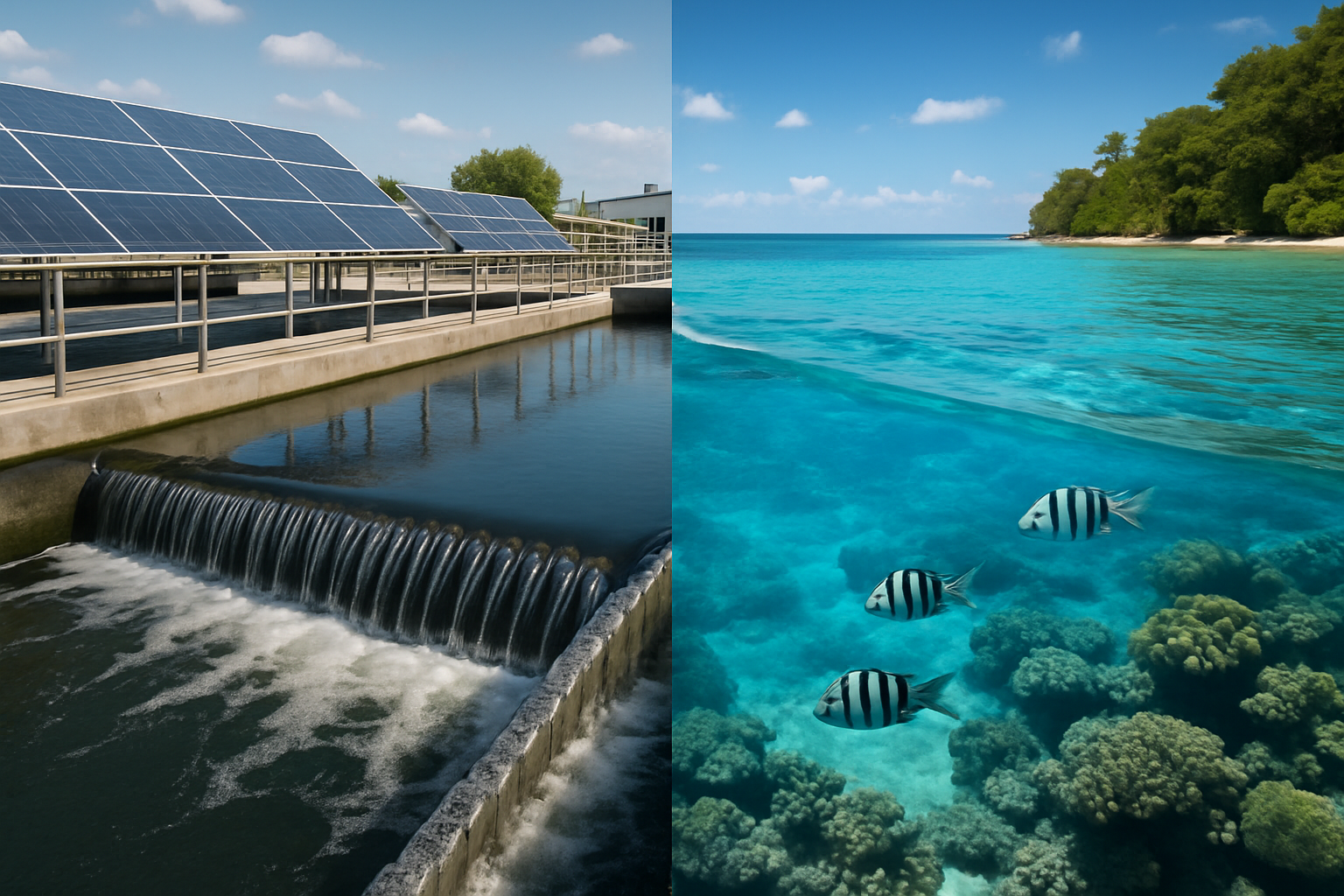
Environmental challenges intensified across three continents this week, as the European Union set ambitious water reduction targets, New Zealand protected marine ecosystems from mining threats, and Wellington faced a continuing sewage crisis that exposes critical infrastructure failures.
The convergence of water scarcity, marine pollution, and conservation battles reflects broader environmental pressures as global temperatures continue breaking records. January 2026 marked the hottest month ever recorded, with 18 of the past 19 months exceeding 1.5°C above pre-industrial levels, creating unprecedented challenges for environmental protection efforts worldwide.
Cyprus Confronts Water Crisis with EU-Mandated Reductions
Cyprus Agriculture Minister Maria Panayiotou and visiting EU Commissioner for the Environment Jessika Roswall emphasized the urgent need to reduce water consumption throughout the European Union, particularly in water-stressed Cyprus, as part of the European strategy for water resilience.
Speaking at a press conference in Nicosia ahead of the Informal Council of EU Ministers of the Environment, Panayiotou confirmed that Cyprus must comply with the EU goal to reduce water consumption by 10 percent by 2030. The Mediterranean island nation will utilize European Commission technical support to achieve these targets through advanced desalination technologies and enhanced monitoring systems to prevent water losses.
"Cyprus utilizes the European Commission's technical support as we work toward meeting these critical water reduction targets."
— Maria Panayiotou, Cyprus Agriculture Minister
The water resilience discussions also covered the circular economy, simplification of environmental legislation, and strategies for preventing and battling wildfires. These comprehensive measures reflect the interconnected nature of environmental challenges facing Mediterranean countries as climate change intensifies drought conditions and extreme weather events.
New Zealand Blocks Seabed Mining to Protect Marine Ecosystems
In a significant victory for marine conservation, New Zealand's fast-track approvals panel declined a 30-year plan to mine the South Taranaki Bight, citing credible risks to marine life. The draft decision represents a precautionary approach to protecting marine ecosystems over extractive industry development.
The Green Party celebrated the decision as a crucial step in safeguarding New Zealand's marine biodiversity. The rejection aligns with international trends toward expanding marine protected areas and prioritizing long-term ecological health over short-term economic gains from resource extraction.
This decision comes as New Zealand grapples with growing environmental awareness and the need to balance economic development with ecosystem protection. The South Taranaki Bight mining proposal would have represented one of the country's largest seabed mining operations, making the rejection particularly significant for marine conservation advocates.
Wellington's Sewage Crisis Exposes Infrastructure Failures
Meanwhile, New Zealand's capital continues struggling with a major environmental disaster as raw sewage spills into the sea along Wellington's south coast. The ongoing contamination has prompted detailed investigations into who knew what and when about the city's broken wastewater treatment plant.
The sewage pollution represents a critical infrastructure failure affecting both public health and marine ecosystems. Wellington's coastal waters, previously valued for recreation and marine life, now face contamination that could have long-lasting environmental consequences.
The timeline of events reveals systemic issues in the city's wastewater management infrastructure, highlighting the broader challenges many urban areas face in maintaining aging environmental systems while managing population growth and climate change impacts.
Global Context: Environmental Pressures Mount Amid Record Temperatures
These regional environmental challenges occur within a global context of unprecedented climate pressures. Recent memory recalls reveal that environmental protection efforts have intensified worldwide, with initiatives spanning from Zimbabwe's wetland restoration to Romania's solar energy expansion and the Caribbean's marine conservation partnerships.
The European Union faces particular challenges as auditors warn that climate goals are at serious risk due to critical raw materials shortages and dangerous dependence on China, which controls 60% of global production and 90% of refining capacity for materials essential to renewable energy infrastructure.
France has called for the EU to establish climate "red lines" during the Cyprus environment ministers summit as the bloc reviews its approach to UN climate goals. These discussions reflect growing recognition that environmental protection requires coordinated international action and substantial policy reforms.
Water Infrastructure as Investment Opportunity
The water challenges facing Cyprus and Wellington highlight a broader global trend toward recognizing water infrastructure as both a crisis and an opportunity. Global investors increasingly view water utilities as defensive assets with stable demand regardless of economic cycles, driven by rising population, urbanization, and climate pressures.
Investment drivers include industrial demand from data centers, clean energy facilities, and manufacturing, while regulated pricing frameworks provide revenue visibility supporting steady returns. However, the sector faces challenges including aging infrastructure replacement costs, environmental regulations, and the need to balance affordability with modernization requirements.
Marine Conservation Gains International Momentum
New Zealand's seabed mining rejection contributes to broader international marine conservation efforts. Recent developments include Saudi Arabia's rare leatherback sea turtle sighting in the Red Sea, Cyprus's designation as a conservation priority for Mediterranean seabirds, and Gabon's continued environmental leadership through comprehensive ecosystem management.
These conservation initiatives demonstrate that despite climate change pressures, international cooperation, technological innovation, and protected area designation can achieve success when integrated with sustainable development strategies.
Technology and Innovation in Environmental Protection
Environmental protection efforts increasingly integrate technological innovation with traditional knowledge systems and community-based management approaches. Recent initiatives include smart water management systems, advanced treatment technologies, leak detection systems, and efficiency optimization tools.
Climate change is altering water availability patterns and marine ecosystems, requiring adaptive infrastructure that can respond to changing environmental conditions. The water sector is transforming from a basic utility service into a sophisticated investment asset class reflecting the critical importance of essential environmental infrastructure.
Looking Ahead: Coordinated Global Response Required
The environmental challenges evident in Cyprus, New Zealand, and other nations require enhanced international coordination, corporate transparency, and supply chain monitoring. Success depends on addressing both climate change and chemical contamination simultaneously, creating what experts describe as a "double burden" requiring integrated solutions.
The need for accelerated implementation is urgent as the action window narrows. Environmental protection has evolved from reactive crisis management to proactive ecosystem service management emphasizing community participation, technological integration, and economic viability.
As February 2026 unfolds, these environmental developments provide a template for sustainable environmental protection in the climate change era, demonstrating both the challenges and opportunities that define this critical period for global environmental action.