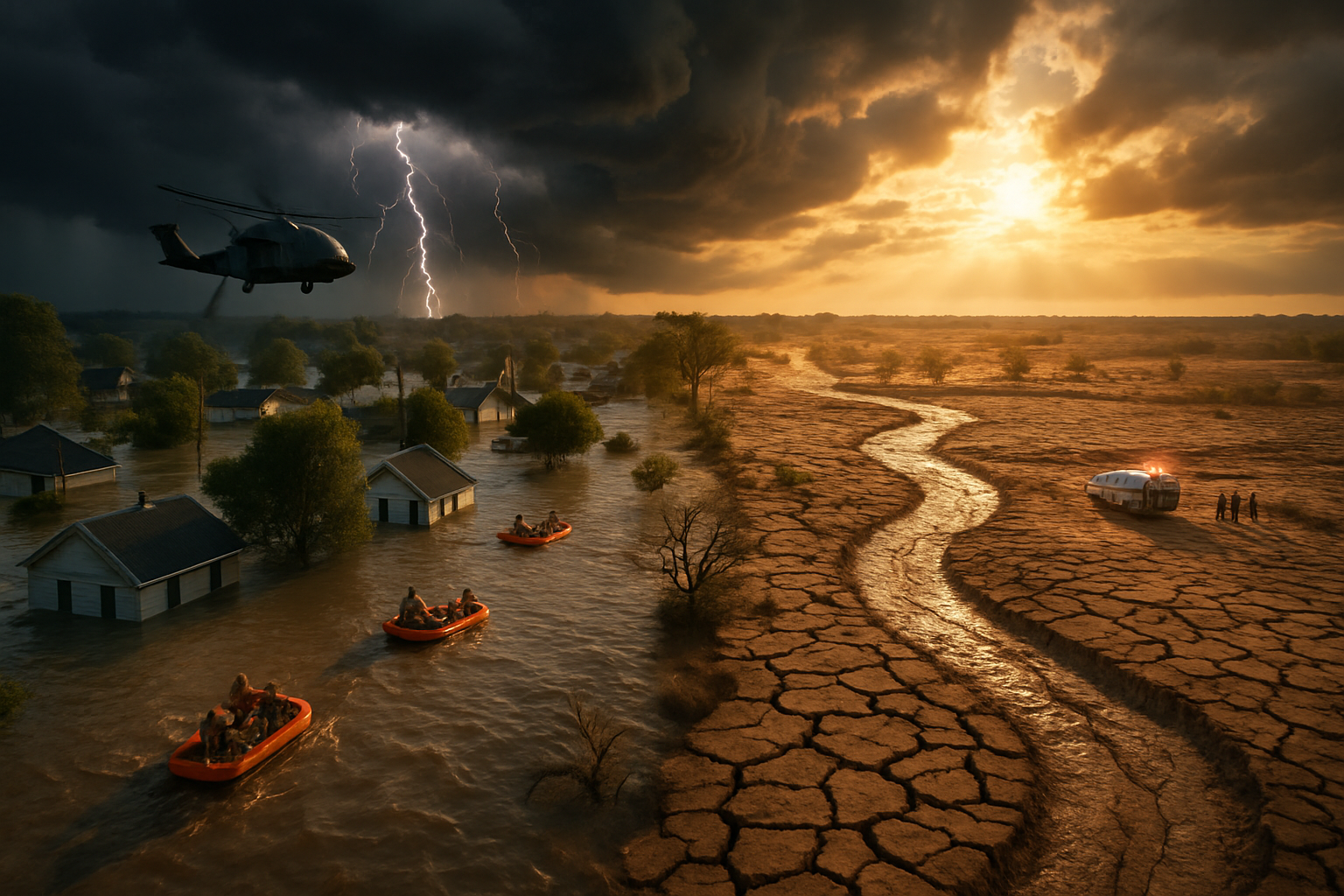
A devastating convergence of extreme weather disasters across four nations has exposed critical vulnerabilities in global emergency response systems, as Afghanistan, Algeria, Bolivia, and the North Caucasus region battle simultaneous flooding, severe storms, and unprecedented weather conditions during what scientists confirm is the 22nd consecutive month of global temperatures exceeding 1.5°C above pre-industrial levels—the longest sustained warming streak in recorded human history.
Afghanistan Flash Floods Kill Dozens
At least 28 people have been confirmed dead and 49 others injured in Afghanistan following days of heavy rain that triggered devastating flash floods, landslides, and lightning strikes across several provinces. Yousuf Hammad, spokesman for the national disaster authority, reported that the extreme weather has affected 1,130 families since March 26, causing widespread damage to homes, roads, farmland, and critical infrastructure.
The mountainous terrain of Afghanistan proved particularly vulnerable to the intense precipitation, with traditional drainage systems overwhelmed by the sudden influx of water. Local communities, already struggling with humanitarian challenges, found themselves facing another catastrophic natural disaster that has destroyed livelihoods and displaced thousands of families.
Algeria Faces Triple Weather Threat
Algeria's civil protection services have issued urgent warnings for a powerful atmospheric disturbance affecting northern regions through Tuesday, bringing a dangerous triple threat of extreme weather conditions. The system is delivering heavy rainfall exceeding 60mm, dense snowfall above 1,100 meters elevation in western and central mountains, and dangerous winds surpassing 100 km/h.
Most concerning are the accompanying dust storms creating respiratory hazards across 16 provinces, with authorities particularly warning vulnerable populations to remain indoors. The combination of flooding in Béchar and Béni Abbès provinces, where civil protection teams rescued 11 people trapped by rising waters, demonstrates the multi-faceted nature of this weather emergency.
Bolivia's Deadly Rainfall Crisis
Bolivia is experiencing a catastrophic rainy season that has claimed 37 lives and left 14 people missing since December 2025, with the situation dramatically escalating in recent weeks. René Vásquez, director of Emergency and Auxilio del Viceministerio de Defensa Civil, reported that approximately 1,500 families across Cochabamba, Santa Cruz, Beni, and La Paz departments are currently affected by the ongoing crisis.
The intensity of the current disaster is evident in Cochabamba alone, where 1,000 families have been severely impacted across 20 communities in municipalities including Pojo, Arque, and San Benito. Emergency coordination efforts are underway to validate all affected populations and distribute crucial support to displaced communities.
"Since December last year, we have a total of 37 deaths and 14 missing persons. In just the past week alone, around 1,500 families have been affected,"
— René Vásquez, Director of Emergency and Auxilio
North Caucasus Faces Century-Scale Flooding
The North Caucasus region and Azerbaijan are grappling with what officials describe as the largest-scale flooding in 100 years, triggered by heavy rainfall beginning on the night of March 27-28. The disaster has been particularly severe in Daghestan, where hundreds of residential buildings and household plots have been flooded, forcing the evacuation of thousands of residents.
Rescue services in Daghestan reported that 760 residential houses and 950 adjoining territories were inundated, with water levels reaching up to 1.5 meters in some areas. A total of 3,338 people have been evacuated from danger zones, highlighting the scale of this unprecedented regional emergency.
The situation has been so severe that states of emergency have been declared in two Russian regions, underscoring the magnitude of the disaster and the strain on local emergency response capabilities.
Climate Context: Record-Breaking Warming Streak
These simultaneous disasters are occurring during an unprecedented period of global climate volatility. January 2026 was confirmed as the hottest month ever recorded, extending a warming streak that has now persisted for 22 consecutive months above the critical 1.5°C threshold. This sustained warming is overriding natural cooling mechanisms, including the typical effects of La Niña weather patterns.
The World Meteorological Organization has indicated a 50-60% probability of El Niño development during July-September 2026, which could potentially drive global temperatures to unprecedented levels by combining baseline warming with natural cycle amplification. This creates what climate scientists term a "climate volatility paradox," where sustained global warming enables both heat records and devastating regional extremes through disrupted atmospheric circulation and polar vortex patterns.
Emergency Response Systems Under Strain
The simultaneity of these disasters has exposed critical weaknesses in global emergency response systems, which were primarily designed to handle sequential rather than concurrent multi-continental emergencies. Traditional mutual aid mechanisms that allow stable regions to assist areas in crisis have proven inadequate when multiple continents face disasters simultaneously.
Emergency services across all affected regions are operating at or beyond their capacity limits. Transportation networks, power grids, and communication systems designed for historical climate patterns are repeatedly failing as extreme weather exceeds their operational parameters. The cascading nature of these failures compounds the primary impacts of the weather disasters themselves.

Economic and Social Devastation
The economic toll of these simultaneous disasters is staggering. Agricultural sectors across all affected regions are experiencing mounting losses as extreme weather destroys crops and disrupts supply chains during critical growing seasons. Tourism industries face extended cancellations and infrastructure damage during what should be peak revenue periods.
Perhaps most concerning is the human cost beyond the immediate casualties. Families are losing generational homes, small businesses face extinction from repeated disruptions, and mental health services report increased demand for support related to climate anxiety and repeated trauma. The recovery timelines have fundamentally shifted from the traditional expectation of weeks to months or even years, representing a fundamental change in disaster response approaches.
Infrastructure Adaptation Crisis
The current crisis represents what many experts consider a watershed moment for global climate preparedness. The choice between reactive crisis management and transformative infrastructure adaptation has become increasingly critical as traditional seasonal patterns that have guided infrastructure design, agricultural planning, and emergency preparedness for centuries are no longer reliable frameworks.
The concept of "building back better" with climate-resilient infrastructure has evolved from an optional enhancement to an essential survival strategy. Current conditions provide a preview of what may become routine circumstances in the 2030s without significant climate adaptation investment.
International Cooperation at Breaking Point
Environmental challenges transcend political boundaries, as atmospheric systems and ocean currents transport climate effects globally regardless of borders. The simultaneity of disasters is testing cooperation mechanisms that were developed assuming stable regions would be available to assist others during isolated emergencies.
Success in addressing these challenges requires unprecedented international cooperation, enhanced multi-sector coordination, and increased financial commitments that recognize environmental protection as essential infrastructure rather than optional enhancement. The tools, knowledge, and cooperation frameworks exist for comprehensive environmental protection, but they require implementation at unprecedented speed and coordination.
"The convergence of extreme weather, infrastructure vulnerabilities, and emergency response limitations underscores the urgent need for coordinated international action. This may be a decisive moment for global climate resilience strategies."
— Climate Emergency Response Analysis
A Decisive Moment for Global Response
The question facing the international community is no longer whether transformative climate action is needed, but whether humanity can organize and implement solutions rapidly enough to maintain planetary habitability during Earth's most environmentally challenging period in recorded history.
The window for effective climate action continues to narrow as ecological systems approach critical thresholds that could trigger irreversible changes to global food security, climate stability, and human settlement patterns. Additional weather systems developing in the Atlantic and Pacific regions suggest that current crisis conditions may persist for weeks or months, potentially establishing a "new normal" of extreme weather frequency and intensity that permanently challenges traditional emergency response frameworks.
March 2026 may prove to be a defining moment that determines humanity's capacity to adapt and protect the essential environmental systems upon which all life depends. The choices made in the coming months regarding adaptation strategies, infrastructure investment, and international cooperation could be decisive for climate resilience strategies affecting generations to come.