Global financial markets are displaying signs of cautious recovery and persistent volatility as major economies navigate the aftermath of the March 2026 energy crisis, with significant developments emerging across European currencies, Asian stock exchanges, and corporate sector adjustments.
Norwegian Krone Shows Strength Despite Travel Concerns
The Norwegian krone has finally begun to strengthen after months of pressure from global energy market disruptions, according to latest market data. However, analysts warn that this currency appreciation may not translate into immediate relief for Norwegian travelers planning summer vacations in Southern Europe.
The krone's recovery comes against the backdrop of Norway's energy sector resilience during the March crisis when oil prices reached historic peaks of $119.50 per barrel for Brent crude. Norway's position as a major energy exporter has provided some insulation from the supply chain disruptions that devastated other European economies during the Strait of Hormuz closure.
Pakistan Stock Exchange Demonstrates Remarkable Recovery
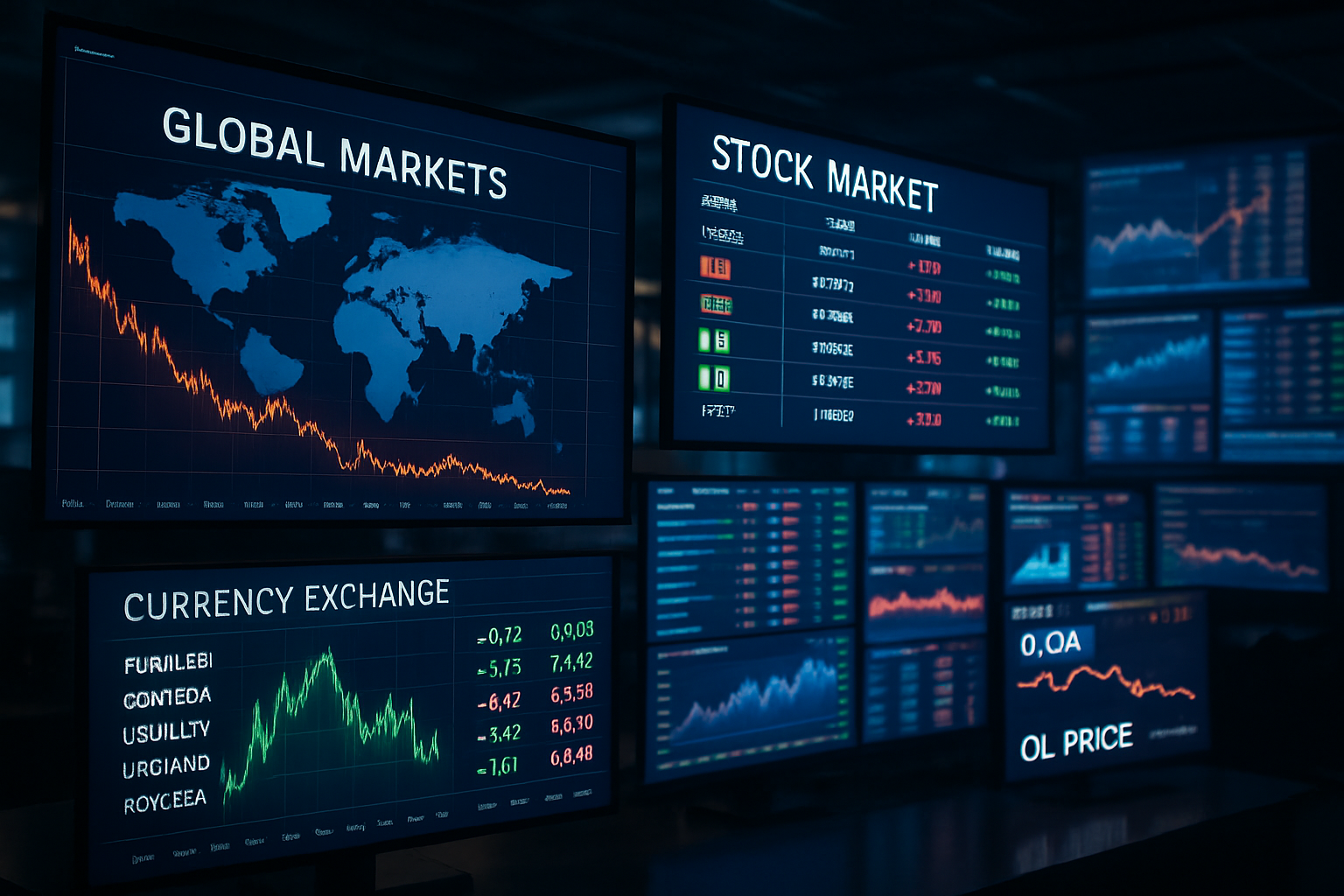
In a stunning reversal of fortunes, Pakistan's KSE-100 index has staged one of the most dramatic recoveries in emerging market history. The benchmark index gained over 2,000 points during intraday trading on Tuesday, marking a significant recovery from the devastating losses suffered during the March crisis when the exchange recorded its largest single-day decline of 8.97%.
The bullish momentum follows confirmation that Pakistan's State Bank received $1 billion from Saudi Arabia as the second tranche of a $3 billion deposit arrangement. This financial support has significantly bolstered Pakistan's foreign exchange reserves, which reached $21.43 billion as of late February, providing crucial stability during the global energy market volatility.
"This recovery demonstrates the underlying resilience of Pakistan's financial sector despite external challenges."
— Market Analyst, commenting on KSE-100 performance
The KSE-100 gained 2,132.25 points or 1.24 percent to stand at 174,328.95 during afternoon trading, with trading volume reaching 402.5 million shares. This represents a remarkable turnaround from the March lows when circuit breakers were triggered following massive sell-offs during the Strait of Hormuz crisis.
Regional Financial Resilience Emerges
Pakistan's recovery is particularly significant given its role as a crucial mediator in the recent US-Iran ceasefire negotiations. The successful diplomatic breakthrough, achieved just 88 minutes before a potential military escalation, has enhanced Pakistan's standing as a regional stabilizer and attracted renewed investor confidence.
Danish Corporate Sector Faces Fresh Challenges
Danish markets present a more complex picture, with Unibrew shares experiencing significant volatility following competitive developments in the beverage sector. The Danish company's stock price declined sharply after news emerged regarding competitor activities involving PepsiCo, highlighting the ongoing sensitivity of European markets to corporate developments.
The Danish C25 index has reflected the broader European market uncertainty, with all companies experiencing declines during the height of the March energy crisis. Denmark's heavy reliance on energy imports made it particularly vulnerable to the oil price surge that reached unprecedented levels when Iran's Revolutionary Guard declared the Strait of Hormuz "unsafe for shipping."
Historical Context: Recovery from Unprecedented Crisis
These developments must be understood against the backdrop of what analysts describe as the most severe financial market disruption since the 2008 crisis. The March 2026 energy emergency saw:
- Oil prices breach $100 per barrel for the first time since 2022
- Natural gas prices surge 24% in Europe and 78% in the United States
- Over 18,000 flights cancelled globally in aviation's worst crisis since COVID-19
- The largest strategic petroleum reserve release in 50-year history by the IEA
- Major shipping companies suspending Persian Gulf operations
Central Bank Coordination Proves Effective
The recovery has been supported by unprecedented coordination between major central banks. The European Central Bank and Bank of Japan implemented emergency liquidity provisions that prevented broader financial contagion when traditional monetary policy tools proved insufficient against structural geopolitical disruptions.
This coordinated response represents a departure from the post-2008 synchronized monetary policy approach, with central banks increasingly pursuing country-specific strategies based on domestic economic conditions while maintaining crisis response mechanisms.
Currency Markets Reflect New Dynamics
Currency markets are displaying increased sophistication in differentiating between countries based on governance quality, policy credibility, and economic management capabilities rather than broad regional categorization. The Norwegian krone's strength despite European energy vulnerabilities illustrates this trend toward fundamental analysis over geographic proximity.
The Pakistani rupee has remained relatively stable during the global volatility, with the USD to PKR rate maintaining levels around 278, reflecting the country's successful navigation of the energy crisis through diplomatic channels and strategic financial partnerships.
Investment Strategy Evolution
Portfolio managers are increasingly recognizing that emerging markets with strong institutional frameworks offer greater stability during uncertainty periods. The speed of Pakistan's market recovery reflects fundamental improvements in economic governance, enhanced monetary policy frameworks, and sophisticated international trade approaches.
"Countries investing in diversified economic structures, strong institutional frameworks, and international cooperation are showing greater resilience."
— Investment Strategist on emerging market trends
This shift represents a fundamental evolution from regional themes toward country-specific analysis based on institutional quality and policy effectiveness, rewarding investors with sophisticated country analysis capabilities while challenging traditional geographic sector-based approaches.
Energy Sector Transformation Accelerating
The March crisis exposed dangerous vulnerabilities in global energy architecture, particularly the over-dependence on the 21-mile Strait of Hormuz chokepoint that handles 40% of global seaborne oil transit. This has accelerated discussions about fundamental energy infrastructure transformation to reduce dependence on volatile geopolitical regions.
Digital financial infrastructure has proved valuable during crisis periods, with countries having advanced digital payment systems demonstrating superior operational continuity. Nigeria's achievement of 43% fuel sales through digital platforms with same-day settlements during the energy crisis exemplifies this technological advantage.
Looking Forward: Sustainable Growth Templates
The current financial market developments suggest a maturation of emerging market finance toward fundamental analysis over speculation. Markets are showing increasing sophistication in differentiating between countries based on governance quality rather than broad regional categorization.
The template established by Pakistan's market performance, combined with improving foreign exchange positions and regulatory effectiveness, provides a model for emerging markets seeking to thrive in an environment characterized by reduced international coordination and increased geopolitical complexity.
Technology Integration Continues
Despite global memory chip shortages that have seen semiconductor prices increase sixfold, financial sector technology integration has accelerated. Enhanced digital payment systems, electronic banking services, and automated transaction processing have provided stability during global volatility periods.
This technological resilience has become a crucial differentiator, with institutions investing in data analytics, risk management systems, and customer engagement platforms better positioned to capitalize on emerging opportunities while maintaining operational stability.
Risk Assessment for Global Markets
While current developments show positive momentum, significant challenges remain. The underlying vulnerabilities exposed during the March crisis—particularly single-point failure risks in global supply chains—require sustained attention and investment to prevent similar disruptions in an increasingly volatile interconnected global economy.
Recovery timelines remain uncertain and dependent on sustained diplomatic progress rather than traditional economic factors. The success of the Pakistan-mediated ceasefire provides a template for diplomatic solutions, but the fundamental energy architecture transformation required to reduce strategic chokepoint dependencies will take years to implement.
Financial markets' demonstrated preference for diplomatic resolution over military escalation, as evidenced by the dramatic rallies following ceasefire announcements, suggests that sustained geopolitical cooperation will be crucial for maintaining the current recovery trajectory across global financial systems.