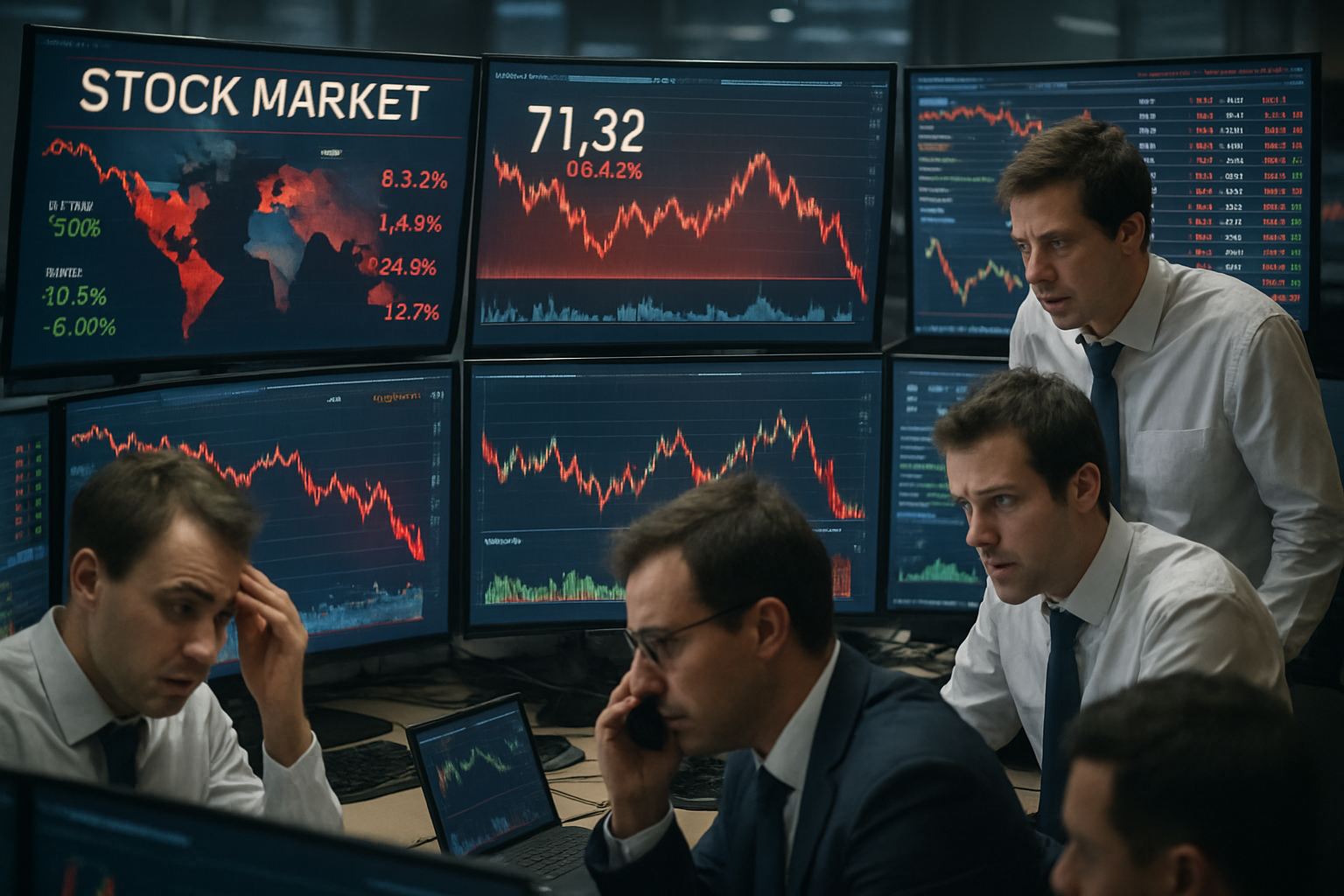
Global financial markets are experiencing their most severe disruption since the 2008 financial crisis, with oil prices breaching $100 per barrel for the first time since 2022 as international trade routes collapse and governments worldwide implement emergency austerity measures to combat escalating economic pressures.
The convergence of multiple crises has created a perfect storm that is reshaping the global economic landscape. From Pakistan's implementation of drastic fuel conservation measures to Bulgaria's property market innovations amid mortgage complexities, nations are grappling with unprecedented challenges that threaten decades of economic stability.
Energy Crisis Triggers Market Collapse
The closure of the Strait of Hormuz, which handles 40% of global seaborne oil transit, has sent shockwaves through energy markets. Brent crude prices have surged to $119.50 per barrel, with WTI jumping a record 18.98% to $108.15, marking the biggest single-day increase on record.
Natural gas prices have exploded by 24% in Europe and 78% in the United States, reaching €47.32 per MWh in European markets—the highest level since February 2025. Qatar, which supplies approximately 20% of global LNG exports, has halted production at its Ras Laffan and Mesaid facilities, with force majeure declarations expected imminently.
"This is the most severe energy security crisis in decades, with single-chokepoint vulnerabilities completely exposed," said energy analyst Samuel Ciszuk. "The situation is going longer than initially thought, and financial markets are proving to be the ultimate constraint on prolonged conflict."
— Samuel Ciszuk, Energy Security Analyst
Major shipping companies Maersk and MSC have suspended all Persian Gulf operations, stranding over 150 oil and LNG tankers worth billions in cargo. The geographic irreplaceability of the 21-mile Strait of Hormuz has demonstrated the dangerous over-dependence of modern logistics on strategic chokepoints.
Global Stock Market Carnage
Financial markets worldwide have suffered catastrophic losses. Pakistan's KSE-100 index experienced its worst single-day decline in history, crashing 8.97% or over 15,000 points before trading was suspended. South Korea's KOSPI plunged 12% with circuit breakers activated, while the Korean won hit a 17-year low as foreign capital fled previously strong AI and memory chip positions.
European markets have not been spared, with Germany's DAX continuing its steep decline and Italy's Milan exchange dropping 4%. The pan-European STOXX 600 fell 1.3%, while Dow futures dropped between 400-570 points, signaling continued volatility in U.S. markets.
Central banks are coordinating unprecedented emergency responses. The European Central Bank and Bank of Japan are providing coordinated emergency liquidity to prevent broader financial contagion, though traditional monetary policy tools are showing limited effectiveness against these structural geopolitical disruptions.
Pakistan Implements Severe Austerity Measures
In response to the global fuel crisis triggered by Middle East conflicts, Pakistan's Prime Minister Shehbaz Sharif announced comprehensive austerity measures designed to conserve fuel and reduce government expenditure. The measures include:
- 50% reduction in fuel allowances for official vehicles (excluding ambulances and public buses)
- Suspension of 60% of government department vehicles for two months
- Federal cabinet forgoing salaries for the next two months
- 25% salary reduction for parliamentarians
- Implementation of a four-day work week with 50% of staff working from home
These measures affect a nation of over 240 million people and represent some of the most dramatic government cost-cutting initiatives seen globally since the height of the 2008 financial crisis.
China's Strategic Economic Pivot
Amid the global turmoil, China has announced a significant economic policy shift that could reshape international trade relationships. Beginning May 1, 2026, China will implement zero-tariff treatment for all products from 53 African countries maintaining diplomatic relations with Beijing.
This policy represents China's most comprehensive African trade expansion in modern history and positions Beijing as a champion of multilateral cooperation during a period when other major economies are turning toward protectionist measures.
Burkina Faso has emerged as a key beneficiary of Chinese investment strategies, with the country's Finance Minister Dr. Aboubakar Nacanabo meeting with West African Development Bank President Serge Ekué to discuss the implementation of the RELANCE 2026-2030 development plan, a strategic framework for economic and social transformation.
European Real Estate Markets Under Pressure
The global economic uncertainty has created unexpected opportunities in some sectors. Bulgaria's real estate market is experiencing a phenomenon where property owners are increasingly comfortable selling mortgaged properties, with industry brokers noting that transactions involving mortgaged real estate are often faster than conventional sales when proper procedures are followed.
The active Bulgarian property market, driven by rising prices and strong demand for completed apartments in major cities, demonstrates how localized markets can sometimes benefit from global uncertainty as investors seek tangible assets.
Aviation Industry in Crisis
The global aviation sector faces its most comprehensive disruption since the COVID-19 pandemic, with over 18,000 flights canceled worldwide. Eight countries have simultaneously closed their airspace, including Iran, Iraq, Israel, UAE, Qatar, Syria, Kuwait, and Bahrain.
Dubai International Airport, the world's busiest with over 86 million passengers annually, remains completely shut down due to missile damage. Major airlines including Emirates, Air France-KLM, Wizz Air, and Bulgaria Air have suspended operations indefinitely, stranding hundreds of thousands of passengers globally.
Corporate Response to Global Uncertainty
The crisis has forced major corporations to reassess their strategies. PayPay's $1.1 billion U.S. IPO has been postponed indefinitely due to market volatility. Technology companies are delaying major announcements and reassessing international expansion plans as supply chains dependent on Middle Eastern trade hubs face severe disruptions.
Finland's major corporations have identified immigration reform as crucial for economic growth, with OP Pohjola research indicating that recruitment facilitation is essential for maintaining competitiveness in the current environment.
U.S. Markets Show Resilience Amid Trump Comments
Despite the global turmoil, U.S. markets have shown some resilience, with Wall Street's three major indices recovering from initial losses following comments from President Donald Trump. Market participants interpreted the president's statements as potentially market-positive, though volatility remains high.
Long-term Economic Implications
The current crisis exposes fundamental vulnerabilities in the global economic architecture that have been developing for decades. The over-dependence on strategic chokepoints, particularly the Strait of Hormuz, demonstrates the need for comprehensive restructuring of international supply chains.
Energy security experts warn that unlike weather-related disruptions with predictable timelines, recovery from this crisis depends entirely on military operations and diplomatic normalization. Traditional monetary policy tools are proving inadequate against structural geopolitical disruptions.
The situation represents a template-setting moment for 21st-century crisis management in an increasingly multipolar world. Success in containing the escalation could provide a framework for future nuclear crisis resolution and strengthen diplomatic precedents. Failure may accelerate the shift toward military solutions in international relations, potentially reshaping geopolitics for decades while encouraging nuclear proliferation globally.
As governments worldwide grapple with immediate supply needs versus long-term energy security architecture, the international community faces its greatest test of multilateral cooperation in the modern era. The decisions made in the coming weeks will determine not only the resolution of the current crisis but also establish precedents for conflict resolution approaches that will influence international relations for generations to come.