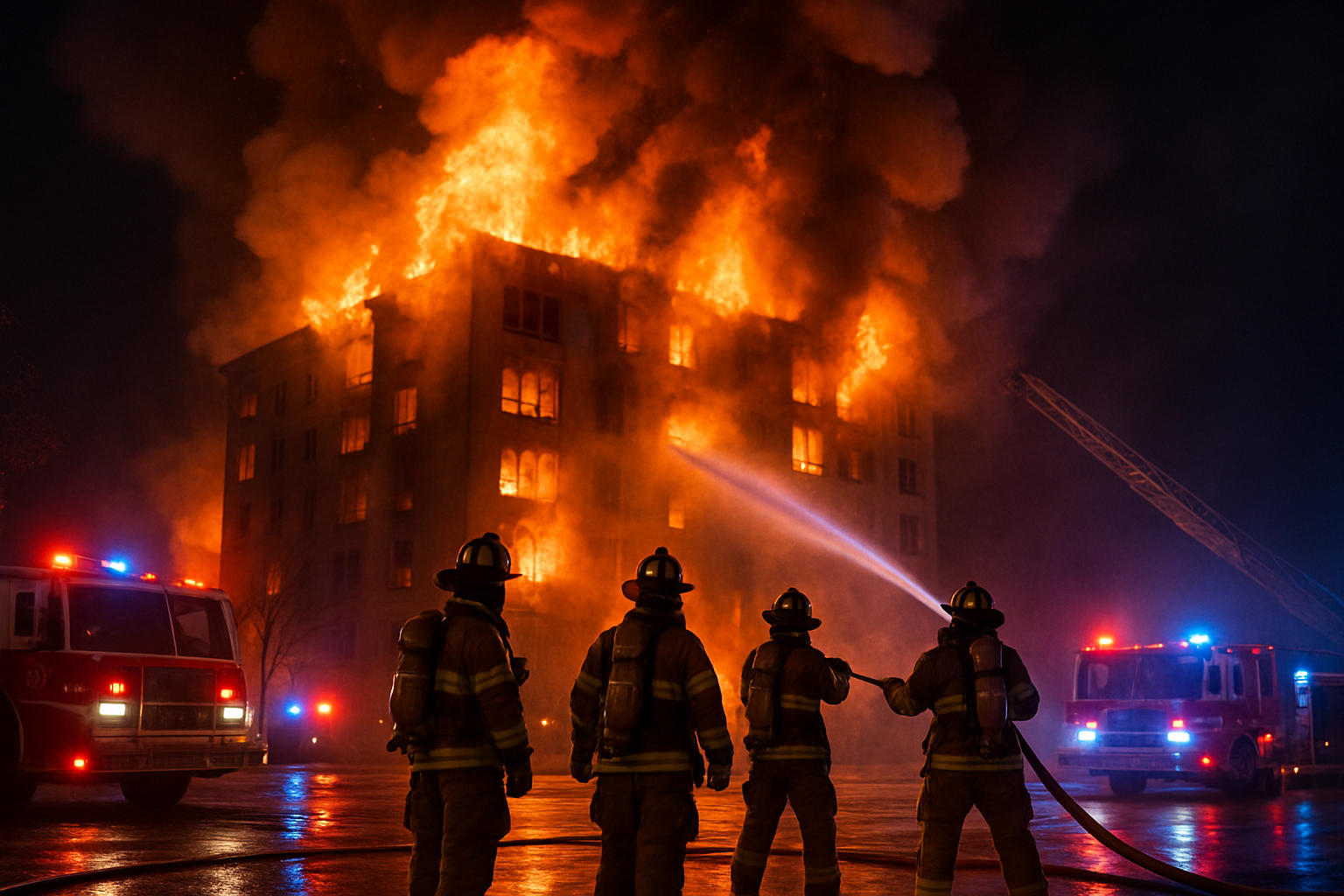
A devastating series of fire emergencies across Moscow, Denmark, and Jamaica has claimed multiple lives and exposed critical gaps in global fire safety infrastructure, as emergency services worldwide grapple with increasingly frequent and complex disaster scenarios during the 21st consecutive month of global temperatures exceeding 1.5°C above pre-industrial levels.
Moscow Apartment Fire Claims Three Lives
The most tragic incident occurred in central Moscow, where a devastating fire in a multi-story residential building claimed three lives and injured four others, according to TASS news agency reports. The blaze erupted in what authorities describe as one of the deadliest residential fires in the Russian capital this year.
Emergency responders faced significant challenges containing the fire, which spread rapidly through the aging apartment complex. The incident highlights ongoing concerns about fire safety protocols in older residential buildings across Eastern Europe, where aging electrical infrastructure and limited modern fire suppression systems create dangerous conditions for residents.
Russian emergency services deployed multiple units to the scene, but the intensity of the blaze and structural complications prevented immediate rescue of all occupants. The Moscow fire represents part of a broader pattern of residential fire emergencies that have stressed emergency response capabilities throughout 2026.
Denmark Evacuation Emergency
Simultaneously, Danish authorities launched a major evacuation operation in Odense following what officials described as a "violent fire" that forced all residents from their homes during overnight hours. The aggressive blaze required extensive emergency response coordination, with fire services working through the night to contain the flames and ensure resident safety.
The Odense incident demonstrates the effectiveness of proactive evacuation protocols, with no casualties reported despite the fire's intensity. Danish emergency services have increasingly emphasized rapid evacuation procedures as extreme weather conditions and aging urban infrastructure create more volatile fire scenarios.
This evacuation follows Denmark's broader emergency preparedness initiatives, including enhanced SMS alert systems and civil defense infrastructure improvements implemented in response to growing regional security concerns and climate-related emergency frequency.
Jamaica Family Loses Everything in House Fire
In St. Mary, Jamaica, a devastating fire completely destroyed a family's three-bedroom semi-concrete house in Frontier, leaving the Thompson family homeless with nothing but ashes. Craft vendor Angella Thompson described the heartbreak of losing irreplaceable family photographs and memories, emphasizing that the emotional toll exceeded material losses.
"The loss of family pictures, my uncle's pictures and records when they were young hurts the most; that is greater than the material things."
— Angella Thompson, Fire Victim
The Jamaica incident illustrates the particular vulnerability of rural and semi-urban communities where fire response capabilities may be limited and building construction materials increase fire spread risks. Thompson was not at home when the fire occurred, highlighting how quickly residential fires can consume entire properties when detection and response systems are inadequate.
Industrial Fire Safety Concerns Escalate
Beyond residential fires, industrial incidents continue to challenge emergency services globally. In Russia's Leningrad Region, a fuel tank fire at Primorsk port required full personnel evacuation, according to Regional Governor Alexander Drozdenko. While extinguished successfully, the incident demonstrates the complex logistics and safety protocols required for industrial fire emergencies involving hazardous materials.
These industrial incidents occur against a backdrop of increasing workplace safety concerns, following recent deadly factory fires in South Korea that killed multiple workers and prompted comprehensive safety investigations across the manufacturing sector.
Climate Change Amplifies Fire Risks
Fire safety experts increasingly link the frequency and intensity of fire emergencies to climate volatility patterns that have dominated 2026. The 21st consecutive month of global temperatures exceeding 1.5°C above pre-industrial levels has created conditions that strain traditional fire prevention and response systems.
Cyprus Fire Service Chief Nikos Longinos reported 7,154 fires in 2025 alone, consuming 133.46 square kilometers and causing 10 deaths. Rural fire stations must now operate on a 24-hour basis, with 1,180 incidents occurring during previously closed hours, creating dangerous coverage gaps that compromise emergency response effectiveness.
Similarly, Sweden faces a forest fire crisis where deforestation of high-value natural forests has quadrupled in recent years, with investigators warning that current rates could see the last unprotected old-growth forests disappear within 25 years.
Emergency Response Systems Under Strain
The simultaneous fire emergencies across multiple continents expose critical weaknesses in global emergency response systems designed for sequential rather than concurrent disasters. The Australian Fire Emergency Services Authority (AFAC) has identified a shift toward "compound disasters," where multiple emergency types occur simultaneously, fundamentally challenging traditional resource allocation and mutual aid mechanisms.
Emergency services note a transition from isolated regional disasters to multiple simultaneous incidents across different specialties, requiring fundamental restructuring of response protocols for what experts describe as a "permanent climate volatility era."
Technology Integration and Traditional Methods
Successful fire emergency responses increasingly require sophisticated integration of cutting-edge technology with traditional firefighting knowledge. Private drone groups in Cyprus now monitor high-risk areas daily to provide immediate fire alerts, while advanced meteorological forecasting combines with traditional ecological knowledge for more effective prevention strategies.
However, these technological advances must be balanced with community engagement and traditional knowledge systems to create sustainable fire management approaches that address both immediate emergency response and long-term prevention.
Economic and Social Impact
The economic implications of increased fire emergency frequency extend far beyond immediate property damage. Recovery timelines have shifted from weeks to months or years, requiring sustained adaptation investment rather than simple restoration. The "building back better" approach has evolved from an optional enhancement to an essential survival strategy.
Families like the Thompsons in Jamaica face the devastating reality of losing generational properties and irreplaceable memories, while communities must invest increasingly significant resources in fire prevention and response capabilities to protect vulnerable populations.
International Cooperation Imperative
Fire emergencies transcend political boundaries, making international cooperation essential for effective response and prevention strategies. The European Union's Civil Protection Mechanism has been repeatedly activated, with Sweden and Denmark providing €246 million in assistance representing the largest coordinated European emergency response on record.
Success in managing global fire emergency challenges requires coordinated policy frameworks, shared monitoring systems, collaborative enforcement mechanisms, and innovative financing that recognizes fire safety as a global public good essential for community stability and human prosperity.
Looking Forward: Critical Action Window
March 2026 represents a watershed moment for global fire emergency preparedness. The convergence of extreme weather conditions, infrastructure vulnerabilities, and emergency response limitations underscores the urgent need for coordinated international action addressing both immediate threats and long-term climate adaptations.
Current fire emergency patterns preview what may become routine conditions in the 2030s without significant climate adaptation investment. The window for effective environmental action is narrowing as ecological systems approach critical thresholds that could trigger irreversible changes affecting global safety standards and emergency response capabilities.
The tools, knowledge, and cooperation frameworks exist for comprehensive fire emergency protection, but implementation requires unprecedented speed, coordination, and sustained international cooperation with enhanced financial commitments to fire safety infrastructure as essential components of planetary sustainability and human security.