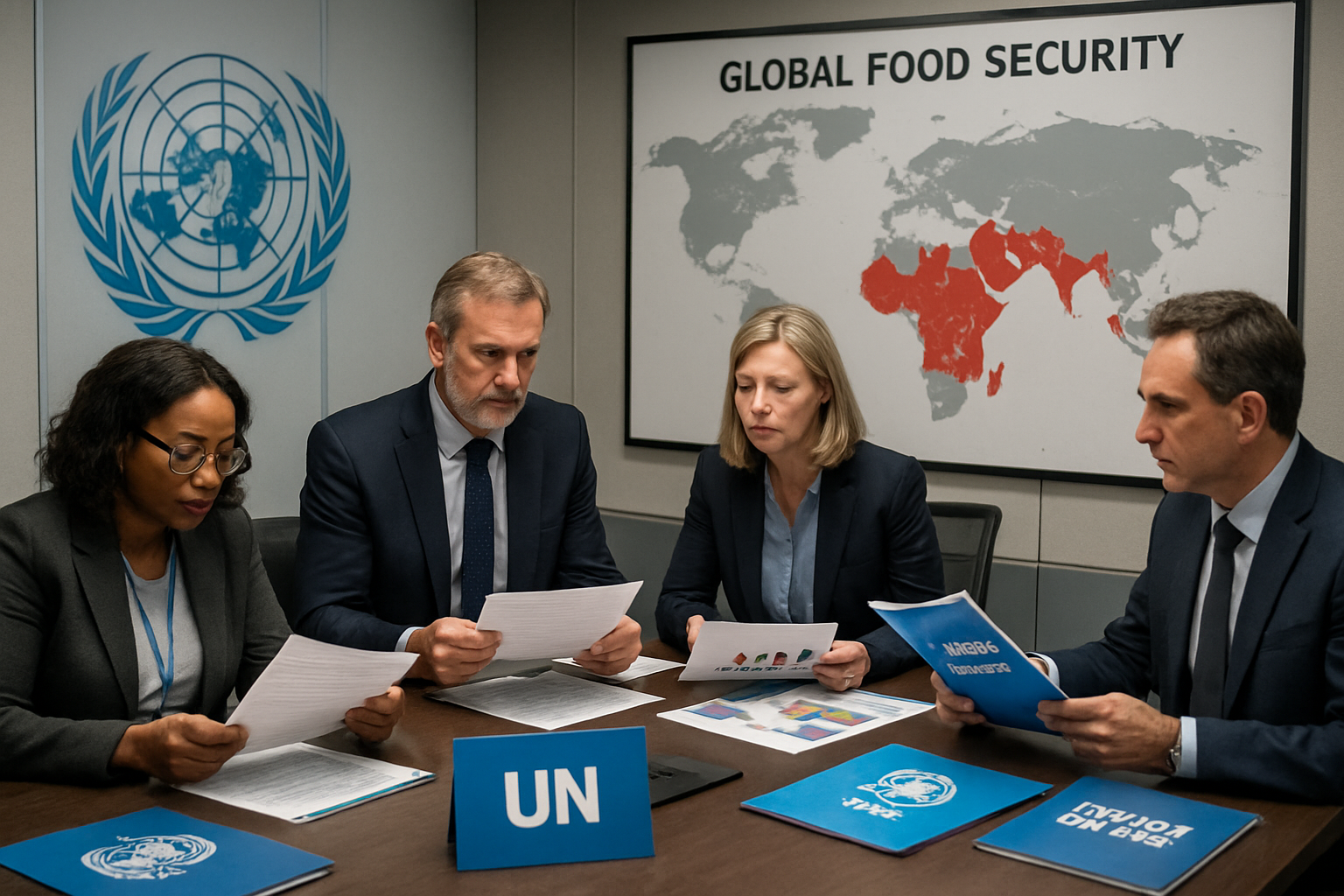
A devastating new UN report reveals that the number of people facing catastrophic acute hunger worldwide has increased ninefold since 2016, with Afghanistan, Gaza, and Sudan identified as among the most severely affected hunger hotspots globally.
The comprehensive "Global Food Crises 2026" report, compiled by United Nations agencies including the Food and Agriculture Organization (FAO) and the World Food Programme (WFP), paints an alarming picture of escalating food insecurity affecting hundreds of millions of people across the world's most vulnerable regions.
The crisis has reached unprecedented proportions, with Afghanistan experiencing what UN officials describe as the worst hunger emergency on record. The World Food Programme has warned that worsening hunger and malnutrition in the country are threatening the future of millions of children, describing the situation as a "silent emergency" that demands immediate international attention.
Afghanistan: A Nation in Crisis
Afghanistan stands at the epicenter of this global food catastrophe, with approximately 4 million children at risk of severe malnutrition—the highest level recorded in the country's history. The scale of the crisis has forced the World Food Programme to make devastating choices, turning away three out of every four hungry and malnourished children due to severe budget shortfalls.
The systematic exclusion of women from employment has created additional layers of complexity in aid delivery. With 88% of female-headed households unable to meet minimum living requirements compared to 75% of the general population, the humanitarian crisis has taken on distinctly gendered dimensions that further complicate international response efforts.
"This represents a fundamental failure of the global humanitarian architecture when organizations must choose which children to help based on budget constraints rather than need,"
— UN Development Programme Assessment
The healthcare system collapse has left WHO delivering emergency medical oxygen to only 23 hospitals nationwide, while hundreds of health centers have been forced to close due to international aid cuts. This medical infrastructure breakdown occurs against the backdrop of Afghanistan ranking 181st out of 181 countries on the Georgetown Institute Women, Peace and Security Index.
Regional and Global Dimensions
The food crisis extends far beyond Afghanistan's borders, creating a complex web of interconnected emergencies across multiple continents. Gaza and Sudan have emerged as particular flashpoints, with the latter experiencing what UN experts have determined shows "hallmarks of genocide" in attacks on civilian populations and infrastructure.
In Sudan, the collapse of agricultural systems has been compounded by systematic targeting of civilian infrastructure during the ongoing conflict between the Sudanese Armed Forces and Rapid Support Forces. The crisis has left 17.8 million people requiring urgent assistance, with famine conditions declared in multiple areas of North Darfur, including Um Baru, where child malnutrition rates have reached a catastrophic 53%.
The regional implications extend across the Horn of Africa, where refugee flows into Chad and South Sudan have strained already limited resources, while disrupted trade routes have affected food security across the broader region.
Climate Change as Crisis Amplifier
The food security emergency is unfolding during an unprecedented period of global warming, with January 2026 marking the 18th consecutive month of temperatures exceeding 1.5°C above pre-industrial levels. This sustained warming has fundamentally altered traditional agricultural cycles, disrupted water availability, and intensified extreme weather events that destroy crops and disrupt food distribution networks.
The compound nature of these crises—combining conflict, climate change, and economic instability—has created what experts describe as a "perfect storm" for global food insecurity. Traditional seasonal patterns that have guided food production for millennia are no longer reliable, forcing rapid agricultural adaptation in regions least equipped to manage such transitions.
International Response and Funding Gaps
Despite the scale of the emergency, international response has been severely hampered by competing global priorities, access restrictions, and chronic underfunding. The crisis in Ukraine, Middle East conflicts, and other emergencies have stretched humanitarian resources thin, creating what aid organizations describe as a "zero-sum" environment where urgent needs in one region mean unmet needs elsewhere.
Recent international conferences, including a major donor meeting hosted by Germany that raised $1.8 billion in pledges, represent important steps but fall far short of identified needs. The African Union has suspended Sudan's membership, creating additional diplomatic isolation that complicates humanitarian access and regional cooperation.
The Islamic Red Crescent has managed to serve over 2 million people through 128+ healthcare centers despite political constraints, demonstrating that effective humanitarian delivery remains possible even in challenging environments when organizations adapt their approaches to local realities.
Systemic Vulnerabilities Exposed
The current crisis has exposed fundamental vulnerabilities in global food systems that extend beyond immediate humanitarian emergencies. Supply chain disruptions, energy price volatility, and climate-driven agricultural failures have created cascading effects that impact food security even in traditionally stable regions.
The ninefold increase in acute hunger since 2016 reflects not just the scale of current emergencies but the inadequacy of existing systems to prevent and respond to compound crises. Traditional models that prioritize short-term market efficiency over long-term resilience have proven insufficient for addressing the complexity of contemporary food security challenges.
Success stories from countries implementing comprehensive agricultural protection strategies demonstrate that alternative approaches are possible. Regional cooperation initiatives, South-South knowledge transfer, and technology-tradition integration models offer potential pathways toward more resilient food systems.
Looking Forward: Critical Choices Ahead
As the world grapples with this unprecedented food security emergency, the choices made in 2026 are likely to determine global food security trajectories for decades to come. The convergence of climate acceleration, population growth, and geopolitical tensions has created what experts describe as a critical decision point for international cooperation on food security.
The UN report emphasizes that while the tools and knowledge exist for comprehensive responses to food crises, success depends on sustained international cooperation, enhanced coordination across multiple sectors, and recognition that food security represents essential infrastructure for human prosperity and planetary sustainability.
"The window for building resilient and equitable food systems is narrowing rapidly as environmental pressures intensify and population growth increases agricultural demands,"
— Global Food Security Assessment 2026
The human dimension remains central to addressing this crisis—millions of farmers, food workers, and vulnerable communities depend on stable and fair global food systems. The scale of suffering documented in the UN report, from Afghanistan's malnourished children to Sudan's displaced populations, underscores the urgent moral imperative for coordinated international action.
As climate change continues to accelerate and geopolitical tensions reshape global cooperation frameworks, the international community faces an unprecedented test of its commitment to preventing mass starvation and building food systems capable of serving a growing global population in an increasingly unstable world.