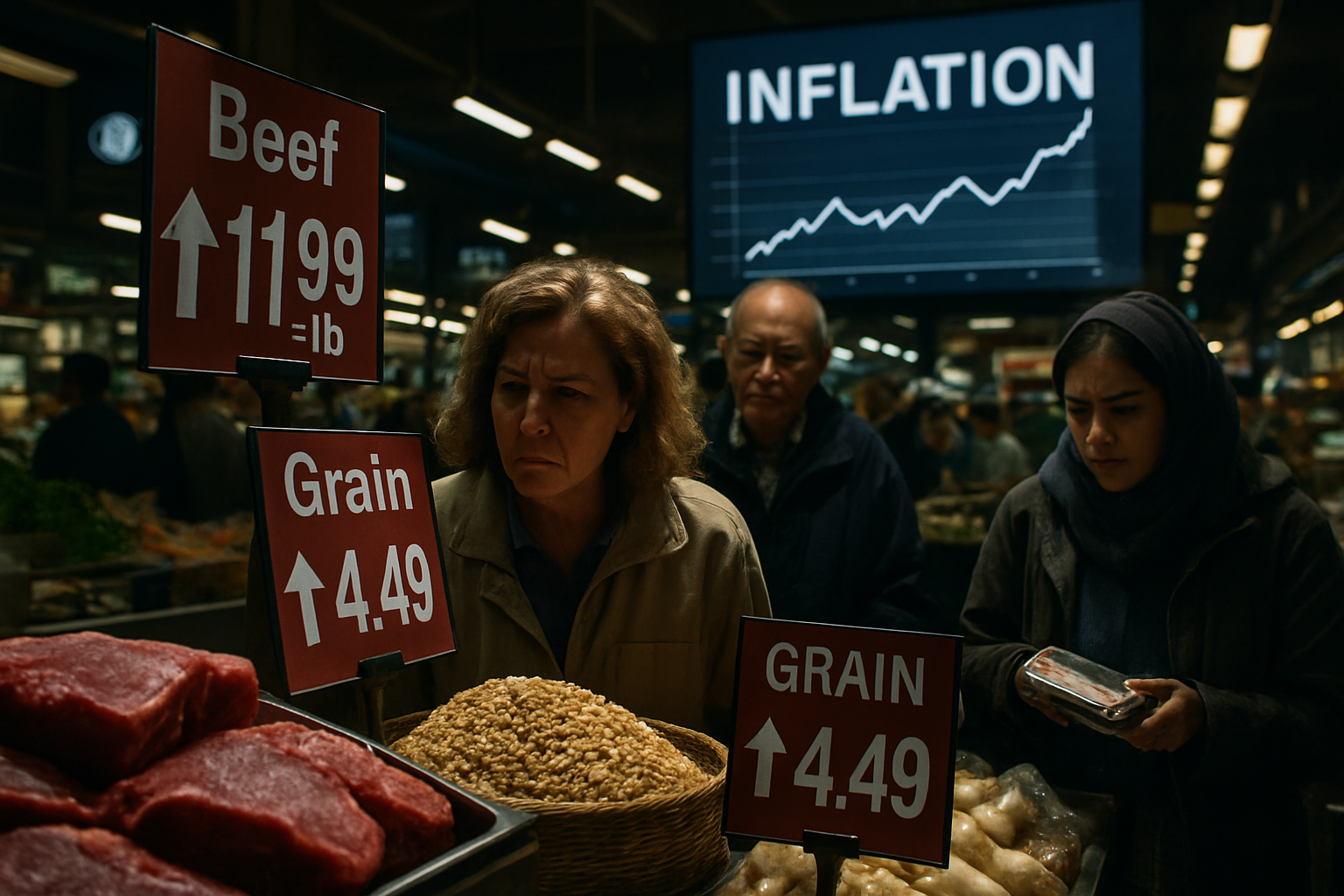
A global food price crisis is unfolding across multiple continents, with beef prices in New Zealand reaching their highest levels in two decades while rice shortages in the Philippines force desperate consumers into overnight queues for subsidized grain.
Food prices have surged 4.5% in New Zealand over the past 12 months to February 2026, with beef mince experiencing its most dramatic annual increase in twenty years. The crisis reflects a broader pattern of food insecurity affecting millions worldwide during the 19th consecutive month of global temperatures exceeding 1.5°C above pre-industrial levels.
New Zealand Beef Crisis Deepens
The dramatic surge in beef prices represents the largest annual increase recorded since the early 2000s, creating significant affordability challenges for New Zealand consumers. The price explosion comes as global protein demand transforms, driven partly by weight-loss treatment adoption and shifting dietary preferences toward healthier options.
Argentina's beef industry provides context for the global protein shortage. Domestic beef consumption has fallen to 20-year lows as export-oriented policies prioritize foreign currency earnings over domestic food security. With production levels remaining low and sustained export focus, meat availability for domestic markets has dramatically reduced across major producing nations.
The crisis extends beyond New Zealand's borders. Ghana's cocoa sector faces severe challenges with bean stockpiles remaining unsold due to international pricing pressures, while farmers struggle with production costs and climate-related risks affecting traditional growing regions.
Philippines Rice Emergency Escalates
In the Philippines, desperate scenes unfold daily as consumers line up overnight for government-subsidized rice selling at P20 per kilogram. National Food Authority Administrator Larry Lacson confirmed the unprecedented nature of the crisis: "We've observed nationwide that the lines are getting longer. In fact, I don't know if it's good or bad, but sometimes our kababayans start to line up the night before."
The government's subsidized rice program primarily serves senior citizens, persons with disabilities, indigent families, solo parents, farmers, fishers, minimum wage earners, and public transport workers through Kadiwa centers nationwide. However, the overwhelming demand creates what the Department of Agriculture calls a "false impression of a supply shortage."
The rice crisis stems from Middle East conflicts pushing up prices of basic goods globally. Energy disruptions from the Strait of Hormuz closure—affecting 40% of global seaborne oil transit—have cascaded through agricultural supply chains, increasing transportation and production costs worldwide.
Climate Change Amplifies Food Security Challenges
The current food price surge occurs during unprecedented environmental stress. January 2026 marked the hottest month in recorded history, extending an 18-month streak of global temperatures above the critical 1.5°C threshold. This sustained warming fundamentally alters agricultural systems, affecting traditional growing seasons, water availability, and pest management worldwide.
"The convergence of climate pressures, supply chain vulnerabilities, and economic instabilities creates a critical decision point for global food security policy."
— Global Food Security Analysis, March 2026
Storm Leonardo's devastating impact on Spanish agriculture, with rainfall reaching 526 liters per square meter in some regions, exemplifies how extreme weather events disrupt continental food supplies. European countries now face fresh produce shortages as traditional supplier regions struggle with climate-induced agricultural challenges.
Regional Variations Tell Different Stories
While some regions face acute shortages, others demonstrate successful adaptation strategies. Bangladesh has implemented strategic food price adjustments ahead of Ramadan, with vegetable and meat prices moderating while fish prices remain stable—reflecting typical pre-holiday market dynamics.
Slovakia reports continued global food price declines lasting six months, with sugar prices down nearly 20% year-over-year, indicating deflationary pressures in some international commodity markets. However, these regional successes contrast sharply with widespread inflation affecting essential food staples across much of the developing world.
Egypt has established a strategic "food security triangle" through collaboration between multiple ministries, importing substantial frozen poultry ahead of Ramadan to ensure adequate supply and price stability during peak demand periods.
Technology and Traditional Knowledge Integration
Successful agricultural adaptation increasingly requires sophisticated integration of cutting-edge technology with traditional farming wisdom. Malaysia's transition to "outcome-driven delivery" in agriculture, Kenya's Nguruman irrigation rehabilitation benefiting 10,000+ farmers, and Algeria's innovative conversion of date waste to livestock feed demonstrate diverse approaches to food security challenges.
South-South cooperation emerges as a sustainable alternative to traditional North-South aid dependencies. Zimbabwe's 370 metric tonne maize donation to Malawi exemplifies regional solidarity, while Bolivia's collaboration with India on livestock management shows how peer-to-peer knowledge transfer proves more culturally appropriate and economically sustainable.
Supply Chain Vulnerabilities Exposed
The current crisis exposes fundamental vulnerabilities in global food supply chains. Energy price surges—24% in Europe and 78% for US natural gas—increase production and distribution costs throughout food networks. When local production challenges occur, they rapidly translate into international market pressures affecting consumers thousands of miles away.
Qatar's halt of LNG production at major facilities, affecting approximately 20% of global exports, demonstrates how single-point failures in critical infrastructure create cascading effects across agricultural systems. Fertilizer production, heavily dependent on natural gas, faces particular pressure as spring planting seasons begin in many regions.
Economic and Social Implications
The food price crisis creates broader economic implications extending beyond agricultural sectors. In Malta, unprecedented grocery cost pressures drive food inflation above eurozone averages, with meat and juice prices particularly affecting household budgets. Consumer confidence in multinational corporations declines measurably, with a documented shift toward local sourcing and supply chain transparency.
Pakistan faces wartime austerity measures with four-day government work weeks as fuel prices reach the highest levels in South Asia. These economic pressures directly impact food accessibility as transportation costs increase and agricultural operations face higher input prices.
International Cooperation and Policy Responses
The European Food Safety Authority (EFSA) develops standardized protocols for international cooperation in food safety and supply chain management. The African Continental Free Trade Agreement enables agricultural partnerships across national boundaries, creating shared value chains and coordinated responses to food security challenges individual nations cannot address independently.
However, funding sustainability remains a critical concern for developing nations where immediate economic pressures often override long-term food security considerations. Technical capacity building requires sustained education, training, and institutional investment beyond initial technology deployment.
Prevention-Focused Transformation
Industry experts identify 2026 as a critical transformation turning point requiring enhanced international coordination, climate-adaptive processing, and prevention-focused approaches integrating traditional dietary wisdom with modern safety science. The shift from reactive crisis management to proactive resilience building demonstrates superior cost-effectiveness in protecting vulnerable populations.
Success factors include sustained political commitment transcending electoral cycles, community ownership ensuring local stakeholder engagement, transparent governance preventing corruption, and adaptive management capable of responding to rapidly changing environmental conditions.
Looking Forward: Window for Action Narrows
The convergence of climate pressures, supply chain vulnerabilities, and economic instabilities creates what experts describe as a "perfect storm" challenging food security across both developed and developing nations. The window for building resilient, equitable food systems narrows rapidly as environmental change accelerates and population growth increases demands on agricultural resources.
Agricultural innovations demonstrate humanity's adaptive capacity, but success depends on sustained international cooperation, enhanced coordination across multiple sectors and scales, and increased financial commitments recognizing food security as essential infrastructure for human prosperity and planetary sustainability.
"The capacity of international institutions and national governments to respond effectively to cascading food crises will determine whether current challenges represent temporary disruption or sustained global food system instability."
— International Food Policy Research Institute, 2026
As millions of farmers, food workers, and vulnerable communities depend on stable and fair global food systems, the choices made during this critical period may determine food security trajectories for decades ahead, making coordinated international action more urgent than ever before.