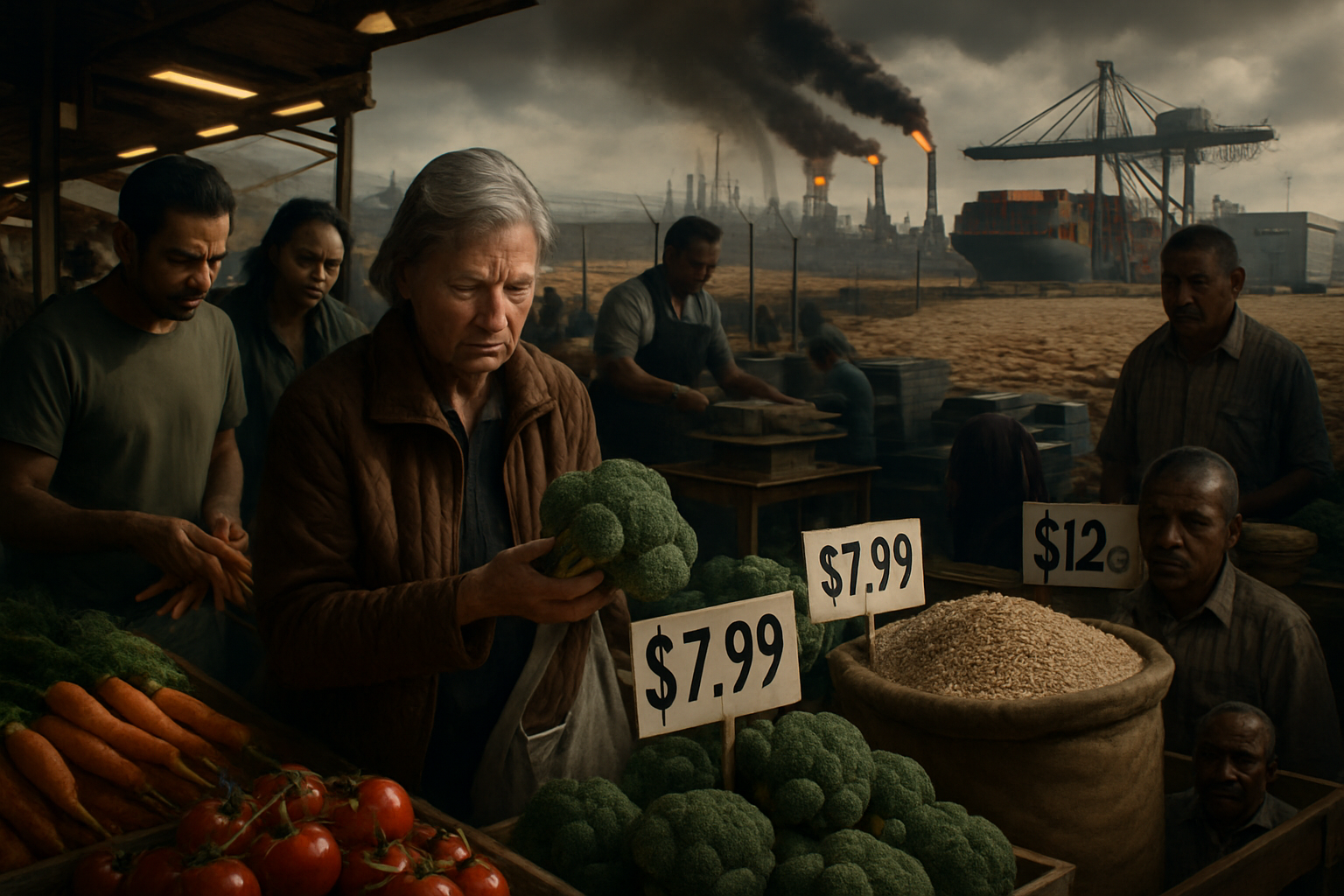
Global food prices have surged to critical levels as Middle East tensions disrupt agricultural supply chains worldwide, with the UN Food and Agriculture Organization reporting the second consecutive monthly increase amid geopolitical instability that threatens food security across multiple continents.
The March 2026 global food price index increased significantly according to the FAO, marking a troubling trend as regional conflicts in the Middle East create cascading effects throughout international food systems. This price surge occurs during the 20th consecutive month of global temperatures exceeding 1.5°C above pre-industrial levels, creating a "perfect storm" of climate and geopolitical pressures on agricultural production.
Middle East Tensions Trigger Supply Chain Disruptions
The ongoing tensions in the Middle East have created unprecedented disruptions to global food distribution networks. Energy price volatility stemming from regional conflicts has increased transportation costs throughout the agricultural supply chain, from farm to market. Natural gas prices have surged 24% in Europe and 78% in the United States, directly impacting fertilizer production costs and food processing operations worldwide.
The Strait of Hormuz closure has affected 40% of global seaborne oil transit, creating ripple effects that extend far beyond energy markets into agricultural logistics. These disruptions have forced food distributors to seek alternative shipping routes, significantly increasing costs that are ultimately passed on to consumers.
"The convergence of climate pressures, supply vulnerabilities, and economic instabilities creates a 'perfect storm' for global food security."
— International Food Security Expert
Regional Food Shortages Intensify Global Crisis
In the Democratic Republic of Congo, a severe palm oil shortage has persisted for approximately one month across markets in Bunia and surrounding areas. The Association of Palm Oil Depositaries reports that this essential cooking ingredient, typically sourced from the neighboring Haut-Uélé province, has become increasingly scarce, forcing families to alter their dietary habits and cooking methods.
The palm oil shortage in central Africa demonstrates how localized disruptions can compound global food security challenges. Palm oil serves as a primary cooking fat for millions across the region, and its scarcity has forced consumers to seek more expensive alternatives or reduce their overall food consumption.
European Agricultural Pressure Points
Latvia presents a contrasting but equally concerning picture, where potato supplies that sustained communities through the winter months are now running dangerously low. Latvian farmers report that while potato acreage has stabilized at more than 12,500 hectares in recent years, current supplies are approaching depletion ahead of the new growing season.
The primary concern among Latvian producers centers on how rising production costs will affect the upcoming agricultural season. Fertilizer prices have increased dramatically due to energy cost escalation, while diesel fuel for farm equipment has reached levels that threaten the viability of small-scale operations.
"Farmers say that supplies are now running low, and the main concern is estimating how rising costs will affect production costs in the new season."
— Latvian Radio Agricultural Report
Climate Change Amplifies Agricultural Vulnerabilities
The current food crisis unfolds against the backdrop of unprecedented climate conditions. January 2026 marked the hottest month in recorded history, extending a streak of 20 consecutive months where global temperatures exceeded the critical 1.5°C threshold above pre-industrial levels.
This sustained warming has fundamentally altered traditional farming cycles worldwide. Water availability has become increasingly unpredictable, pest and disease patterns have shifted dramatically, and extreme weather events have increased in both frequency and intensity. Traditional seasonal patterns that have guided agricultural planning for millennia are no longer reliable indicators for crop planning.
Technology and Traditional Knowledge Integration
Despite these challenges, agricultural communities worldwide are demonstrating remarkable adaptability through innovative approaches that combine cutting-edge technology with traditional farming wisdom. Successful adaptations emphasize community ownership of development processes, transparent governance structures, and sustained political commitment that transcends electoral cycles.
The most effective agricultural innovations integrate precision farming techniques with indigenous knowledge systems, creating resilient food production methods that can withstand both climate volatility and economic pressures. These approaches prove superior to purely technological solutions that ignore local traditions and community needs.
Economic Implications Extend Beyond Agriculture
The global food price surge has created substantial economic multiplier effects extending far beyond agricultural sectors. Rising food costs contribute to inflationary pressures that affect monetary policy decisions, while supply chain disruptions impact transportation, processing, and retail industries.
Consumer confidence in multinational food corporations has declined measurably, driving a shift toward local sourcing and simplified supply chains that offer greater transparency and traceability. Insurance costs are mounting as companies invest in molecular testing infrastructure and enhanced food safety protocols.
South-South Cooperation Emerges
International cooperation patterns are evolving as developing nations increasingly share expertise through peer-to-peer partnerships rather than traditional North-South aid relationships. This South-South cooperation proves more culturally appropriate and economically sustainable, enabling countries facing similar challenges to collaborate directly.
Examples include Zimbabwe's 370 metric ton maize donation to Malawi, Bolivia-India agricultural partnerships, and the African Continental Free Trade Agreement's agricultural cooperation initiatives. These partnerships bypass traditional aid dependencies while fostering genuine technological and knowledge transfer.
Policy Responses and Strategic Interventions
Governments worldwide are implementing diverse approaches to address food security challenges. Some countries focus on direct market interventions and price stabilization measures, while others emphasize technology-driven agricultural adaptations and infrastructure development.
The most successful responses demonstrate sustained political commitment, adequate funding mechanisms, and comprehensive oversight systems capable of adapting to rapidly changing environmental and social conditions. Prevention-focused approaches consistently demonstrate superior outcomes compared to reactive crisis management strategies.
International Coordination Challenges
The scale and complexity of current agricultural challenges require enhanced international coordination, as climate change and supply disruptions transcend national boundaries. Unilateral responses prove insufficient when dealing with interconnected global food systems.
Regional frameworks like the African Continental Free Trade Agreement and enhanced cooperation through organizations like the European Food Safety Authority provide templates for coordinated responses that individual nations cannot achieve independently.
Looking Forward: Critical Juncture for Global Food Security
The convergence of climate pressures, geopolitical tensions, and supply chain vulnerabilities in 2026 represents a critical juncture for global food security policy. The window for building resilient, equitable food systems is narrowing rapidly as environmental change accelerates and population growth increases demands on agricultural resources.
Success in addressing these challenges depends on sustained international cooperation, enhanced coordination across multiple sectors and scales, and increased financial commitments that recognize food security as essential infrastructure for both human prosperity and planetary sustainability.
"The tools and knowledge exist for comprehensive responses to current threats and long-term sustainability challenges, but success requires unprecedented speed and coordination."
— Global Agricultural Policy Expert
The human dimension remains central to any sustainable solution. Millions of farmers, food workers, and vulnerable communities depend on stable, fair global food systems. The choices made during this critical period may determine food security trajectories for decades ahead, making coordinated international action more urgent than ever before.
Agricultural innovation must keep pace with accelerating environmental change while maintaining effectiveness principles that ensure community benefit and environmental sustainability. The coordination of immediate crisis response with long-term resilience building proves crucial for global food systems serving growing populations amid unprecedented environmental challenges.